Ibizan Hound vs Pharaoh Hound: A Practical Comparison
Compare Ibizan Hound and Pharaoh Hound coats, activity, training, and home arrangements without relying on their similar silhouettes.
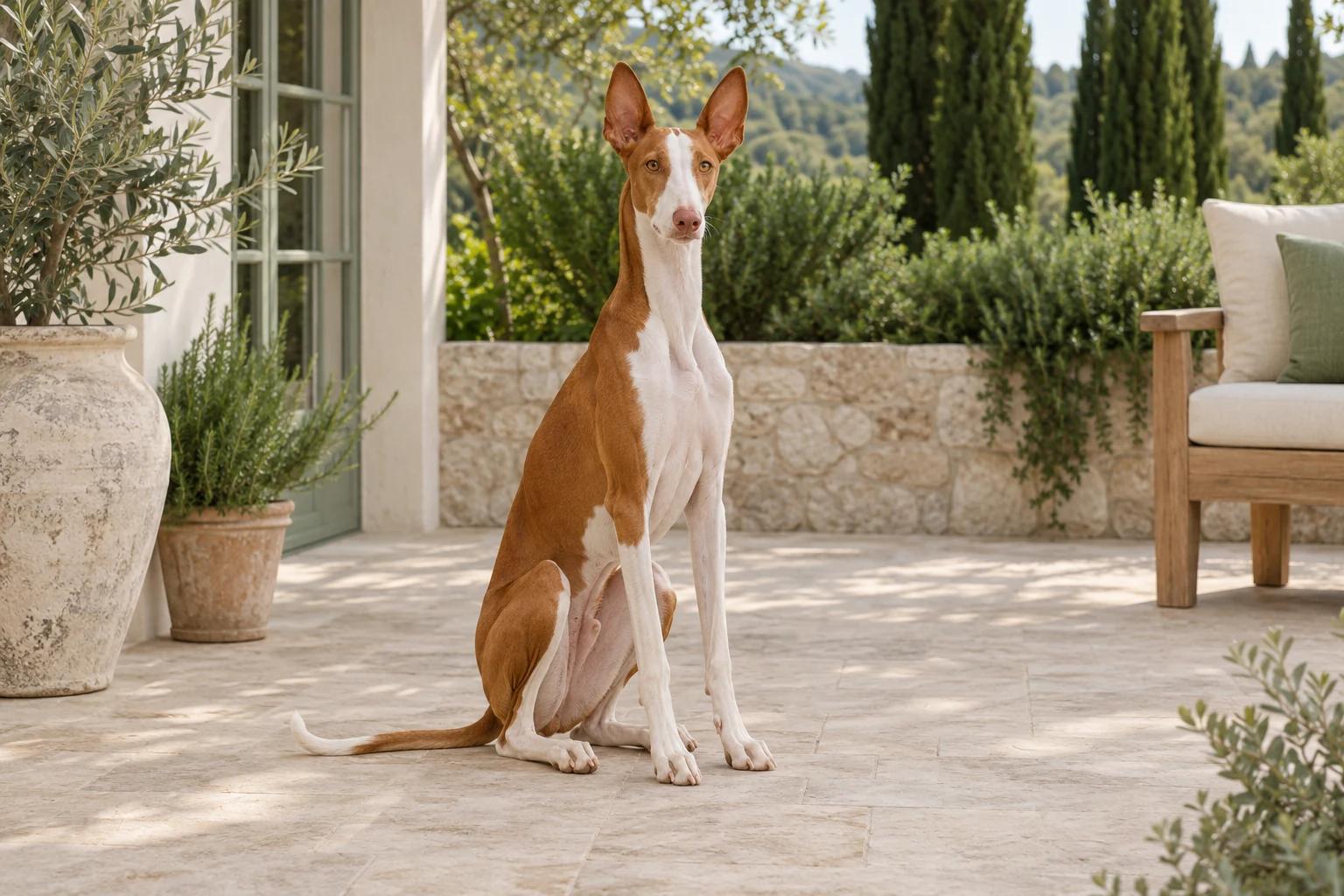
Ibizan Hound vs Pharaoh Hound can look like a choice between two variations on the same elegant outline. Upright ears and lean bodies make the resemblance understandable, but they do not settle the ownership question. Coat type, opportunities for activity, and the individual dog's response to everyday situations deserve a closer look.
Read the Ibizan Hound profile alongside the Pharaoh Hound profile. Then consider which arrangements you can provide consistently, not just which appearance first caught your attention.
Ibizan Hound vs Pharaoh Hound: begin with the coat
The UKC Ibizan Hound standard recognizes smooth and rough or long-haired coats. The UKC Pharaoh Hound standard describes a short, glossy coat without feathering. That distinction is more useful for daily care than assuming every dog with this outline has the same coat.
A wire-coated Ibizan deserves an actual coat-care demonstration. Ask the caregiver to show the tools and explain what they do at home versus what a professional handles. A smooth Ibizan and a Pharaoh may look more alike in photographs, but equipment and technique should still be chosen for the individual coat.
Color can help you notice differences without becoming a selection rule. Ibizans may be red, white, or combinations of the two; the Pharaoh standard describes tan shades with particular white markings. Neither pattern tells you how a dog behaves or how well it will fit your routine.
Put activity access on the map
Both profiles call for an active life, with the Ibizan rated higher for activity and mental engagement. Instead of converting those ratings into a universal number of minutes, draw your actual options on a map: local walking routes, suitable enclosed exercise areas, and places where you could practice skills without a crowd.
Check how you would reach each place on a workday. If every useful outing requires a long drive, include that travel time in your plan. A facility that looks convenient online may have booking rules, busy periods, or access arrangements that do not suit your schedule.
For either breed, a garden should be assessed rather than assumed secure. Walk its boundaries, inspect gates, and consider what happens when someone opens an entrance. The Ibizan standard describes considerable jumping ability, so a fence's mere presence is not an adequate assessment.
Do not deliberately test whether a dog can escape. Ask an experienced caregiver or professional to help evaluate the setup. Exercise plans should not depend on releasing a dog into an unenclosed place and hoping training will overcome every distraction.
Compare the learning process, not a cleverness ranking
The site's Pharaoh profile rates training responsiveness somewhat higher, but a comparison score cannot tell you how two individual dogs will learn. Ask to watch a short session and notice what keeps the dog involved.
VCA's Ibizan Hound care narrative recommends rewarding, varied training rather than lengthy repetition. A practical way to use that idea is to choose one small task, reward a few successful attempts, and finish before the session becomes a negotiation.
For example, ask a caregiver to demonstrate approaching for lead attachment. Does the dog understand the cue? Is the equipment familiar? What happens after the lead is attached? These details reveal a routine you can learn, rather than inviting a vague judgment that the dog is obedient or stubborn.
Pharaoh Hound vs Ibizan Hound discussions often focus on which dog is easier. Replace that question with: which dog's current skills and needs match the teaching I am willing to do? An adult with an established routine may present a different proposition from a puppy of either breed.
A shared home needs more than affection
Both breeds are described as affectionate, and the profiles encourage companionship. That does not answer how an individual handles separation, unfamiliar visitors, or other animals. Ask for specific observations and the arrangements under which they occurred.
If there are already animals at home, describe them accurately to the breeder or rescue. Discuss separation spaces and introductions before a placement. A pleasant meeting in one setting does not establish unrestricted compatibility in every room or outdoors.
For guests, think about where the dog can rest without being expected to participate. Tall ears and an unusual outline can attract attention, but visitors do not need to touch the dog. A comfortable introduction may begin with people sitting quietly while the handler manages distance.
If regular time alone is unavoidable, ask how the dog currently experiences it and what transition support is available. Do not infer tolerance from a breed's independent appearance. Make the care arrangement explicit before assuming your work schedule will fit.
Fit equipment to the body, not the photograph
The difference between Ibizan Hound and Pharaoh Hound appearance can be subtle in a cropped image, and neither silhouette gives you reliable equipment measurements. Ask for a proper harness fitting and check travel arrangements against the individual dog.
At home, leave enough room for the dog to stretch and turn without occupying a busy passage. Think about the long body and tail when placing a resting area beside furniture. A bed that fits neatly into a corner may still leave an awkward approach.
For transport, measure the usable space and the opening through which equipment must pass. Rehearse getting ready and loading without the pressure of a departure deadline. If you share the vehicle with luggage or another dog, test the full arrangement rather than only the empty boot.
These details are not glamorous, but they are the parts of ownership you repeat. Choosing between breeds becomes easier when the decision is grounded in those repeated tasks.
What to ask at an adult-dog visit
Bring a short list: current activity routine, coat tools, response to ordinary visitors, travel setup, and training support. Ask for examples rather than adjectives. “What did yesterday look like?” is often more informative than “Is this an easy breed?”
Watch a quiet pause as well as active moments. Notice how the owner prepares the dog for care and how they end an activity. If possible, meet more than one adult rather than allowing a single especially polished example to represent the whole breed.
Choosing an Ibizan Hound or Pharaoh Hound should not rest on a romantic ancestry story. Our article on the Ibizan's hunting account examines a separate aspect of the breed. Use the breed quiz to organize your household priorities, then discuss them with people who know the particular dog.
FAQ
Are Ibizan Hounds and Pharaoh Hounds the same breed?
Ibizan Hounds and Pharaoh Hounds are distinct breeds, despite similar ears and lean outlines. Coat differences include the Ibizan's smooth and rough coat varieties and the Pharaoh's short, unfeathered coat.
Which one is easier to train?
Neither an Ibizan Hound nor a Pharaoh Hound can be assumed easier to train from breed alone. Ask about existing skills, useful rewards, distractions, and the support available to continue training after the dog comes home.
Does either breed need a secure exercise plan?
Both Ibizan Hounds and Pharaoh Hounds need a secure exercise plan. Plan suitable enclosed opportunities and controlled outings rather than relying on recall in an open area. Assess gates and boundaries for the individual dog, with experienced help when needed.
Is coat length the main reason to choose between them?
Coat length is only one factor when choosing between an Ibizan Hound and a Pharaoh Hound. Activity access, companionship arrangements, handling, travel, and the individual dog's experience all belong in the comparison.
Sources behind this article
- United Kennel Club: Ibizan Hound standard ↗
- VCA Animal Hospitals: Ibizan Hound ↗
- United Kennel Club: Pharaoh Hound standard ↗
Article source checked: November 16, 2026. Source checked 2026-11-16
Keep reading

Affenpinscher vs Brussels Griffon: Everyday Differences
Read article →