Hovawart vs Beauceron: Choosing a Daily Routine
Compare Hovawart and Beauceron coats, activity, handling, and training. Use everyday situations to decide which demands fit your home.
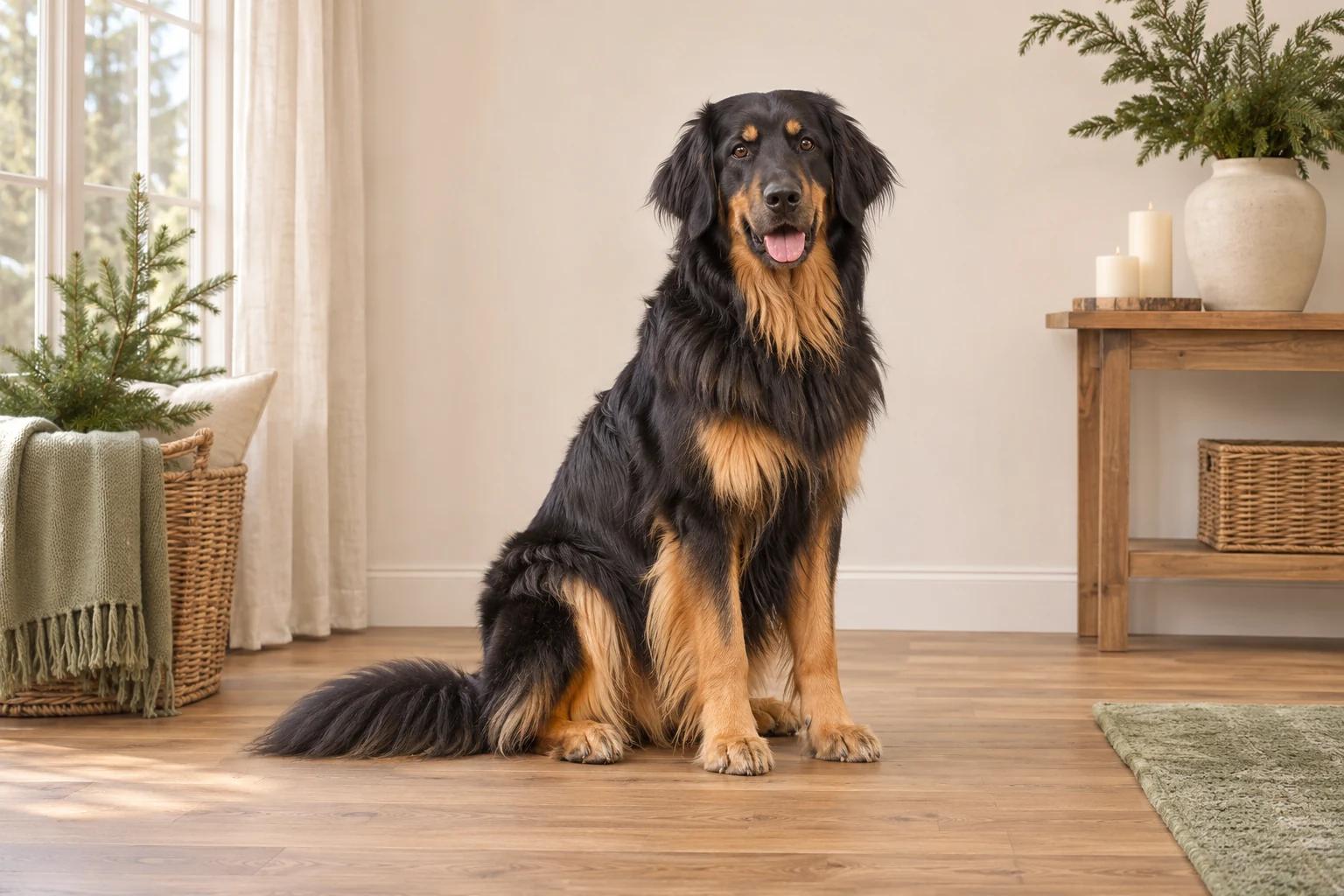
Hovawart vs Beauceron is a comparison between two substantial working dogs, not two interchangeable versions of a black-and-tan companion. The most useful differences emerge when you imagine a wet walk, a visitor arriving, or a workday with limited flexibility. Coat, activity, and the kind of teaching you enjoy all matter more than choosing the more impressive photograph.
Start with the Hovawart profile and Beauceron profile. Then compare the arrangements you could actually sustain, including who would care for the dog when you are away.
Hovawart vs Beauceron: what changes at home?
The UKC Hovawart standard describes a powerful, long-coated dog with strong family attachment and a protective tendency. The AKC Beauceron introduction emphasizes a powerful, spirited herding dog. Neither description means an adult arrives with the household manners you need.
The obvious visual distinction is coat length. The Hovawart has a longer outline with furnishings; the Beauceron's coat is shorter. On the site's profiles, the Beauceron also has the higher activity and shedding ratings. Those comparisons are useful planning prompts, not a prediction that one particular dog will be quieter or tidier than another.
For a household deciding between them, the first question is therefore not which is more loyal. Ask which set of ordinary jobs you want to take on: tending a longer coat, organizing a demanding activity routine, teaching calm arrivals, and handling a strong dog in shared spaces.
Compare your Tuesday, not your ideal weekend
A mountain walk once a fortnight does not describe the rest of a dog's life. Write down your usual morning departure, midday arrangements, and evening return. Mark the periods when someone can participate rather than merely open a back door.
For the Beauceron, scrutinize the activity part of that plan especially carefully. The profile's high activity rating is a reason to ask about the individual dog's current outlets and how they fit around work. Do not translate it into an invented minimum mileage. A dog learning a new skill and a dog covering distance are doing different things.
For the Hovawart, do not interpret a lower comparative rating as permission to offer an empty day. The Hovawart Club of North America stresses engaged ownership and participation. Ask a caregiver to describe a normal day, including what happens between outings.
A practical trial is to spend a week following your proposed timetable before bringing a dog home. Go outside at the planned times and identify where training could happen. If the routine already collapses without a dog involved, change the plan before choosing either breed.
A doorway reveals more than a posed photograph
Imagine answering the door while carrying a parcel. Where would the dog wait? Can you separate the entrance from the main living area? Who controls access when a tradesperson arrives? These questions are particularly relevant when considering a Hovawart's watchful tendencies, but they belong in a Beauceron plan too.
You need an arrangement that works before training is complete. A resting area away from the doorway and a clear household procedure are more useful than hoping everyone will remember to hold a collar. Ask visitors to wait while you organize the dog rather than allowing an improvised greeting.
During a visit with adult dogs, ask the owner to show you their actual arrival routine. Observe where the dog goes and what the person does. Do not provoke guarding or ask to see a protective demonstration. You are evaluating everyday management, not staging a test of courage.
The difference between Hovawart and Beauceron ownership may become clearer in this ordinary moment than in broad temperament labels. You may discover that one individual's established routine suits you particularly well, or that both require more support than you anticipated.
Coat work and cleaning are separate commitments
A short coat does not mean no loose hair, and a longer coat does not automatically mean daily professional styling. Ask to see the tools used for the adult dog's real coat, not just a freshly prepared show appearance.
For a Hovawart, consider where you would check and dry the longer hair after a muddy outing. Can the dog stand comfortably while you work around the legs and underside? Is there somewhere to leave damp towels without turning the entrance into an obstacle course?
For a Beauceron, consider the cleaning routine that accompanies a shedding short coat. Washable covers, accessible cleaning tools, and a place for regular brushing may matter more than owning an elaborate grooming kit. Ask how coat care changes through the year instead of assuming that one demonstration represents every season.
If grooming is something you genuinely enjoy, that preference belongs in the decision. If it is a chore you tend to postpone, make a realistic support plan. Appearance alone will not tell you which routine you will maintain.
Choose teaching you want to keep doing
Beauceron vs Hovawart comparisons sometimes become arguments about which breed is smarter. A more useful question is whether you enjoy explaining small skills repeatedly and carrying them into new settings.
Ask to see loose-lead walking, settling while people talk, and a simple recall in a secure area. Notice the handler's role. Does the dog need reminders? What reward is useful? What happens when the environment becomes more interesting? These observations help you understand the work, without turning a single encounter into a permanent verdict.
Discuss training support before choosing a puppy or adult. A qualified reward-based trainer can help you plan practical skills, and the current caregiver can explain what the dog already knows. Agree on cue words among everyone who will handle the dog.
When deciding Hovawart or Beauceron, also ask which activities you would enjoy even if progress were slow. Enthusiasm for the process is more sustainable than buying a dog because you admire someone else's finished performance.
Make the final comparison personal
Meet adult examples where possible, and ask specific questions about time alone, guests, walking routes, coat care, and travel. Keep notes about the individual dogs rather than writing a single stereotype for each breed.
Our article on the Hovawart's name and modern development explores a separate historical question. For household fit, use the breed quiz to organize your preferences, then compare them with the dog's demonstrated needs. Neither a quiz nor a breed label replaces that conversation.
FAQ
Is the Hovawart simply a long-haired Beauceron?
A Hovawart is not simply a long-haired Beauceron; they are distinct breeds. Their sometimes similar coloring should not replace comparison of activity, handling, coat care, and the individual dog's experience.
Which breed needs more activity?
My Breed Atlas rates Beauceron activity needs higher than Hovawart activity needs. That is a comparative tendency, not a fixed exercise prescription. Ask about the individual dog's existing routine and discuss suitable activity with its caregiver and veterinarian.
Is the Beauceron easier to groom?
The Beauceron's shorter coat changes grooming tasks compared with a Hovawart, but does not remove brushing or household cleaning. Compare the actual adult coat and the routine its caregiver follows rather than equating short hair with no maintenance.
What should I observe before choosing either breed?
Before choosing a Hovawart or Beauceron, observe ordinary handling: an arrival, a lead walk, a quiet pause, and care preparation. Ask how those routines were taught and what support you would need to maintain them.
Sources behind this article
- United Kennel Club: Hovawart standard ↗
- Hovawart Club of North America: FAQ ↗
- American Kennel Club: Beauceron ↗
Article source checked: November 16, 2026. Source checked 2026-11-16
Keep reading

Affenpinscher vs Brussels Griffon: Everyday Differences
Read article →