Greater Swiss Mountain Dog vs Labrador Retriever
Compare Swissy and Labrador size, activity, handling, and household routines before choosing between these two substantial companions.
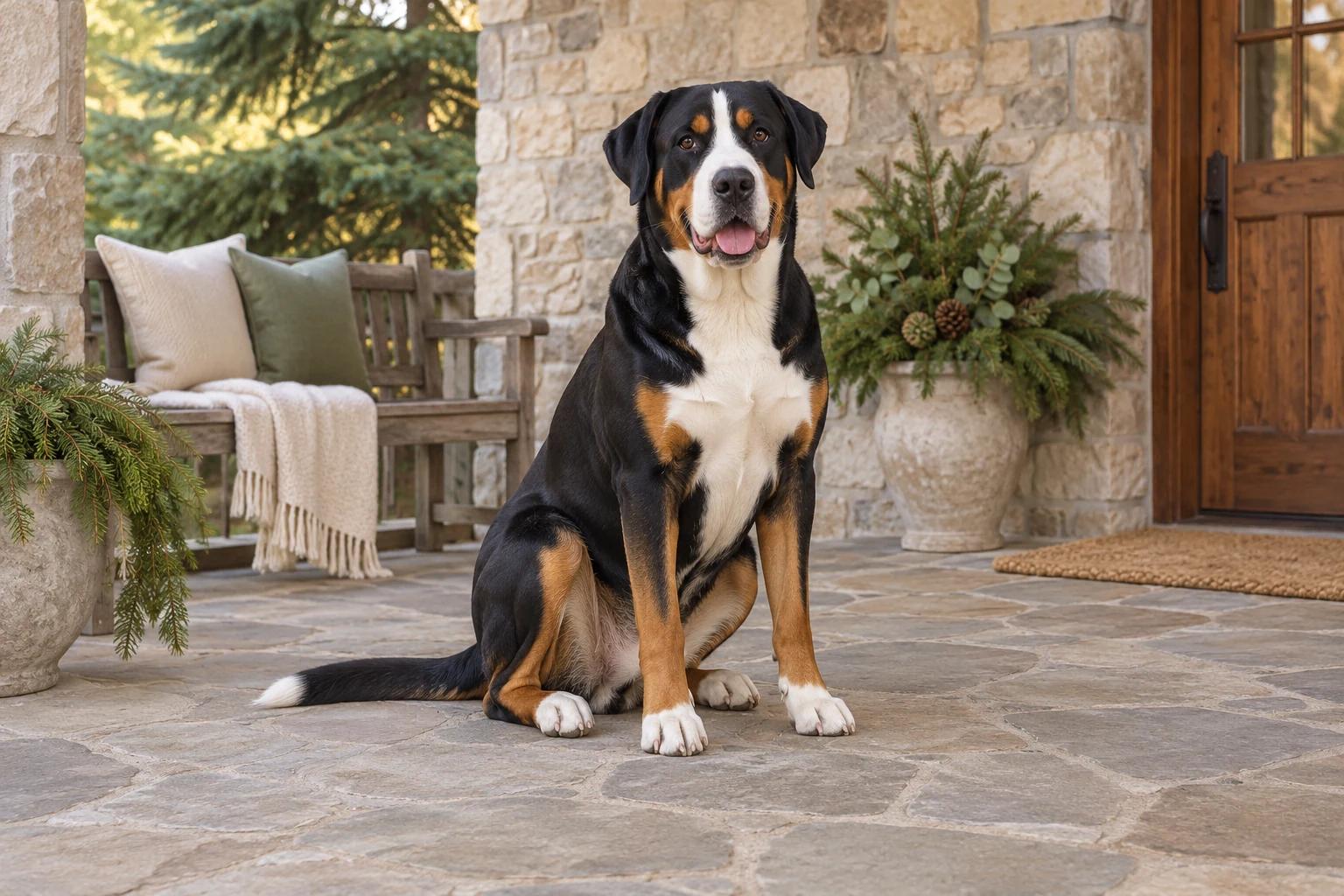
Explore the
Greater Swiss Mountain Dog
Background, care, and everyday considerations.
View breed profile →The Greater Swiss Mountain Dog vs Labrador Retriever choice brings together two substantial dogs, but not two interchangeable lifestyles. The Swissy's imposing build and the Labrador's familiar sporting outline are only the beginning. For a useful comparison, look at physical handling, the activities you want to share, and the space a dog will occupy in your daily routine.
A Labrador is not simply the smaller option, and a Swissy is not simply a larger Labrador. Meet adults, talk about ordinary days, and compare your plans with the needs of the individual dog.
Greater Swiss Mountain Dog vs Labrador Retriever: Size first
The size references in the Greater Swiss Mountain Dog profile list males at 115–140 pounds and females at 85–110 pounds. The Labrador Retriever profile lists 65–80 pounds for males and 55–70 pounds for females. These ranges describe a substantial difference in the typical handling commitment, not a prediction of a particular puppy's final weight.
This difference between Greater Swiss Mountain Dog and Labrador Retriever size matters most when plans go wrong. Who can help if the dog cannot use the usual entrance? How will it travel to an appointment? Can your boarding arrangement accommodate the actual adult dog rather than just the breed name on a form?
Measure the vehicle space, sleeping area, and route between them. With a Swissy, especially, do not depend on casually lifting an adult as your everyday solution. With a Labrador, do not mistake a smaller reference range for a dog that requires no handling preparation. Both deserve a plan based on the people who will actually provide care.
Consider what you want an active afternoon to look like
The AKC's Swissy overview introduces a strong working dog with a background in several farm tasks. Its Labrador overview presents an outgoing, spirited companion. Those broad descriptions help explain why owners are drawn to them, but neither provides a ready-made exercise schedule.
The Labrador profile emphasizes an active daily life and a high interest in play and learning. If your ideal partnership includes regular training games and purposeful outings, that is worth exploring with Labrador caregivers. The Swissy profile also calls for activity and mental engagement; its heavier build is not a reason to assume that a quiet garden will meet every need.
Make your proposed activities specific. “Outdoorsy” could mean a gentle neighborhood walk, a demanding trail, or a game in the garden. Explain the actual outing to a breeder or rescue and ask how the candidate dog has handled something comparable. Consult a veterinarian about physical suitability rather than inferring readiness from a working or sporting label.
Think about momentum, not only manners
A greeting at the door, a turn in a narrow corridor, and a quick movement toward a smell can feel different with dogs of different builds. When considering a Labrador Retriever vs Greater Swiss Mountain Dog, watch everyday movement rather than focusing only on a posed meeting.
Ask to see how the caregiver attaches a lead, approaches a doorway, and brings the dog into a shared room. Note the amount of space the pair uses. The lesson is not that one breed is unruly. It is that the same unfinished skill can have a different practical effect when a much heavier dog performs it.
Plan to teach useful positions before you need them in a crowd. A place to wait while someone puts on shoes can be more helpful than a long list of tricks. Choose cues everyone can remember and make sure the person covering a late workday knows the routine too.
If you cannot comfortably handle the adult dog, address that before placement. Equipment is part of preparation, not a substitute for training or a guarantee that strength will never matter.
Short coats still belong in the care plan
Both profiles describe short coats, which can be appealing if you do not want a long-haired dog. Yet short hair does not erase brushing, cleaning, nail care, or the need to teach comfortable handling. Ask to see the care routine for each dog you meet.
For the Swissy, work out where a large dog can stand or lie while you reach both sides. For the Labrador, consider the same setup and the cleanup associated with the outings you plan to share. A muddy walk creates a practical task regardless of the coat's length.
Before buying equipment, ask the current caregiver which tools the dog already accepts. Put a washable surface near the entrance and decide where damp towels will go. These details may sound minor until grooming and cleaning become part of a busy evening.
Decide which compromises you would willingly make
Choosing a Greater Swiss Mountain Dog or Labrador Retriever means choosing responsibilities as well as appealing qualities. List the changes each candidate would require: vehicle arrangements, help with outings, space for resting, time for activities, and access to training support.
Separate manageable changes from promises you are unlikely to keep. Buying a suitable bed is a one-time adjustment. Finding time for daily outings is an ongoing commitment. If your plan depends on a major change to your work schedule, settle that before bringing a dog home.
Ask the breeder or rescue to describe what might make the placement difficult. A useful conversation includes uncertainties and support, not just positive adjectives. For an adult dog, request examples from its present routine. For a puppy, ask about the adults in its background without treating their behavior as a guarantee.
The breed quiz can help you organize your priorities. If Swissy club activities interest you, the article on pack hikes and title events explains why an organized working event is different from a casual walk. You do not need to pursue that activity to enjoy a Swissy companion.
FAQ
Is a Swissy just a bigger Labrador?
A Greater Swiss Mountain Dog is not simply a larger Labrador Retriever. The breeds have different backgrounds and physical profiles. Size is an important practical distinction, but you should also compare the individual dogs' routines, interests, and handling experience instead of expecting the same temperament in a larger body.
Which is easier to fit into a smaller vehicle?
The Labrador's reference size is smaller, but vehicle fit should be checked for the actual dog and its travel arrangement. Measure usable space and consider access, luggage, and secure transport rather than deciding from the outside dimensions of the car.
Should I choose the Labrador if I like training?
A Labrador is worth exploring if you enjoy an active, training-oriented routine, but a Swissy can also participate in learning and shared activities. Ask caregivers for examples of what motivates their dogs and how much daily practice their routines involve.
Sources behind this article
Article source checked: November 16, 2026. Source checked 2026-11-16
Keep reading

Affenpinscher vs Brussels Griffon: Everyday Differences
Read article →