Greater Swiss Mountain Dog Temperament in Daily Life
Explore Greater Swiss Mountain Dog temperament through company, greetings, alertness, learning, and useful questions about individual dogs.
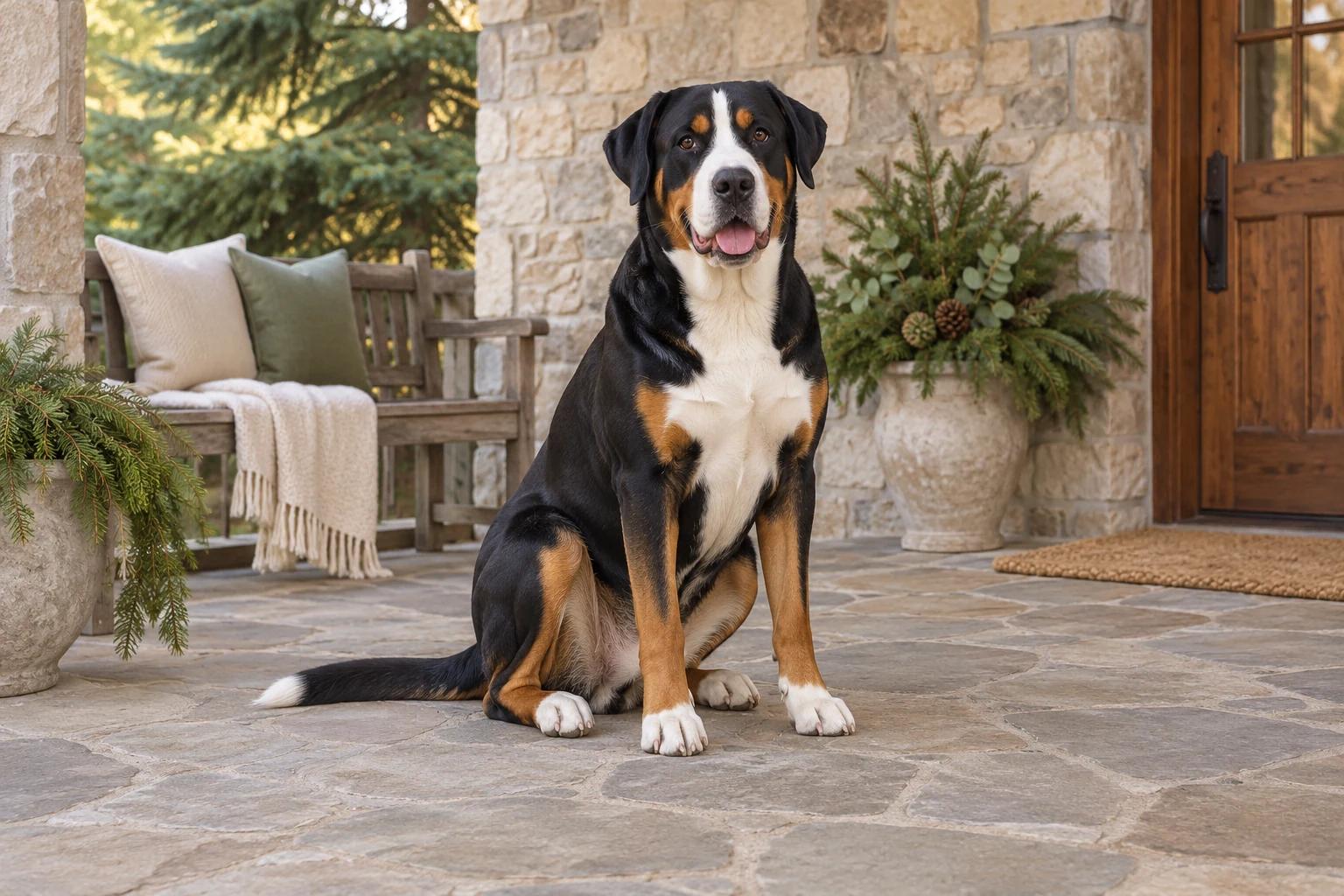
Explore the
Greater Swiss Mountain Dog
Background, care, and everyday considerations.
View breed profile →Greater Swiss Mountain Dog temperament is often introduced with words such as faithful, confident, and alert. Those words become useful only when you connect them to everyday life. What happens when someone arrives? How does a dog join household activities? Can you guide its substantial body through a busy entrance? Understanding a Swissy means looking beyond its striking outline to the interactions you will share repeatedly.
The breed's size makes small habits important. A manageable greeting or a clear way to move past someone in a hallway may matter more to your daily life than an impressive trick.
Greater Swiss Mountain Dog temperament: Watch the situation
The GSMDCA temperament directive describes alertness and willingness to work with a handler, while acknowledging different responses to strangers. It is written for judges and mentors, so its ideal should not be mistaken for a promise about every household dog.
Use that distinction when you visit a breeder or rescue. You are not trying to decide whether a dog performs the breed description perfectly. You are trying to understand what it does in the situations your home will present.
Ask about an ordinary arrival, an unfamiliar visitor, and a person the dog knows well. Those three examples can reveal more than a single energetic greeting. Request a description of what happens after the first excitement, including whether the dog returns to its previous activity or needs help settling.
Greater Swiss Mountain Dog personality and shared space
The AKC overview characterizes the Swissy as a strong, dependable worker. In a home, it is worth translating your hopes for companionship into something observable. Do you want a dog nearby while you read, a partner for regular training, or a companion on outings? Explain that picture to the caregiver.
A dog can enjoy being in the same room without wanting constant physical contact. Leave room for different ways of sharing space. Set up a resting place near household activity that does not block the route between rooms, then notice where the dog chooses to settle.
Think about the places where people congregate. A kitchen doorway may become crowded when several adults are cooking. A resting dog beside the coat rack may be disturbed every time somebody leaves. Rearranging furniture can be more useful than repeatedly asking a large dog to move out of the same awkward location.
These are practical layout choices, not tests of affection. The aim is to make ordinary company easy for everyone.
Greetings need an arrangement, not an audience
A Swissy's substantial presence can make arrivals feel busy even when the dog is simply interested. Decide how you will manage the entrance before inviting visitors to improvise. Where will bags go? Who will handle the dog? Is there somewhere comfortable to wait away from the opening door?
Practice the arrangement during quiet moments. A guest arriving after a long journey is not the ideal person to teach the routine from scratch. Give visitors a brief explanation before they enter, and allow the dog space rather than encouraging everyone to approach at once.
Avoid asking strangers to prove the dog is confident by touching or crowding it. If the dog appears uncomfortable, pause the interaction and consult an appropriate professional about recurring difficulties. A breed label is not a reason to dismiss an individual dog's response.
When meeting a potential adult companion, ask whether its current greeting arrangements would work in your own entrance. A routine that is effortless in an open farmhouse may need adjustment in a shared corridor.
Greater Swiss Mountain Dog characteristics during learning
The practical value of willingness to work with people depends on the skills you actually teach. Choose a few routines that give the dog clear information: where to stand while the lead is attached, how to move to its resting area, and what to do while someone passes through a doorway.
Use reward-based instruction and seek a trainer who is comfortable working with large dogs. Describe the situation you want to improve rather than asking for a vague transformation into a better-behaved dog. A specific task makes progress easier to recognize.
Keep household instructions consistent. If one person invites exuberant jumping and another objects, the dog faces a confusing pattern. Discuss the rules in advance, including how visitors and temporary caregivers should behave.
It can help to record a short description of one successful interaction. What did the person do first? Where was the dog? What happened next? Repeating the useful arrangement gives you a clearer starting point than comparing your Swissy with another owner's polished demonstration.
Observe Greater Swiss Mountain Dog behavior without labels
When something is difficult, describe it before naming it. “Stands by the window when a delivery arrives” gives you a scene to examine. “Dominant” or “dramatic” does not explain what happened or what would make the situation easier.
Look at the setting. Can the dog rest somewhere away from the busiest window? Does the household change pace abruptly when somebody arrives? Is the same difficulty happening everywhere or only in one place? These questions can help you give a trainer useful information without attempting to diagnose the cause yourself.
A sudden behavior change, unusual reluctance to participate, or apparent discomfort warrants a conversation with your veterinarian. Do not assume that a new problem is simply the breed showing its personality.
For long-term planning, ask the current caregiver what the dog finds easy and what still needs support. An honest account of both is more useful than an unqualified assurance that the dog is calm.
Decide whether the relationship fits your day
Write down the time you can offer for outings, learning, care, and company. Then consider the less obvious details: who manages arrivals, who covers an unexpected late evening, and whether each regular handler is comfortable with a dog of this size.
Use the Greater Swiss Mountain Dog profile to connect personality with broader care requirements. The breed quiz can help organize your priorities. If structured working activities appeal to you, read about Swissy pack hikes separately; enthusiasm for the breed does not mean you must pursue a title.
FAQ
Will every Swissy greet strangers enthusiastically?
Not every Greater Swiss Mountain Dog greets strangers enthusiastically. The breed club recognizes variation in responses to unfamiliar people. Ask about the individual dog's experience and allow introductions to proceed without pressure. A general breed description cannot establish how one dog will respond to every visitor.
Does a calm-looking adult still need training?
A calm-looking Greater Swiss Mountain Dog still needs to learn your household routines. Teach and practice the skills that make daily handling clear, including entrances, lead attachment, and moving to a resting place.
How can I assess temperament at a visit?
To assess a Greater Swiss Mountain Dog's temperament, ask for examples from ordinary life and observe familiar routines where appropriate. Discuss settling, handling, visitors, and outings. One meeting is only a sample, so combine your observations with the caregiver's history rather than making a decision from the greeting alone.
Sources behind this article
- GSMDCA: Temperament Directive to Judges and Breed Mentors ↗
- American Kennel Club: Greater Swiss Mountain Dog ↗
Article source checked: November 16, 2026. Source checked 2026-11-16
Keep reading

Airedale Terrier Temperament: What Everyday Life Can Feel Like
Read article →