Grand Basset Griffon Vendeen grooming: a home routine
Build a practical GBGV coat-care routine, from after-walk checks and facial hair to tools, shedding and questions for your groomer.
Explore the
Grand Basset Griffon Vendéen
Background, care, and everyday considerations.
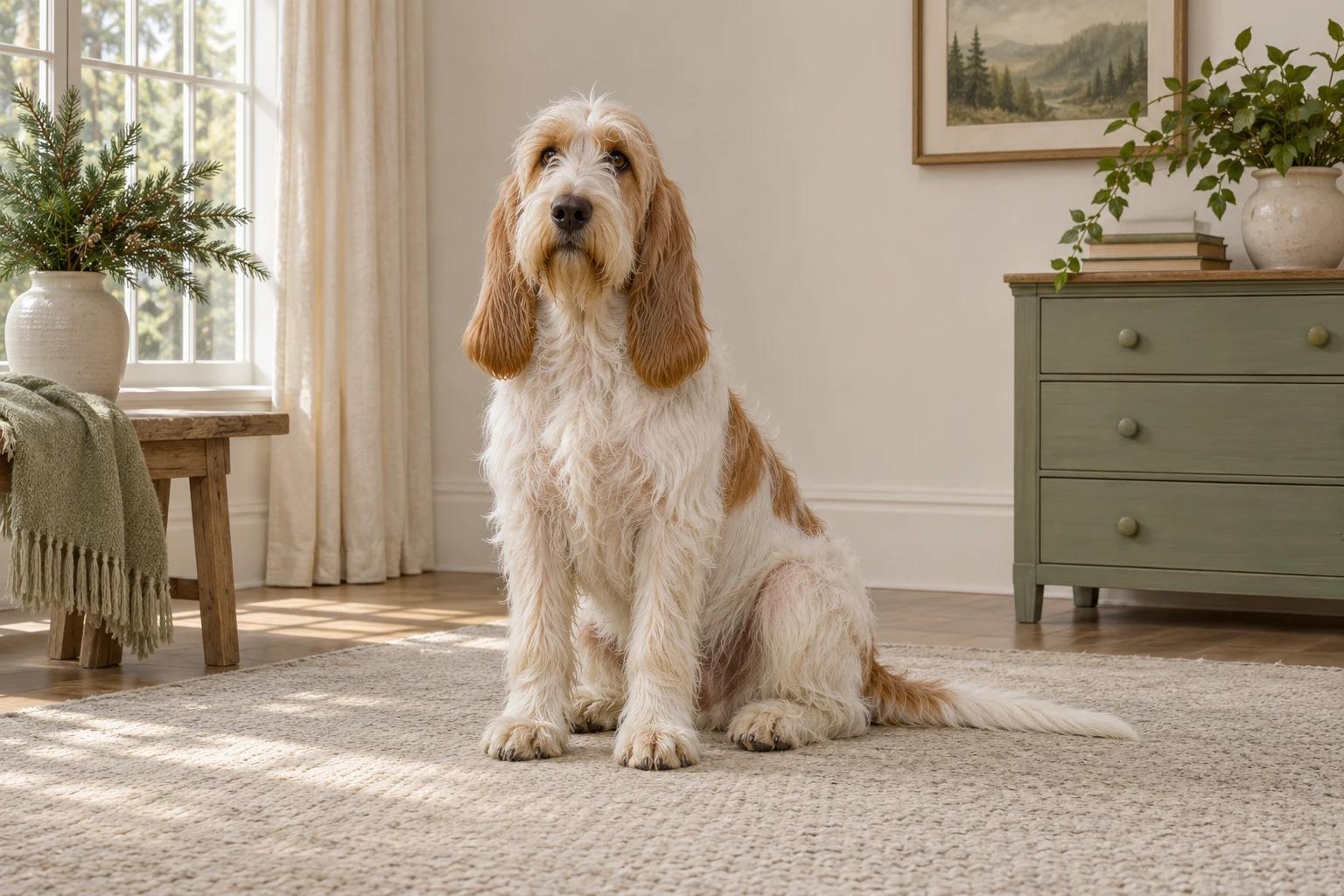
View breed profile →Grand Basset Griffon Vendeen grooming is about keeping a rough-coated hound manageable, not turning the coat into a smooth salon finish. The UKC standard describes a hard, flat coat rather than a silky or woolly one. That gives you a useful starting point when discussing tools and expectations with a groomer familiar with the breed.
The daily practical question is simpler: what did today's outing leave in the coat, and can you check it without a struggle? A sensible routine answers that before a small tangle becomes a frustrating appointment.
Grand Basset Griffon Vendeen grooming starts with a coat check
Begin in good light on a stable, nonslip surface where both you and the dog are comfortable. Look over the coat before reaching for a tool. Check the areas that contacted the ground or vegetation on the walk and notice anything that seems different from the dog's normal appearance.
Think of this as a short inspection, not a requirement to complete every care task in one sitting. If the dog is restless after arriving home, a calm pause may work better than immediately starting a long session. Have everything ready so the dog is not repeatedly repositioned while you search for a comb.
The breed profile describes a wiry coat and regular shedding. A rough texture is part of the picture; debris, tightly caught hair and uncomfortable handling are not goals to preserve for a natural look.
Build a small, understandable tool kit
Ask a breed-experienced groomer to demonstrate suitable brushing and combing tools on your own dog. Request an explanation of what each item does and which areas you should avoid with it. Buying every tool marketed for wiry coats is less useful than confidently using a small set.
Have the groomer show you how to assess the work afterward. A coat can look tidy on the surface while you are uncertain whether an area underneath has been checked. Ask for a practical demonstration rather than trying to force a comb through resistance.
Store tools together with a towel and the care instructions you have been given. If several people help, label any products so nobody substitutes something simply because the bottles look alike. Grand Basset Griffon Vendeen coat care becomes easier to maintain when the next person can understand the same routine.
Do not experiment with sharp tools around a moving dog's face. If a tangle is tight, close to the skin or uncomfortable to handle, leave its removal to an appropriate professional.
Give the face its own quiet moment
This breed's conspicuous facial hair and long ears deserve attention in the care conversation. Ask your groomer which checks you can comfortably perform at home and where professional work begins. It is reasonable to request a demonstration before accepting a complicated routine.
After food or water, look at whether the facial hair needs a gentle wipe and drying. Keep that separate from a full grooming session. A small towel stored near the relevant area makes a brief practical task easier to remember.
If the dog avoids having its head handled, do not interpret that as a reason to hold more tightly. Pause and consider whether the task, position or duration is difficult. A trainer can help with cooperative handling practice; a veterinarian should assess signs of discomfort or a new change in tolerance.
The aim is a dog that can participate in ordinary care, not a perfectly staged photograph at the end of every meal.
Make an after-walk routine that matches the route
The AKC describes the GBGV as a busy scenthound. A muddy verge and a dry pavement outing create different cleanup jobs, so let observation guide the work rather than using an identical lengthy routine after every trip.
Keep a towel near the entrance and check the parts of the coat that picked up visible material. If you cannot remove something easily and comfortably, ask for help rather than tugging. Note repeated trouble spots and discuss them at the next grooming appointment.
For an especially messy outing, decide which tasks must happen now and which can wait for a calmer session. That does not mean leaving the dog uncomfortable. It means avoiding an ambitious full makeover when a small, necessary cleanup is the actual job.
Bathing products and frequency should be discussed with your groomer, with skin concerns referred to your veterinarian. Follow product directions instead of using household cleaning products or improvising a stronger mixture.
Shedding and household maintenance are separate jobs
Grand Basset Griffon Vendeen shedding belongs in the cleaning plan. Grooming and cleaning serve different purposes: one maintains the dog's coat, while the other removes hair already left on furnishings and floors. More aggressive brushing is not a sensible substitute for household cleaning.
Choose washable covers for the resting places you actually use and keep a spare ready while one is being washed. A small cleanup kit in the car may be more useful than trying to keep an active hound permanently spotless.
Record what is normal for your own dog across its routine. If you notice a new coat change, discomfort or an unusual pattern of hair loss, ask your veterinarian rather than treating it as an ordinary breed feature. This guide does not diagnose skin or coat conditions.
What to ask at the first grooming appointment
If you are learning how to groom a Grand Basset Griffon Vendeen, arrive with questions and a description of your actual week. Mention the places you walk, the handling tasks the dog already accepts, and how much work you can realistically maintain between appointments.
Ask the groomer to explain any proposed trimming or coat technique before proceeding. Separate an appearance preference from a practical care need. There is no reason to agree to an unfamiliar procedure merely because it is offered as a standard package.
Request a short home plan with priorities. For example, it might identify the areas to check after outings, tools to practice with, and tasks to leave for the next appointment. A useful plan should be understandable enough that you can explain it back.
The breed quiz can help place this care commitment beside your other preferences. For a different aspect of the breed, read our article about its physical design, which is not a grooming tutorial.
FAQ
Should a GBGV coat feel silky after grooming?
The UKC standard describes a hard coat, not a silky one. Discuss the dog's natural texture and your practical care goals with a breed-experienced groomer rather than treating softness as the measure of a successful appointment.
Can I remove a tight mat with scissors?
Leave tight, skin-close or uncomfortable tangles to a professional. Ask your groomer to show you appropriate home tools and how to recognize when a task is no longer suitable for a routine home session.
Does grooming eliminate hair around the house?
No. Plan for regular shedding and household cleaning as well as coat care. Washable covers, a spare towel and a workable cleanup routine are more realistic than expecting grooming to keep every surface permanently hair-free.
Sources behind this article
- American Kennel Club: Grand Basset Griffon Vendéen ↗
- United Kennel Club: Grand Basset Griffon Vendeen standard ↗
Article source checked: November 15, 2026. Source checked 2026-11-15
Keep reading

Affenpinscher Grooming: A Practical Coat-Care Routine
Read article →