Gordon Setter vs Irish Setter: Beyond Coat Color
Compare Gordon Setter vs Irish Setter working character, introductions, feathered-coat care, and practical fit beyond black-and-tan or red.
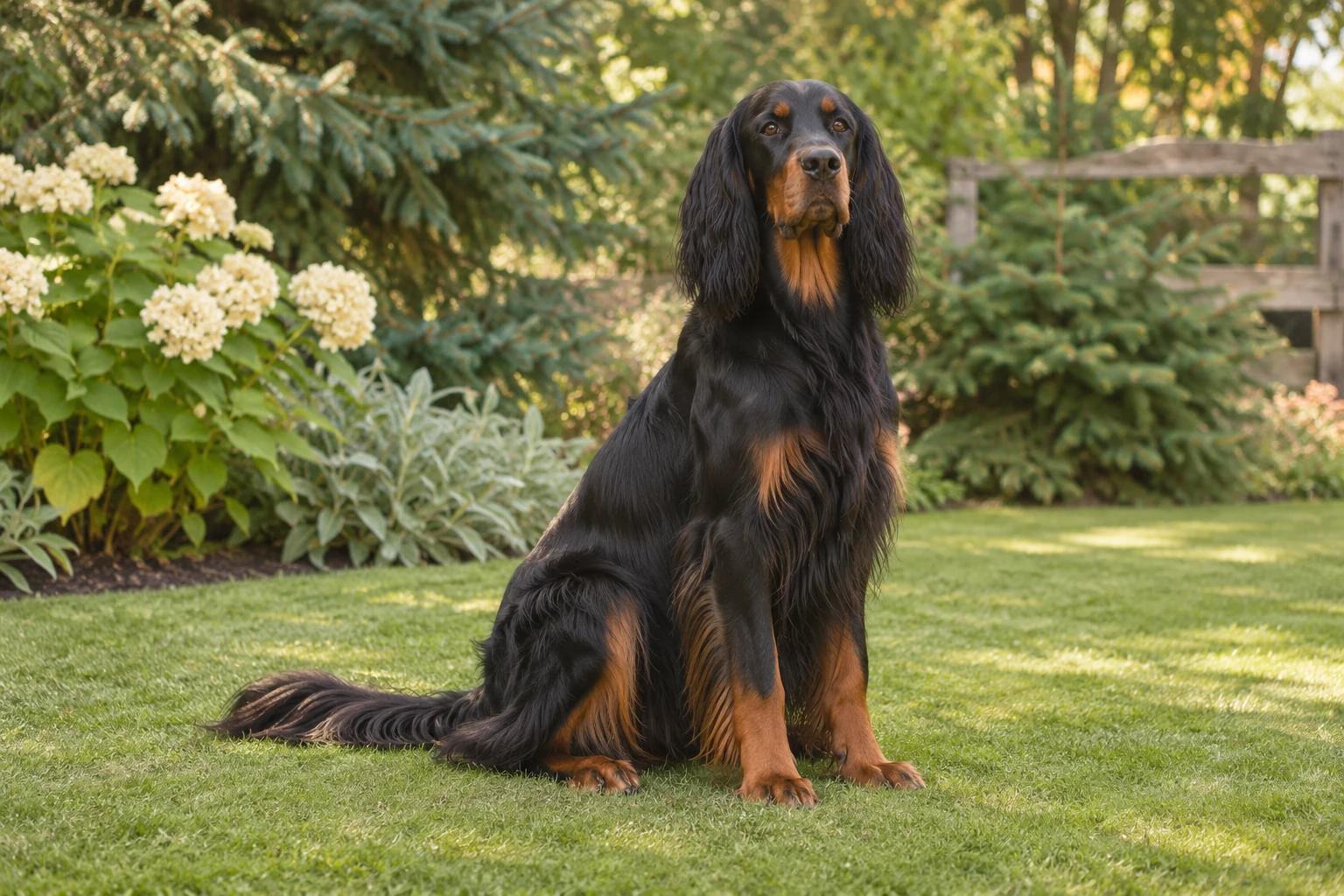
The Gordon Setter vs Irish Setter choice is easy to picture and harder to make well. The Gordon's black-and-tan coat and the Irish Setter's red coat provide an immediate visual distinction. But the more useful comparison concerns how each individual dog approaches outings, new people, handling, and quiet time.
Both are sporting dogs, so neither should be selected as a decorative alternative to an active companion. Read the Gordon Setter profile and Irish Setter profile, then use their shared demands and potential differences to plan a more informative visit.
Gordon Setter vs Irish Setter: two working descriptions
The UKC describes the Gordon as a sturdy pointing dog with a generally good-natured character. Its Irish Setter standard emphasizes an energetic, friendly dog with an exuberant personality. The Gordon standard and Irish standard describe breed ideals and context, not a prediction of how two particular puppies will behave.
The AKC also presents the Gordon as athletic and determined outdoors, with an affectionate domestic side. That breed overview is a useful reminder not to mistake a substantial appearance for a low-activity temperament.
When deciding between a Gordon Setter or Irish Setter, ask what the dog actually does on an ordinary outing. Which sights or scents hold its attention? How does the caregiver regain that attention? What happens when it is time to leave? These details tell you more about the partnership you would be taking on than a contest over which setter is supposedly more sensible.
Introductions may feel different, but assess the dog
The Atlas profiles describe greater openness to unfamiliar people for the Irish Setter, while the Gordon profile leaves more room for a measured introduction. Use that as a topic to explore rather than a reason to demand a particular response.
For the Gordon candidate, ask whether the dog prefers to watch a new person before approaching. For the Irish candidate, ask how greetings are kept manageable when excitement rises. Then remain open to finding that the actual dogs differ from those broad expectations.
A visitor routine should work for everyone involved. Describe whether your household sees occasional quiet guests or frequent arrivals. Ask the caregiver to show the established arrangement if practical. You are looking for a routine you could continue, not staging a test of sociability.
Do not translate an outgoing greeting into automatic compatibility with children, other dogs, or smaller animals. Discuss each relationship separately, including supervision and spaces where the animals can be apart. Breed comparisons cannot settle individual introductions.
Shared activity needs narrow the choice
Both profiles place activity needs toward the higher end of their scales. The practical question is not which setter lets you avoid engagement. It is what kind of activity and teaching you would enjoy sustaining with the dog you choose.
Consider an ordinary week in pieces: routine walks, opportunities to explore safely, short learning sessions, and time to settle afterward. Do not build the comparison around a single impressive outing that happens only occasionally. Ask which parts of the current dog's routine are essential and which are flexible.
If you are interested in a sport or field activity, talk to an appropriate club or trainer about an introduction suited to the dog. If you are not, say that plainly and discuss other appropriate outlets. A hunting background offers context; it does not require every owner to pursue the same hobby.
For either setter, plan physical management around roads and other hazards. A promising response to a cue at a first meeting is not evidence that the dog can immediately be given freedom in unfamiliar surroundings.
Feathering makes coat care a shared responsibility
The difference between Gordon Setter and Irish Setter appearance is striking, but both UKC standards describe feathering on the ears, legs, and underside. Ask how the caregiver checks those areas after outings and which maintenance tasks are done at home versus professionally.
A simple demonstration can be revealing. Have the caregiver show the tools used and identify an area that needs particular attention. Ask what happens after the sort of walk you expect to take, whether that involves wet grass, dusty paths, or ordinary neighborhood pavements.
Do not choose solely from a freshly prepared photograph. A coat's presentation at a show or immediately after grooming is not the whole maintenance story. Ask to understand the routine between polished moments, including the dog's comfort with handling.
The Gordon's specific tan pattern is covered separately in the marking-map article. It is useful appearance reading, but the placement of markings should not become evidence about personality or working ability.
Compare the whole physical setup
These are substantial dogs, and both deserve an adult-sized plan. Look at resting space, transport, doorway handling, and the person responsible for routine walks. Avoid assuming that a finer-looking outline means a dog will be easier to manage.
For an adult, request current measurements for equipment fitting. For a puppy, ask about adult relatives and leave room for variation rather than buying around a hoped-for minimum. Measure the available space in your car and home before deciding that one candidate will fit simply because its photograph looks smaller.
Handling confidence also deserves its own check. Can you comfortably manage the equipment while opening a gate? Can another caregiver follow the same routine? A dog with established lead skills may present a different practical picture from an untrained youngster, regardless of which setter it is.
Use comparable evidence, then choose your preference
An Irish Setter vs Gordon Setter visit is most useful when you bring the same short set of topics to each caregiver: ordinary activity, greetings, coat care, handling, and settling. You are not asking for identical answers. You are making sure you do not investigate one candidate carefully while choosing the other on charm alone.
After each visit, write one thing you enjoyed, one commitment you would need to make, and one unanswered question. Keep observations separate from impressions. “Waited while the lead was attached” is evidence; “seems like my kind of dog” is a preference. Both matter, but they play different roles.
The breed quiz can help you articulate those preferences. The final choice should feel appealing and workable: a dog whose company you enjoy, with care and teaching demands you understand rather than minimize.
FAQ
Is a Gordon Setter less active than an Irish Setter?
Do not choose either breed as the low-activity option. Both Atlas profiles indicate substantial activity needs. Ask about each dog's actual routine, response to outings, and ability to settle rather than assigning a universal ranking.
Which setter is more outgoing with strangers?
The Irish Setter profile describes a stronger general tendency toward openness, but individual introductions still vary. Observe the actual dog and ask how greetings are managed. A friendly reputation is not a guarantee about a particular encounter.
Is coat care very different between the two setters?
The colors differ, but both have feathered areas that need attention. Compare the individual coats, the usual home routine, and any professional grooming arrangements. A recent photograph cannot show the full maintenance commitment.
Sources behind this article
Article source checked: November 15, 2026. Source checked 2026-11-15
Keep reading

Affenpinscher vs Brussels Griffon: Everyday Differences
Read article →