Goldendoodle Grooming: Look Beneath the Fluff
Make Goldendoodle grooming manageable with coat checks, brushing demonstrations, realistic trim choices, and a clear groomer handover.
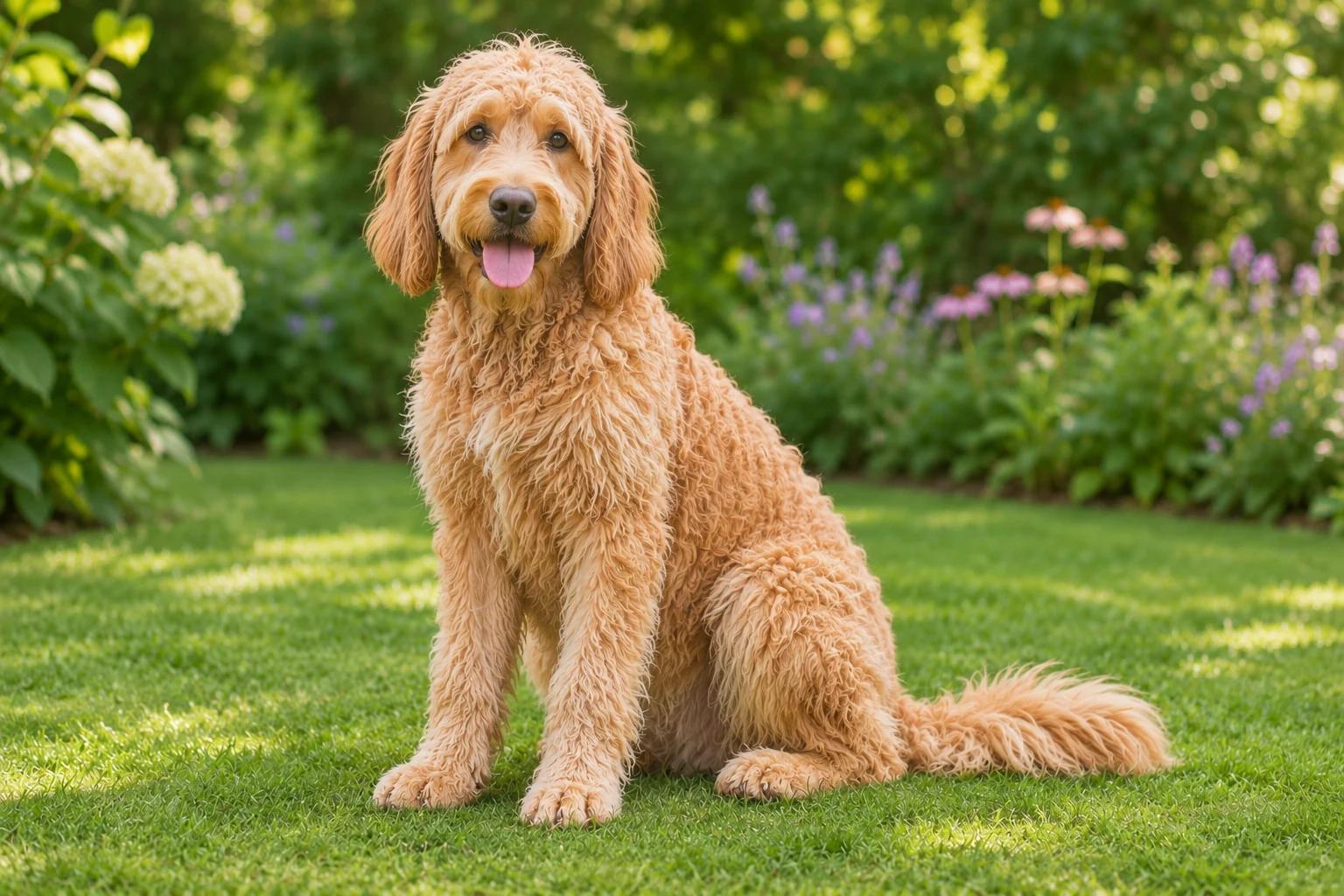
Goldendoodle grooming starts beneath the outline you see in a photograph. A fluffy finish can look tidy while the coat needs closer attention, so the useful question is not simply “Does my dog look brushed?” It is “Can I check the coat comfortably and recognize when I need help?”
The Goldendoodle profile sets out the broader care commitment. For grooming, build your plan around this dog's coat and the length you can maintain. A haircut is only one appointment; the work between appointments deserves just as much thought.
Goldendoodle grooming: brushing and checking are partners
The Goldendoodle Association of North America recommends following brushing with a metal comb to detect tangles below the surface. Ask a groomer to demonstrate this on your dog, including how to work without dragging through resistance. The principle is to check the result, not merely count how long you have held a brush. GANA's grooming FAQ explains that distinction.
Try dividing your record into areas: body, legs, chest, tail, and places the groomer identifies for extra attention. Mark an area complete only when you know what you checked. If someone else helps with care, that small record prevents both of you from brushing the easiest part and overlooking the same awkward spot.
This is especially useful when the coat looks different after a trim. Ask the groomer to show you how much of the home technique changes with the new length. Do not assume that a successful routine on a short coat will work unchanged after it grows out.
Choose a maintainable finish before choosing a style name
A photograph can start a grooming conversation, but it cannot communicate every detail. Point out what you like: a rounded outline, a particular face length, or legs that do not look overly full. Then ask what keeping that appearance would require at home.
Separate preference from feasibility. You might like a longer finish but have limited time for thorough checking. Tell the groomer that openly. Ask for an alternative you can maintain rather than agreeing to the picture and hoping the brushing will somehow fit your week.
GANA's standard describes curly, wavy, and straight coat types. That variety is a reason to inspect the dog in front of you, not treat every Goldendoodle as the same grooming project. The association's standard describes its intended coat types, not a promise about an individual puppy's eventual maintenance.
Make the tools earn their place
Before buying a drawer full of equipment, ask which tools are appropriate for your dog's coat and how to use them. The AKC's home-grooming guidance similarly recommends discussing tool choice with a groomer or veterinarian. It also advises gentle work through the coat and professional help for problems beyond routine care. Read the AKC guide.
A useful demonstration answers three practical questions. What should the tool feel like when it moves normally? What does resistance mean? When should you stop? If you cannot reproduce the motion comfortably, ask the groomer to watch you try a small section before you leave.
Store tools together with a note about their purpose. A brush that is easy for one caregiver to use may be confusing to another. Keeping the routine simple is more valuable than owning equipment whose technique no one has learned.
Do not use scissors to cut close tangles away from skin. Ask a professional to assess them. If the skin looks sore or the dog appears painful, contact your veterinarian rather than turning the grooming session into an attempt at treatment.
Teach the appointment before needing the full appointment
GANA suggests getting to know a groomer before the first full haircut. Ask the salon how introductory visits work, what preparation is appropriate, and which requirements your puppy needs to meet. Your veterinarian can advise about timing and exposure precautions.
At home, separate handling practice from finishing a large grooming task. You may simply invite the dog onto a non-slip resting spot, briefly show a tool, reward calm participation, and finish. On another occasion, practice a comfortable touch in an easy area. The point is to build familiarity rather than accomplish the entire haircut process in miniature.
Keep the groomer informed about the dog's response. “Pulls away when the left front foot is touched” is more helpful than “doesn't like grooming.” Concrete observations let the professionals decide what to check and how to organize the visit.
Coat care is not measured by the hair on your clothes
Goldendoodle shedding and Goldendoodle coat care are different questions. Ask what loose hair the caregiver has actually observed, but do not use a lightly covered sofa as evidence that brushing is unnecessary. Your maintenance plan should follow the coat's condition and professional guidance.
For a puppy, keep expectations open as the dog develops. Record what is happening now rather than insisting the coat must behave like a photograph of an adult relative. If the routine becomes harder to complete, discuss a change in technique or trim instead of simply brushing harder.
The guide to Goldendoodle generation labels explains ancestry terminology separately. You do not need to solve a generation label before asking a groomer to examine a tangle or demonstrate a comfortable coat check.
Leave the salon with a usable plan
Before the appointment, write down your priorities and any problems since the last visit. Ask what the quoted service includes and what might change after the groomer examines the coat. Agree on how they should contact you before making a material change to the proposed finish.
Afterward, ask which area needs the closest attention at home and how you will know the routine is working. Request a suggested next appointment based on your dog's coat rather than borrowing someone else's calendar. A missed or shortened home session should prompt an honest adjustment, not a last-minute struggle immediately before the salon visit.
Learning how to groom a Goldendoodle is largely learning this partnership: observe accurately, do the parts you can manage, and communicate the rest. If you are still comparing dogs, the breed quiz can help make your tolerance for grooming a visible part of the choice.
FAQ
Does a fluffy Goldendoodle coat mean it is tangle-free?
No. Appearance alone does not establish the condition underneath. Ask a groomer to show you how to check through your dog's coat and how to recognize resistance that needs professional attention.
Should every Goldendoodle have the same haircut?
No. Choose a finish that works with the individual coat and the maintenance you can provide. Explain what you like about a reference photograph, then discuss realistic alternatives with the groomer.
What should I bring to a grooming appointment?
Bring notes about tangles, handling difficulties, products used, and the home routine you can sustain. A photograph can illustrate your preferred appearance, but the groomer still needs to assess the coat before agreeing to a finish.
Sources behind this article
Article source checked: November 15, 2026. Source checked 2026-11-15
Keep reading

Affenpinscher Grooming: A Practical Coat-Care Routine
Read article →