Glen of imaal terrier temperament: daily-life questions
Explore Glen of Imaal Terrier personality through everyday routines, companionship, outdoor interests, and thoughtful introductions.
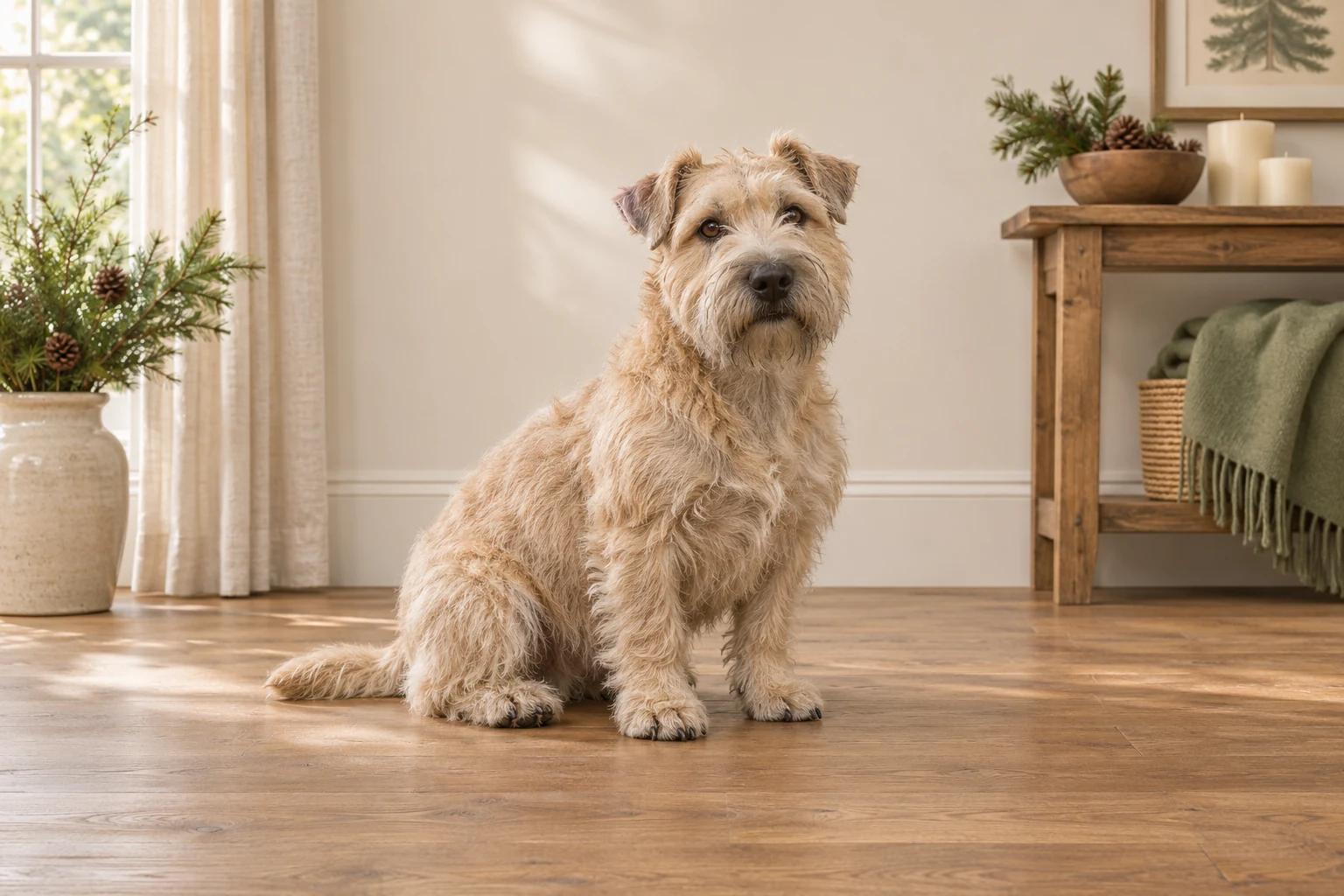
Glen of imaal terrier temperament is best understood without treating “terrier” and “calm” as opposites. The Glen can have a comparatively measured manner while retaining a working terrier's purpose and interest in its surroundings. Choosing one means getting to know that combination in an individual dog, not assuming a relaxed introduction tells the whole story.
The AKC overview describes the breed as less excitable than many terriers while still spirited. That contrast is a useful starting point for questions about daily life, rather than a promise of an effortless companion.
Glen of imaal terrier temperament beyond a first meeting
A meeting in a quiet sitting room samples one situation. It does not show how the dog responds to a moving animal, a visitor at the gate, grooming, or a change in routine. Ask to hear about those ordinary moments before translating one pleasant encounter into a complete personality description.
Use neutral questions. “What does your Glen do when another dog passes the house?” invites a more informative answer than “He is friendly, isn't he?” Ask what happens next as well. A reaction matters, but so does whether the dog returns to its previous activity and what help the handler provides.
The Glen of Imaal Terrier profile puts behavior alongside care needs. Keep your own notes in similarly separate categories: company, outdoor interests, unfamiliar situations, handling, and rest. This avoids letting an appealing shaggy appearance stand in for evidence about temperament.
Glen of imaal terrier characteristics in practical terms
The UKC standard records the Glen's vermin-hunting background and describes an intelligent, active terrier. For a prospective household, the important question is how to manage opportunities and boundaries, not how to recreate historical work.
Look around your outdoor space from the dog's level. Where are the gaps, loose panels, and places where a lead could become tangled? If there are small pets in the home, discuss their housing and separation with a qualified professional before arranging contact. Do not use a breed's quiet reputation as permission to leave different animals together.
Provide activities you can supervise and finish. A search for an appropriate toy, a walk with opportunities to investigate, or a short learning game can be part of the plan. Choose what the individual enjoys rather than assuming every Glen wants the same outlet.
Avoid turning determination into a moral judgment. When a dog keeps returning to something interesting, first ask what access and rewards your setup provides. Removing the opportunity may be more useful than repeatedly declaring the dog stubborn.
What companionship looks like in your home
Glen of imaal terrier personality descriptions often sound most appealing when they suggest a dog who shares everyday life. Translate that wish into specific arrangements. Where will the dog rest during work calls? Who takes it outside? Can it be undisturbed when the household gets busy?
A dog can enjoy company without enjoying every kind of attention. Let the individual approach, and notice when it chooses to move away. Ask current caregivers which forms of interaction the dog seeks and which it merely tolerates. Those answers help visitors behave sensibly from the beginning.
Plan an accessible resting area rather than making furniture access the only route to being near people. For a low-to-the-ground, substantial dog, the layout of ordinary rooms deserves thought. Discuss mobility questions with your veterinarian instead of assuming a dog should copy whatever another breed does easily.
If children share the home, adult supervision and clear boundaries remain necessary. An affectionate description is not a safety assessment of a particular child-dog interaction.
Observe other-dog encounters without staging a test
You do not need a crowded off-leash meeting to learn something useful. Ask about previous experience with known dogs, how introductions were arranged, and which situations the caregiver avoids. If a meeting is appropriate, plan it with competent handlers and enough room to separate.
Watch for the difference between tolerating proximity and choosing interaction. Two dogs passing without greeting can be a successful outcome. A Glen does not need a large circle of canine acquaintances to satisfy a human idea of sociability.
Keep uncertainty visible in your private decision notes. “Has lived with one familiar dog” is narrower and more useful than “good with dogs.” The first statement tells you something observed; the second can encourage assumptions about unfamiliar animals and settings.
Quiet is not the same as inactive
A lower tendency to bark should not be confused with a lack of opinions or interests. Learn the actual dog's triggers and normal communication. If neighbors are close, ask about door sounds, departures, and activity outside windows rather than relying on a general breed label.
Similarly, a Glen resting during a visit may already have had an outing or may simply be resting at that moment. Ask to see the whole routine: what happens before the quiet interval, how often the dog goes out, and what engagement it receives.
Glen of imaal terrier behavior makes more sense when you can connect actions to context. Keep descriptions concrete enough that another caregiver could use them. “Waits by the back door after breakfast” is actionable; “easygoing” leaves almost everything unstated.
Separate appearance from your decision
Our article about Glen puppy markings explores appearance over time. It is a separate question from the dog's character. A preferred coat look should not outweigh the fit between your routine and the animal in front of you.
Try the breed quiz to clarify your priorities, then bring those priorities to conversations with owners, breeders, or rescue caregivers. Ask for examples that might make you reconsider, not just examples that support a decision you already want to make.
FAQ
Is the Glen of Imaal Terrier calm?
The breed is often described as less excitable than many terriers, but that is a comparison, not a promise of constant calm. Ask how an individual behaves during walks, visitors, handling, and quiet household time.
Can a Glen live with another dog?
Compatibility depends on the individual dogs and their experience. Ask for specific history and arrange introductions thoughtfully. Peaceful behavior with one familiar dog does not establish compatibility with every unfamiliar dog.
Does a quiet Glen still need activities?
Yes. Noise level and engagement needs are different questions. Plan suitable outings, shared activities, and opportunities to rest, and adjust the routine to the individual rather than using barking as an activity gauge.
What should I ask a Glen's current caregiver?
Ask about daily routines, handling, reactions to unfamiliar people and animals, favorite activities, and difficult situations. Request concrete examples and the management steps already in use so you can assess what everyday ownership would involve.
Sources behind this article
Article source checked: November 15, 2026. Source checked 2026-11-15
Keep reading

Airedale Terrier Temperament: What Everyday Life Can Feel Like
Read article →