Glen of imaal terrier grooming: the natural coat
Plan Glen of Imaal Terrier brushing, professional coat care, grooming setup, and practical maintenance between appointments.
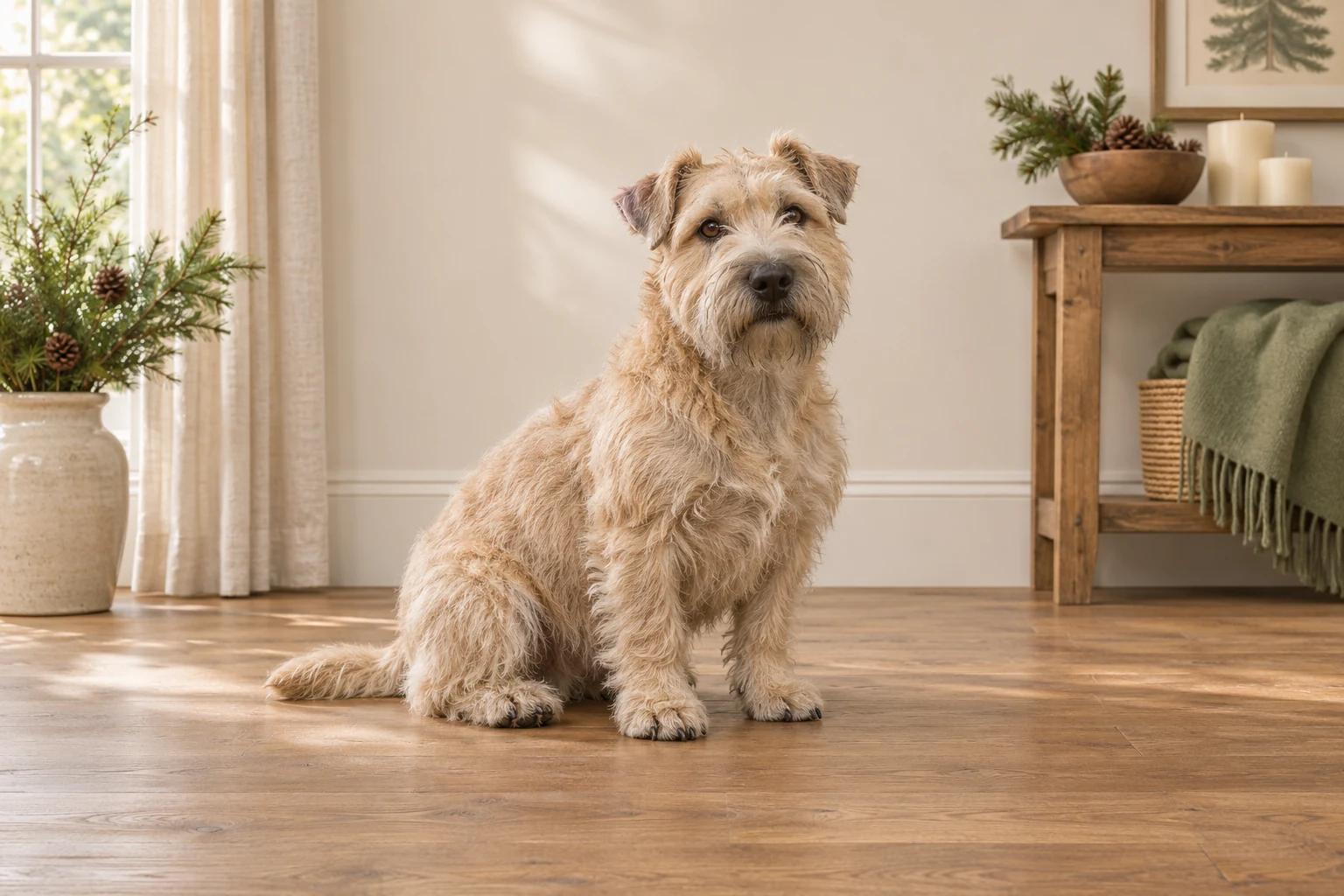
Glen of imaal terrier grooming should preserve a manageable, natural-looking coat without confusing a rough outline with a neglected one. The Glen's appearance can look informal, but coat checks, brushing, and skilled maintenance still need a place in the calendar. The useful question is what your particular coat needs between appointments, not how closely it resembles a freshly prepared show photograph.
The UKC standard describes a medium-length harsh outer coat with softer undercoat and favors a natural outline. Those are coat characteristics, not instructions to leave the dog entirely unbrushed.
Glen of imaal terrier grooming: separate the jobs
Think of care as three different tasks: checking what the dog brought home, maintaining the coat between appointments, and deciding how the coat is professionally finished. Each has its own purpose and can happen at a different time.
After an outing, check for visible dirt or material caught in the lower coat. During a planned brushing session, work systematically rather than only attending to whatever looks untidy. At a grooming appointment, discuss the finish and any areas you have found difficult.
This separation is particularly useful with the Glen's low outline. The upper coat can look presentable while the underside has had a very different journey through the garden. Make the hidden areas part of your routine without requiring the dog to tolerate an awkward position for a long time.
The Glen of Imaal Terrier profile provides the broader ownership picture. Grooming belongs alongside outings and training, not as an occasional extra when someone notices a photograph looks shaggy.
Learn the technique on your own dog
The Glen of Imaal Terrier Club of America grooming guide recommends regular brushing and describes periodic stripping. Ask an experienced groomer to demonstrate what those terms mean on your dog's coat before attempting unfamiliar techniques.
Have the demonstration answer concrete questions. How much coat should you separate at once? Where should your supporting hand rest? What should a comb pass feel like? Which areas should you leave for the professional? Watching someone finish an entire dog is not the same as learning the small movements you need at home.
Bring your existing tools to the appointment if possible. The groomer can explain what is useful, what is unnecessary, and what you should not use without further instruction. This is more economical than buying every tool mentioned in a grooming discussion and trying them in succession.
If you encounter a tight tangle, pause. Do not turn the comb into a lever or cut through hair close to skin you cannot see. Ask the groomer to address the area and show you how to avoid the same difficulty between visits.
Build a low, stable setup
Choose the working surface around the dog and the handler together. A comfortable human posture matters, but it should not require placing the dog on unstable household furniture. Use appropriate nonslip equipment and supervision, and ask for help choosing a setup if access is awkward.
Arrange light so you can see the coat you are examining. Keep the brush, comb, towel, and rewards close enough that you do not need to leave the dog unattended to fetch them. A simple, uncluttered station is easier to repeat than a complicated arrangement that takes longer to prepare than to use.
Practice entering the grooming area when no major job is planned. A brief check and an easy finish can help establish a predictable routine. If the dog is repeatedly moving away, reduce the demand and consider whether technique, position, tangles, or discomfort is involved.
Persistent discomfort or a sudden change in tolerance deserves veterinary attention. Grooming should not become a way to test whether a dog will endure pain.
Decide what “natural” means in practice
For Glen of Imaal Terrier coat care, natural does not have to mean undefined. Tell the groomer what you want to maintain and how much home work you can realistically do. Ask which parts of a requested look depend on specialist technique and which depend on frequent attention between appointments.
If you are interested in showing, say so before a coat change is made. If the dog is a companion and your priority is everyday manageability, explain that instead. A photograph can start the conversation, but the actual coat and your maintenance routine should shape the plan.
Avoid making one appointment interval into a lifelong rule. Record what the groomer did and when the coat begins to need attention again. That information supports a more useful follow-up discussion than simply asking for the same date because it worked once.
Our article about Glen puppy markings addresses appearance as a dog matures. Grooming decisions should not become an attempt to force a puppy's coat to match an imagined adult photograph.
Shedding, bathing, and the household routine
Glen of imaal terrier shedding can be modest in everyday household terms without being nonexistent. Hair removal during grooming is still part of maintenance. Do not judge the entire care requirement by the amount of loose hair visible on dark trousers.
Keep washable covers in resting areas and clean tools after use. These small arrangements make ordinary maintenance easier to sustain. If the dog comes home dirty, decide whether a limited cleanup is enough before launching a full bath.
Ask the groomer which dog-appropriate products and bathing method suit the coat. Do not improvise with household cleaners or introduce several new products at once. Skin redness, unusual odor, or persistent irritation should be assessed by a veterinarian rather than hidden under more frequent washing.
For anyone still comparing ownership commitments, the breed quiz can help sort preferences. Follow that with a hands-on grooming demonstration: seeing the work in real time gives a clearer picture than a general label such as “moderate care.”
FAQ
How to groom a Glen of Imaal Terrier between appointments?
Use the brushing and combing technique demonstrated for your dog's coat, check lower and hidden areas after outings, and keep sessions manageable. Leave tight mats and unfamiliar finishing techniques to an experienced groomer.
Does the natural Glen coat need brushing?
Yes. A natural outline does not remove the need for regular coat maintenance. Brushing and checking are different jobs from shaping the finished appearance, and both should be part of the care plan.
Should I hand-strip my Glen myself?
Learn from a professional or experienced breed mentor before attempting stripping. Ask them to assess the actual coat, demonstrate technique, and identify which work you can reasonably handle at home. Avoid learning by pulling at random sections.
How can I prepare for the first grooming appointment?
Bring your questions, any tools you already use, and a description of the dog's previous grooming experience. Explain your appearance goals and available maintenance time, and ask for a practical home-care demonstration before leaving.
Sources behind this article
Article source checked: November 15, 2026. Source checked 2026-11-15
Keep reading

Affenpinscher Grooming: A Practical Coat-Care Routine
Read article →