German wirehaired pointer temperament: daily partnership
Explore German Wirehaired Pointer companionship, purposeful engagement, introductions, and questions about small-animal compatibility.
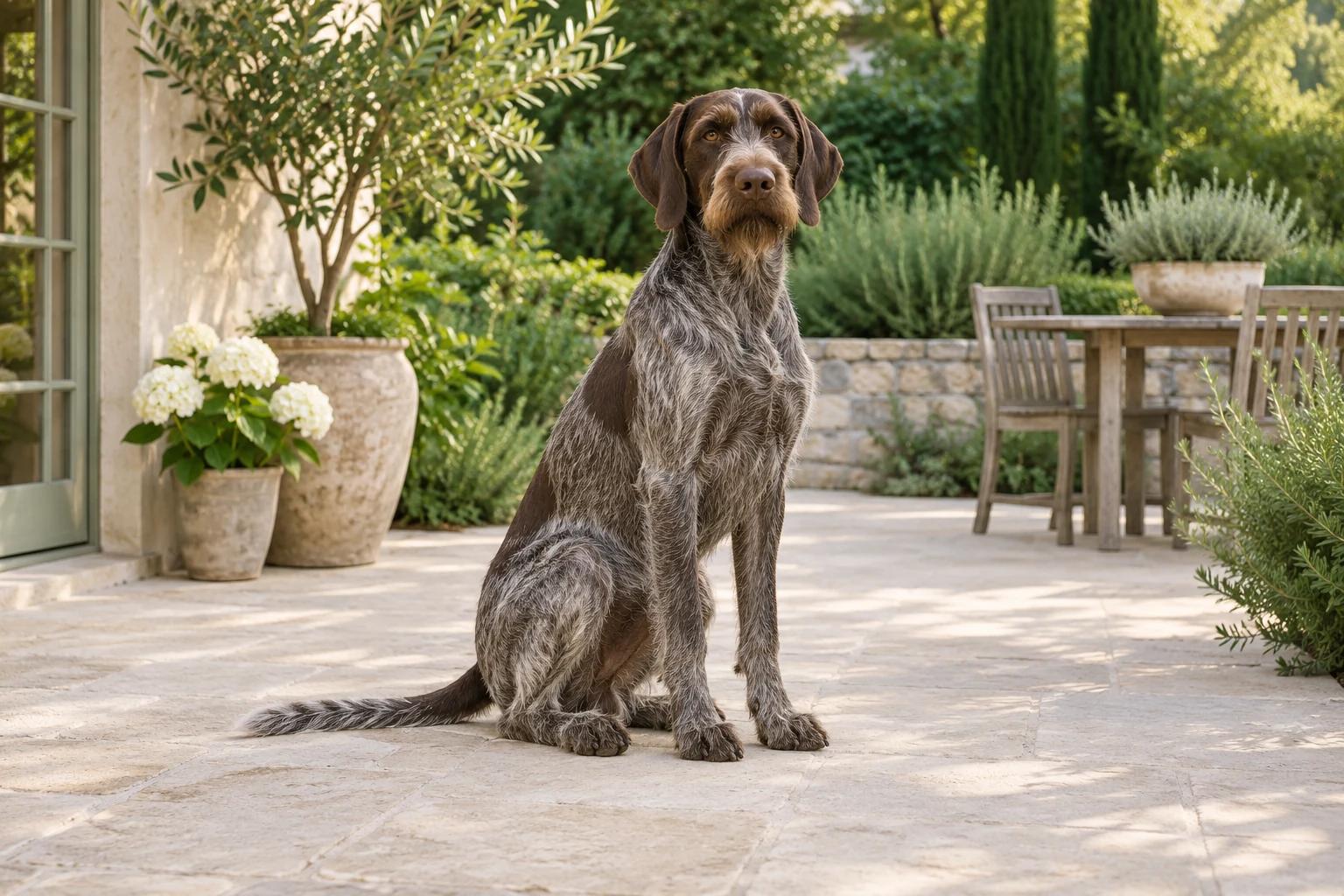
Explore the
German Wirehaired Pointer
Background, care, and everyday considerations.
View breed profile →German wirehaired pointer temperament is best understood through the relationship between activity and companionship. This is not simply a rugged-looking dog to admire at the end of a lead. Consider whether you enjoy working with a dog, making its tasks clear, and including it in ordinary life after the outdoor adventure ends.
The AKC breed introduction presents an outdoor-oriented gundog and affectionate companion. The German Wirehaired Pointer Club of America adds useful context about independent thinking, shared work, and the importance of human contact. Those themes should shape your questions before choosing an individual.
German wirehaired pointer temperament: partnership with opinions
German wirehaired pointer personality is not captured by choosing either obedient or independent. A dog can enjoy interaction while also finding parts of the environment more interesting than the task a person has proposed. The practical question is whether you enjoy teaching and adjusting the setup when that happens.
Think about a simple outing. You may want to walk directly from the car to a path; the dog may notice scent beside the parking area. Your arrangement needs both management and learned communication. Enthusiasm for an active breed should include interest in these ordinary negotiations, not only the destination photograph.
Define what a job means in your home
The parent club's emphasis on purposeful engagement does not require inventing a dramatic occupation. Describe the activities you actually intend to share and what the dog will learn within them. A clearly organized search game or training exercise is more meaningful than giving an activity an impressive name without teaching its components.
Do not promise a sport you have never watched or a hunting routine you do not intend to pursue. Visit an appropriate class or speak with an experienced instructor before making it central to your ownership plan. Ask what participation involves for the human as well as the dog.
Compare household involvement with outdoor access
A large outdoor space and a close working relationship are different resources. Before choosing a Wirehair, consider how much of its life will involve people actively engaging with it, not merely letting it occupy another part of the property.
Sketch an ordinary day in terms of contact: who prepares outings, who teaches, who handles care, and who is present afterward. This is not an exercise-minute calculation. It reveals whether the dog is included in a shared routine or expected to entertain itself for most of the day.
If one adult is the enthusiastic prospective owner, ask who covers the routine when that person is unavailable. Other household members do not need identical hobbies, but they should understand the handling and care they may be asked to provide. A realistic agreement is better than discovering later that all the essential skills belong to one person.
Allow introductions to reveal the individual
The UKC standard notes that the breed can be reserved. That is not a prediction that every Wirehair will avoid visitors, and it is not an excuse to force greetings until the dog behaves more sociably.
Arrange introductions with space and an easy exit. Ask the caregiver how the dog typically responds to unfamiliar people and what changes after a few minutes. A visitor does not have to touch the dog for the meeting to provide useful information.
When assessing German Wirehaired Pointer behavior, describe what you see before interpreting it. “Watched from beside the owner, then approached” is an observation. “Decided I was trustworthy” is a story you cannot verify. Plain descriptions help the next conversation with a trainer or caregiver stay grounded.
Do not infer small-animal compatibility from affection
The parent club cautions that compatibility with cats and other small animals is not assured. If your home includes them, make that a central discussion, not a final question after you have chosen a puppy.
Ask what experience the individual dog has had and in what setting. Living with one familiar cat is not evidence about every small animal or every introduction. For a dog without relevant history, identify what remains unknown rather than testing it through an uncontrolled encounter.
Discuss management with an appropriately qualified professional before bringing animals together. Think through doors, separate areas, caregiver reliability, and what happens if the proposed arrangement does not work. Do not rely on a breed description, a reassuring anecdote, or the hope that the animals will sort matters out themselves.
Look for recovery as well as enthusiasm
When meeting adults, ask to observe transitions between activity and quieter time. How does the caregiver end a game? What does the dog do while equipment is put away? Does it understand the familiar routine, or does the person need to make substantial adjustments?
These observations are not a temperament examination you can score in a single visit. They help you ask about training history and daily arrangements. A dog may behave differently in an unfamiliar setting, and a difficult day should be discussed rather than converted into a permanent label.
German wirehaired pointer characteristics should guide preparation, not hide a problem. If a dog suddenly cannot settle, becomes uncomfortable with touch, or changes its usual behavior, consult a veterinarian and suitable behavior professional. Calling every difficulty normal breed intensity can prevent you from asking the question that actually matters.
Match the dog to your experience honestly
A prospective first-time owner should describe their support, not simply apologize for being new. Who can teach handling skills? Where is a suitable class? Can all regular caregivers participate? A more experienced owner should be equally honest about unfamiliar activities or changed circumstances.
Ask breeders and rescue caregivers what would make them decline a match. Their answer can expose practical requirements that promotional descriptions leave out. Ask about the individual dog's known strengths and unfinished learning, not only what the breed can accomplish at its best.
The German Wirehaired Pointer profile provides broader context, while the existing Wirehair identification guide clarifies a commonly confused name. Use the breed quiz to examine your preferences, then make the final decision using specific information about the dog and the support available.
FAQ
Is a German Wirehaired Pointer only for hunters?
The breed's working background matters, but discuss your actual activities with knowledgeable breeders or caregivers rather than relying on a yes-or-no label. A companion home still needs a credible plan for engagement and learning.
Does an affectionate Wirehair need constant contact?
An affectionate tendency does not define one fixed style of interaction. Ask about the individual dog's routine, preferences, and experience when people are busy or away instead of predicting them from the breed description.
Can a Wirehair live with a cat?
Some individuals have relevant experience, but compatibility is not assured. Obtain specific history and professional guidance, and plan management rather than treating a friendly temperament as proof that an introduction will work.
What should I ask a current caregiver?
Ask about ordinary activities, visitors, care handling, transitions to rest, and situations still being learned. Concrete examples give you more useful information than a broad claim that the dog has a good temperament.
Sources behind this article
Article source checked: November 15, 2026. Source checked 2026-11-15
Keep reading

Airedale Terrier Temperament: What Everyday Life Can Feel Like
Read article →