German wirehaired pointer grooming: natural coat care
Plan German Wirehaired Pointer coat assessment, beard care, outdoor checks, shedding cleanup, and informed grooming appointments.
Explore the
German Wirehaired Pointer
Background, care, and everyday considerations.
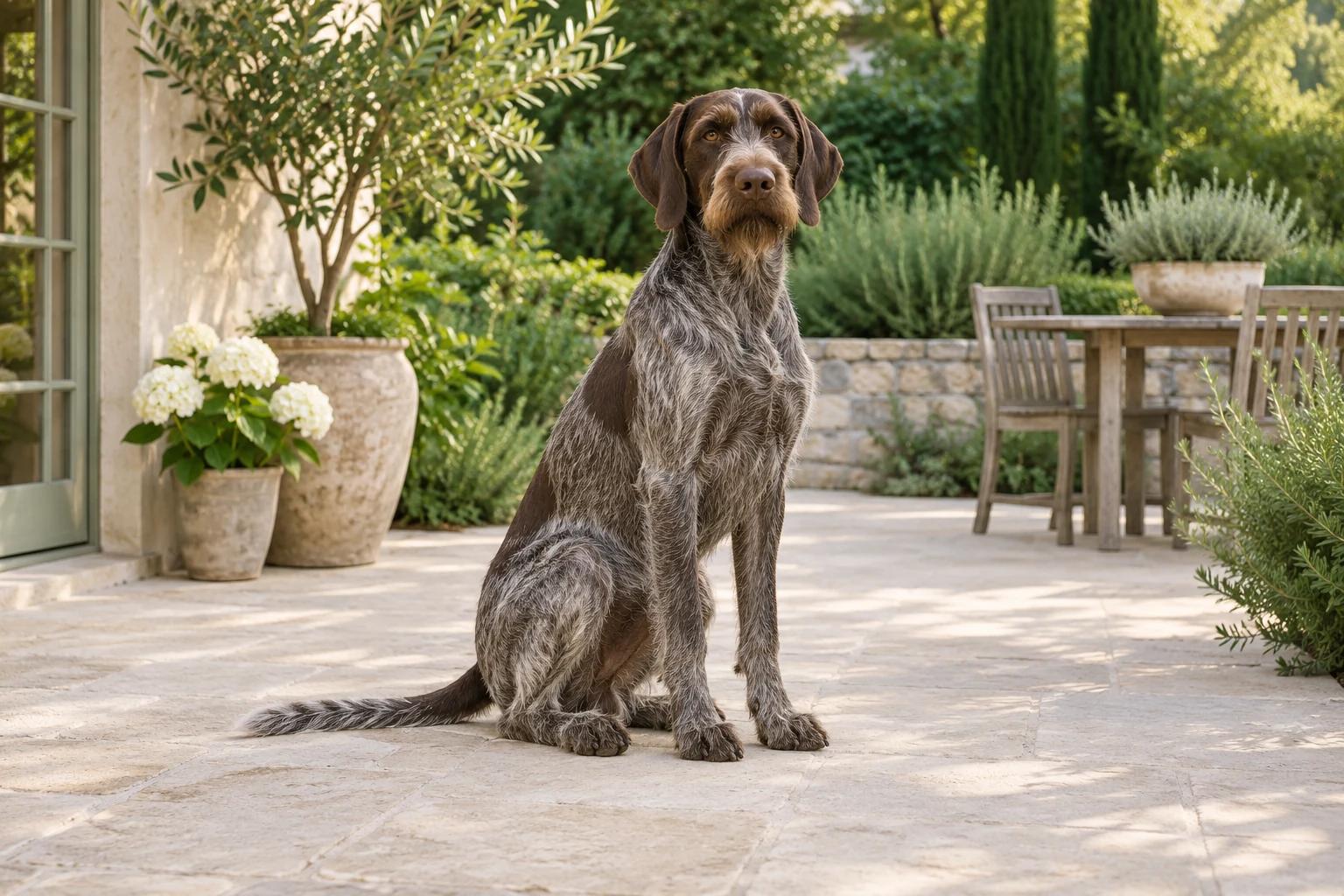
View breed profile →German wirehaired pointer grooming should preserve a practical natural coat while making everyday inspection and handling manageable. The beard is memorable, but it is only one part of the job. Pay attention to the body coat, the areas that collect outdoor debris, and the dog's comfort with the person doing the work.
The UKC breed standard describes a harsh wiry coat with undercoat and facial furnishings. The GWPCA discussion of the standard emphasizes a natural outline rather than excessive sculpting. Neither description is a substitute for a hands-on assessment of your own dog.
German wirehaired pointer grooming: assess the actual coat
Coats do not all present the same maintenance task. The GWPCA discussion notes variation and development as the dog matures. Ask an experienced breed groomer to assess what is growing on your dog now rather than choosing a routine because a photograph shows a similar beard.
Bring questions that connect appearance with technique. Which areas need combing? What should the coat feel like after a routine session? Is there dead coat that needs professional attention? Which tool should you avoid until someone has shown you how to use it? These questions produce a plan you can follow instead of a shopping list detached from the dog.
Make a small coat map
For German Wirehaired Pointer coat care, divide the dog into practical areas: body, legs and feet, and facial furnishings. Ask the groomer to show any differences in their approach. Do not assume the pressure suitable on the body is suitable near the eyes or lips.
A simple note can record what you are comfortable doing and what remains a professional task. This is especially useful when one person handles outdoor outings and another does routine grooming. It also prevents an unfamiliar caregiver from improvising with a tool that happens to be in the kit.
Give the beard attention without making it a styling project
Place a clean towel where food and water cleanup is convenient, and make checking the facial hair part of your ordinary observation. The goal is to notice residue or tangles, not to scrub the face until every hair lies in a chosen direction.
Teach comfortable face handling before it becomes necessary to deal with a problem. Ask the groomer how to support the dog's head without gripping the beard and which areas should be left alone. If a knot is tight or close to the skin, do not start cutting into it with household scissors.
A dramatic beard does not have to become your model. Discuss a functional companion-care goal with the professional caring for the coat. Keep grooming preferences separate from any irritation, odor, pain, or skin concern, which should be discussed with your veterinarian rather than hidden with a cosmetic product.
Check after outdoor activity while the details are fresh
After an outing, inspect the areas the dog has actually exposed to the environment. If it has moved through vegetation, look carefully for loose debris in the coat and around the feet. If it has been wet, organize sensible cleanup and drying before it settles into the home.
Use a consistent location with enough light to see what you are doing. The check should not depend on chasing the dog around while another person unloads the car. Keep the relevant towels and basic grooming equipment nearby, with sharp or specialist tools stored out of casual reach.
Distinguish a loose piece of plant material from something embedded, painful, or uncertain. Do not dig into skin or sensitive areas. Contact a veterinary professional when removal is not straightforward or the dog appears uncomfortable. A routine coat check is not a home-treatment appointment.
Understand what the groomer proposes before agreeing
Owners learning how to groom a German Wirehaired Pointer may encounter terms such as stripping, clipping, and tidying. Ask exactly what the groomer means, which areas would be affected, and why the technique suits this individual coat. Do not approve a procedure solely because it is common for another wire-coated breed.
The GWPCA document favors a natural presentation. For a companion, discuss coat condition, comfort, your ability to maintain it, and any veterinary considerations rather than trying to reproduce a show photograph at all costs. An honest assessment may reveal work you should not attempt yourself.
Ask for a home-care demonstration before leaving. Knowing the name of a technique is not the same as knowing the angle, pressure, and stopping point. If you cannot confidently reproduce the demonstrated step, say so and arrange an alternative rather than experimenting on a reluctant dog.
Keep shedding expectations modest and accurate
German wirehaired pointer shedding is relatively light in the breed profile, but that does not mean no loose hair or no cleaning. Keep a manageable routine for the dog's usual resting places and travel area. A small amount of recurring cleanup is easier to plan than the expectation of a permanently hair-free home.
Avoid choosing grooming tools by the quantity of hair they promise to remove. More material in the brush is not automatically a better result. Follow the approach demonstrated for your dog's coat and review it as the coat changes.
Keep observations factual. A sudden change in hair loss, patchy appearance, or discomfort deserves a veterinary conversation. Do not assume that buying a stronger tool, changing food without guidance, or scheduling repeated baths will explain the cause.
Plan the appointment around handling, too
Tell the groomer what the dog currently accepts, what equipment is unfamiliar, and whether any area has become sensitive. A clear handling history helps them plan the appointment. It is more useful than assuring them that the dog is normally friendly.
If the dog needs extra preparation, involve a qualified reward-based trainer. Separate learning to stand for care from completing a demanding coat job. Choose short, achievable practice with professional guidance rather than forcing a lengthy session because the appointment is approaching.
Keep nails, ears, and dental care visible in the wider routine. Ask your veterinary team for individual instructions, and confirm which services a grooming appointment does and does not include. Record tasks completed so that caregivers are not relying on assumptions.
For broader ownership context, see the German Wirehaired Pointer profile. The existing Wirehair and Griffon article addresses identification rather than this care routine. If you are still choosing a breed, include hands-on maintenance among the preferences you consider in the breed quiz.
FAQ
Should every German Wirehaired Pointer be groomed identically?
No. Have the actual coat assessed, including its condition and stage of development. Ask for a routine that you can maintain and a clear explanation of any professional technique proposed.
Should I trim the beard myself?
Do not improvise near the face with scissors or unfamiliar tools. Ask a knowledgeable groomer to assess the furnishings and demonstrate appropriate home maintenance before attempting anything beyond straightforward care.
Does light shedding mean brushing is unnecessary?
No. Loose-hair quantity is only one part of coat care. Inspection, debris checks, and maintenance of the body coat and furnishings still need attention, guided by the individual dog's needs.
What should I bring to a grooming consultation?
Bring the dog, your current tools, a description of its activities, and notes about handling or coat concerns. Ask what you should do between appointments and which tasks should remain with a professional.
Sources behind this article
Article source checked: November 15, 2026. Source checked 2026-11-15
Keep reading

Affenpinscher Grooming: A Practical Coat-Care Routine
Read article →