German shorthaired pointer grooming: a simple routine
Plan smooth-coat grooming, shedding cleanup, post-outing checks, and bathing preparation for your German Shorthaired Pointer.
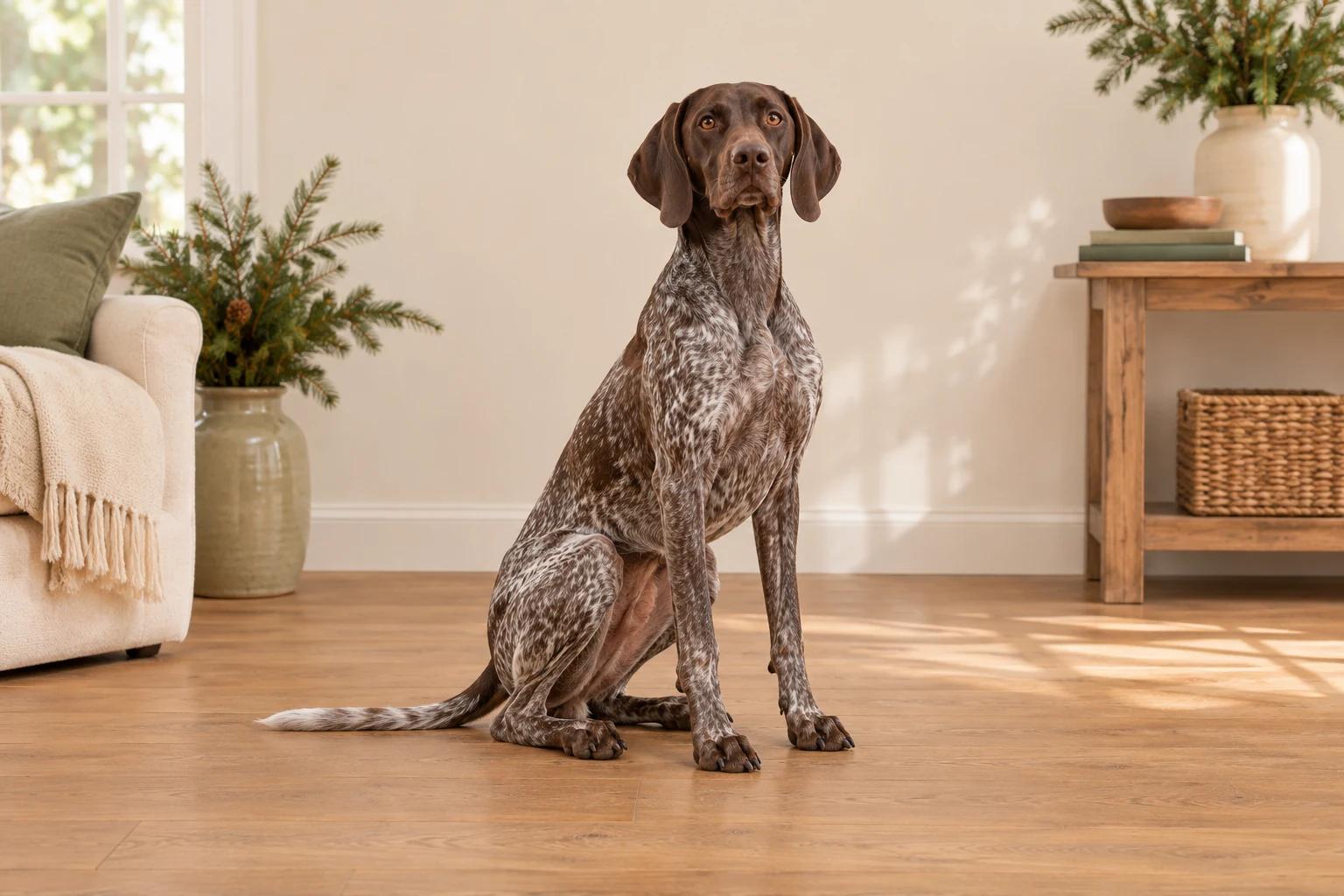
Explore the
German Shorthaired Pointer
Background, care, and everyday considerations.
View breed profile →German shorthaired pointer grooming is less about styling and more about noticing what a short coat can conceal: loose hair, outdoor debris, and areas that the dog would rather you did not touch. A smooth outline makes the routine look simple, but it still helps to have a deliberate order.
The UKC breed standard describes the GSP's short, shiny coat. Use that natural appearance as your starting point. A companion grooming session does not need to transform the dog into a different silhouette or remove as much hair as possible.
German shorthaired pointer grooming: start with a light touch
Keep the basic kit small. For smooth-coated dogs such as pointers, VCA's grooming guide identifies short-bristled brushes and flexible grooming gloves as useful options. Have someone experienced demonstrate suitable pressure on your dog before buying a collection of increasingly aggressive tools.
Your first question is not how much hair the brush collects. It is whether the dog can stand comfortably while you use it. Put the kit within reach, choose a surface with secure footing, and avoid trapping the dog between your body and a wall. A short, uneventful session gives you a better foundation than a long struggle to finish every task.
Use a repeatable route around the coat
Work in an order you can remember: one side, the other side, then the areas that need closer attention. This is a practical way to avoid brushing the easy back repeatedly while forgetting the chest or legs. It is not a requirement to complete the whole route in one sitting.
Pause when the dog turns away repeatedly or an area appears uncomfortable. Note where the problem occurred. “Would not allow the left front foot to be touched” is more useful to a professional than “hates grooming.” Do not assume resistance is a training problem if the response is new or localized.
Manage shedding where the hair actually lands
German shorthaired pointer shedding is part of ordinary ownership. A coat can be short and still leave hair on clothing, upholstery, and car fabric. Plan both dog care and household cleanup rather than asking one brushing session to solve both.
Identify the two or three surfaces that create the most work. A washable cover on the dog's usual resting place may be more useful than a complicated whole-house cleaning system. Keep travel textiles separate from clean household laundry, and test any upholstery tool on an inconspicuous area before using it broadly.
Do not keep brushing simply because another hair comes away. The aim is sensible maintenance, not a hair-free dog. If shedding changes suddenly or comes with skin changes, ask your veterinarian rather than buying a stronger rake or applying a product intended to stop the process.
The breed's modest grooming demands can be an advantage for owners who prefer a natural coat, but they should not be interpreted as permission to skip all hands-on care. Regular brief sessions also let you notice how the dog responds to being touched before a bigger appointment is necessary.
Build an after-outing inspection, not an automatic bath
A GSP returning from an outdoor activity needs a look over before settling into the house. Choose a well-lit place where you can examine the coat and feet without chasing the dog between rooms. Keep a towel near that entrance so cleanup does not depend on finding equipment after the dog arrives wet.
Separate loose dirt from something embedded, painful, or unfamiliar. An ordinary wipe is different from trying to remove material attached to skin or lodged in a sensitive area. If you cannot tell what you are looking at, contact a veterinary professional. Do not probe, cut blindly, or turn an uncertain finding into a home procedure.
For german shorthaired pointer coat care, consistency matters more than elaborate products. Decide which adult checks the dog after shared outings, especially when one person drives and another brings equipment inside. Otherwise, each can assume the other already did it.
Prepare the bath before bringing the dog in
When bathing is needed, arrange towels, a suitable dog product, and secure footing first. VCA recommends products formulated for dogs rather than human shampoo and suggests gentle water application rather than spraying directly at a reluctant dog. Follow the product instructions and ask your veterinarian about any skin-specific needs.
The room itself deserves attention. Can the dog enter and leave without slipping? Can you reach the towels without leaving it unattended? Where will wet equipment go afterward? These logistical details often make more difference to a manageable bath than an expensive accessory.
Do not assume that enthusiasm for outdoor water means enthusiasm for a bathroom. The sound, footing, and handling are different. If home bathing is difficult, a professional appointment can include a conversation about preparation and handling rather than becoming an occasional emergency after the dog is already very dirty.
Include the tasks that a brush cannot do
A grooming plan should also account for nails, ears, and teeth. Ask your veterinary team to demonstrate appropriate routine care and identify what they want you to report. Keep those instructions with the dog's care information so a caregiver does not improvise with unfamiliar products.
If you are learning how to groom a german shorthaired pointer, do not add every new skill in the same session. You can learn coat handling separately from nail equipment. Tell a groomer which tasks the dog already accepts and which remain unfamiliar, including any previous difficult experiences.
Bring precise questions to an appointment. Which tool should touch this coat? What pressure should I use? Which parts of the routine can I manage at home? Which tasks should I leave to you for now? Ask for a demonstration you can repeat, not simply a bag of products.
Keep a brief record of appointments and unusual observations. That gives the next professional useful context and prevents two caregivers from repeating a task because neither knew it had already happened.
The German Shorthaired Pointer profile puts coat care alongside other ownership needs. Read the weekday exercise plan for outdoor logistics, and use the breed quiz if you are comparing daily care preferences before choosing a dog.
FAQ
Does a German Shorthaired Pointer need a haircut?
Routine companion care focuses on maintaining the natural short coat rather than creating a haircut. Ask a groomer about the individual coat and avoid assuming that clipping is necessary because other breeds receive it.
What brush should I start with?
A short-bristled brush or flexible grooming glove is a sensible option to discuss for a smooth coat. Have a groomer demonstrate the tool and pressure on your particular dog rather than choosing by advertising claims alone.
How often should I bathe my GSP?
Bathing depends on the dog's activities, coat condition, and individual needs. Ask your veterinarian or groomer for guidance rather than adopting a rigid schedule from another owner's routine.
What should interrupt a grooming session?
Stop for pain, marked distress, or an unfamiliar skin finding. Record what you noticed and consult the appropriate professional instead of brushing harder or attempting treatment during a routine care session.
Sources behind this article
Article source checked: November 15, 2026. Source checked 2026-11-15
Keep reading

Affenpinscher Grooming: A Practical Coat-Care Routine
Read article →