German pinscher temperament: life beyond the outline
Explore German Pinscher personality through arrivals, play, everyday routines, and practical questions for a breeder or rescue.
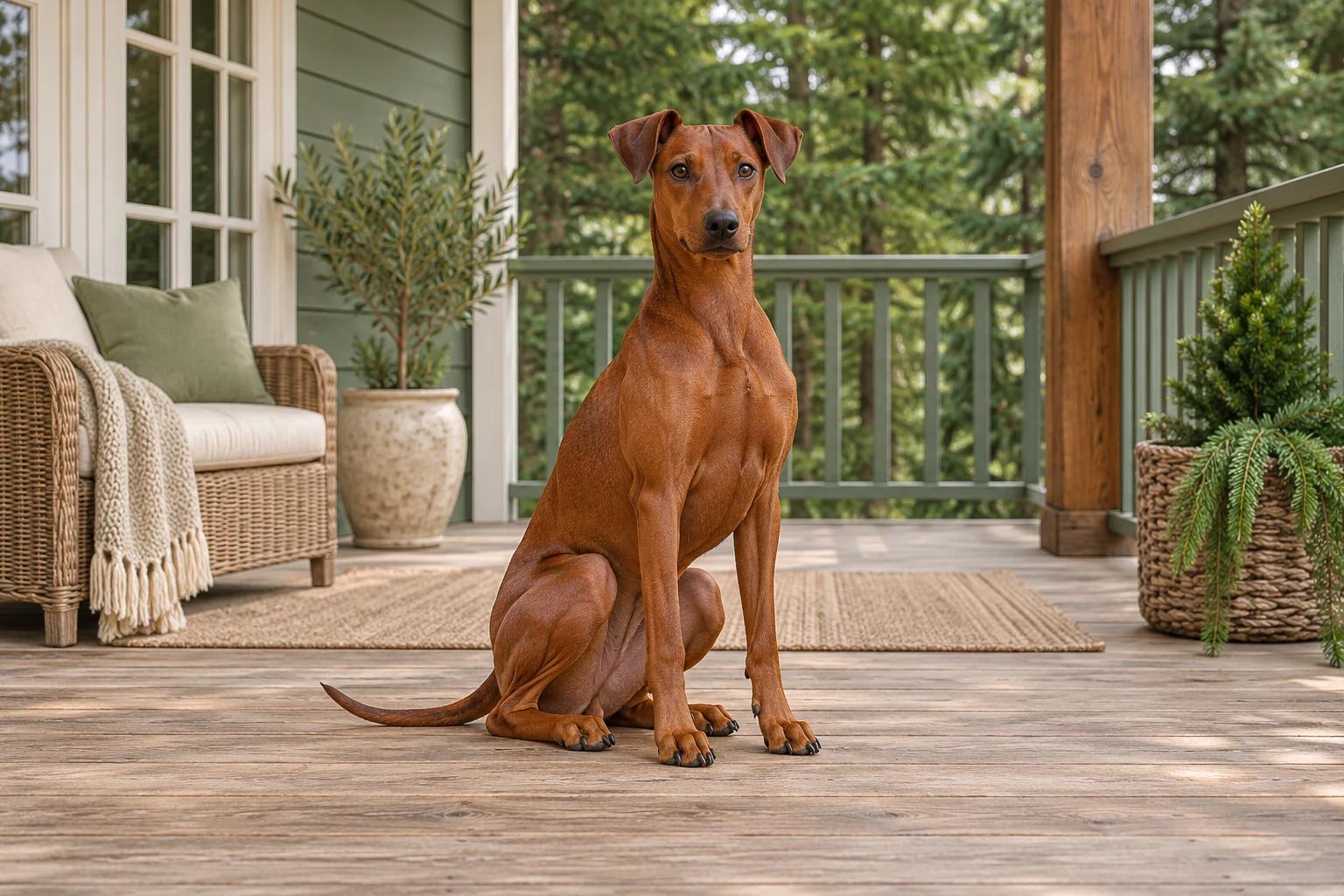
German pinscher temperament is often described with words that sound effortless: intelligent, lively, alert. In a home, those qualities become practical questions. What will the dog notice? What will you teach it to do next? How much participation can you offer on an ordinary day? The useful starting point is an engaged companion, not a small version of an easier dog.
German pinscher temperament behind the sleek outline
The American Kennel Club introduction identifies an energetic, intelligent breed with a rat-catching background. The UKC standard adds playfulness and watchfulness to its description. These are brief reference points, not a prediction of every dog's reactions.
In practical terms, explore both sides of german pinscher personality: what the dog enjoys doing with people and how it responds when something changes around it. A household might welcome a lively partner for training but find constant attention to a busy hallway difficult. Another might have a quiet entrance yet struggle to provide regular engagement. Your setting matters as much as the adjective you prefer.
Ask for ordinary examples. What happens when a parcel arrives? What does the dog do while dinner is prepared? How does it respond when its familiar handler stops playing? Answers grounded in daily life are more informative than being told the breed has “lots of character.”
Make the front door part of your assessment
Before choosing a German Pinscher, stand inside your entrance and imagine bringing in groceries while someone else arrives. Is there a place for the dog to be without being directly in the doorway? Can a visitor enter without leaning over it? Where would you keep a lead or a barrier if the individual needs that arrangement?
This is an ownership exercise, not a claim that every German Pinscher has a visitor problem. An alert dog deserves a clear routine rather than improvised shouting whenever the bell rings. Discuss the dog's existing experience with the current carer, then agree on a plan with a qualified reward-based trainer if you need help.
During a visit, do not deliberately startle the dog to see what it will do. Ask the handler to describe past reactions and show a normal arrival where appropriate. A staged confrontation tells you little useful and creates an unnecessary challenge.
Intelligence is not the same as automatic agreement
A quick learner still needs understandable information. Decide which household behaviors matter and whether everyone will teach them the same way. If one person invites jumping during play while another objects to it at the door, the problem is not solved by calling the dog stubborn.
Keep the discussion concrete. Do you want four feet on the floor while a lead is attached? A pause before leaving the car? A place to rest while you eat? These outcomes are easier to teach and observe than a general demand to be good.
The german pinscher characteristics that appeal to you should fit the way you like to spend time. If you enjoy noticing small improvements and repeating a simple exercise, that is useful preparation. If you mainly want a dog that needs little active involvement, reconsider whether the attraction is to the appearance rather than the daily relationship.
Play needs a beginning and an ending
Ask what kinds of play the individual already knows. Some dogs arrive with clear experience of exchanging a toy; others need that skill introduced. Rather than selecting a game because it appears in a breed description, choose one you can supervise comfortably in your actual space.
A useful conversation with a trainer might cover how to start play, how to pause, and what to do when the game becomes harder for the dog to manage. Put the toys away between planned activities if that helps your household maintain a clear routine, but do not assume every interaction needs to be a formal lesson.
Also observe quieter companionship. Can you provide a place where the dog is not continually interrupted? Will visitors understand that resting is not an invitation to begin another game? A lively household can offer plenty of company while still needing deliberate arrangements for downtime.
Other animals are an individual question
The breed's historical work gives you a reason to ask careful questions about experience around small animals, not a basis for declaring any particular pairing compatible or incompatible. Describe your existing household accurately to the breeder or rescue. Include animals that live in separate rooms, not just those that share the sofa.
For another dog, ask about actual interactions and management history. Do not assume that one cheerful meeting demonstrates how two dogs will share space, attention, or valued items. Discuss introductions and separation options with a suitably qualified professional when needed.
If you are assessing german pinscher behavior in an adult, request specific information about previous homes and situations. Unknown history should remain unknown in your notes. Filling a gap with a breed stereotype does not make the decision more informed.
A useful fit check before committing
Try describing an ordinary weekday in six sentences: who provides the first outing, where the dog rests, what happens midday, when you share an activity, who handles daily care, and what happens if the plan fails. If your answer depends on someone vaguely “being around,” make responsibility explicit.
Then ask the current carer which parts would be most different from the dog's present life. That identifies the transition work ahead. It also gives them useful information when discussing a potential placement instead of asking them to decide from your house size alone.
The German Pinscher profile is a broader reference for ownership. If coat appearance first drew your attention, the existing historical and modern color article separates that topic from personality. The breed quiz can help you put appearance alongside the time and involvement you can offer.
FAQ
Does a German Pinscher need a very strict owner?
The useful requirement is clear, consistent teaching, not intimidation. Agree on understandable household routines and seek reward-based professional guidance when needed. Labels such as strict do not explain what a dog should do or how it will learn.
Is a German Pinscher automatically a good apartment fit?
No breed name settles that question. Consider entrances, outside access, noise, time alone, and the individual's routine. A compact footprint does not remove the need for activity, engagement, and a workable care plan.
What if behavior changes suddenly?
Discuss a sudden or unexplained change with a veterinarian rather than attributing it to temperament. Keep notes about what changed and when. A qualified behavior professional can help with further assessment and an appropriate plan.
Sources behind this article
Article source checked: November 15, 2026. Source checked 2026-11-15
Keep reading

Airedale Terrier Temperament: What Everyday Life Can Feel Like
Read article →