Flat coated retriever vs golden retriever: daily life
Compare these retrievers through ordinary workdays, grooming, space, and questions to ask before choosing an individual dog.
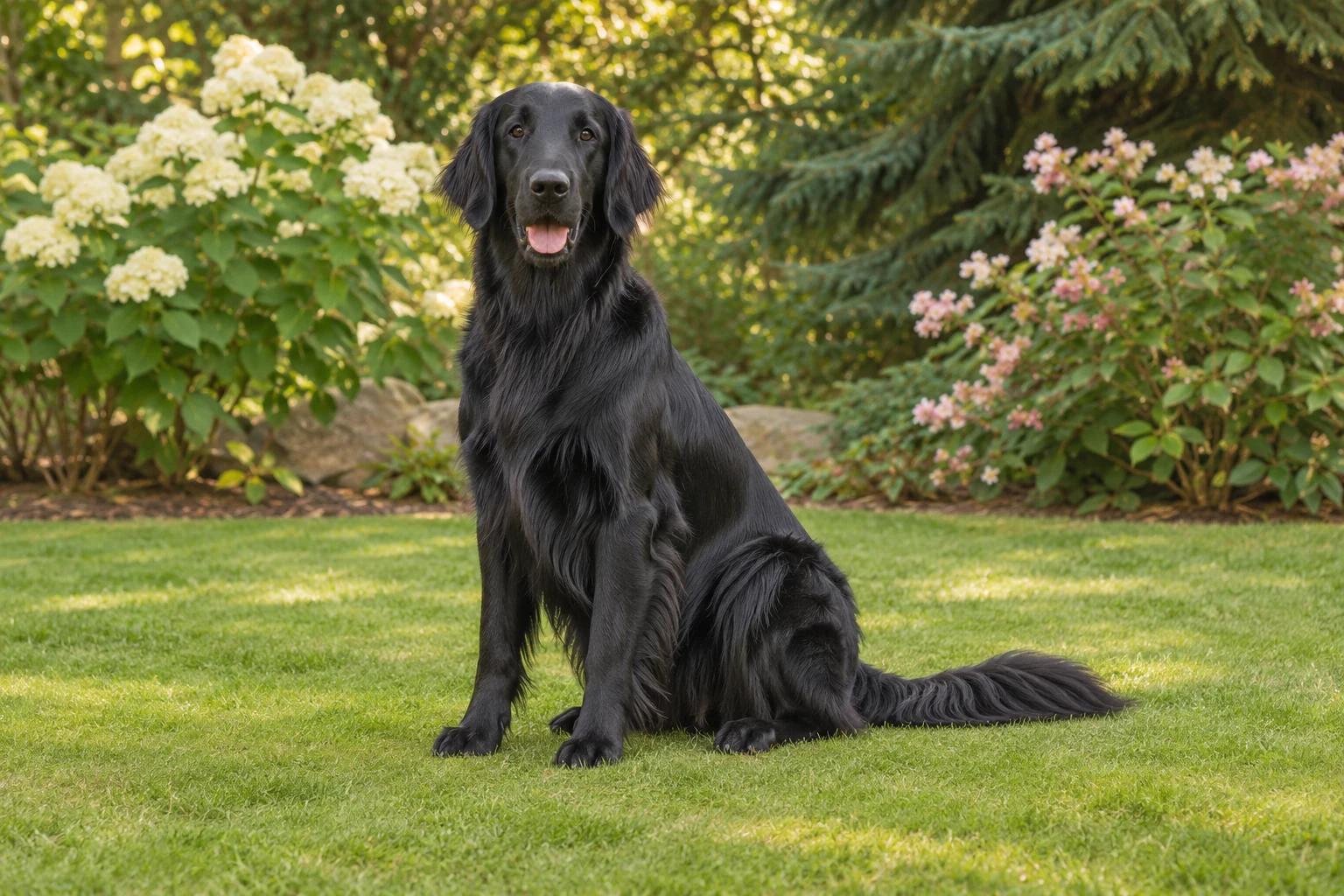
Flat coated retriever vs golden retriever is not a choice between an active dog and a decorative version of one. Both deserve a place in your daily schedule, suitable activities, and regular coat care. The useful comparison is how each dog would fit the routines you can actually provide. Start with the differences you can observe, then investigate the individual rather than assigning a whole personality from coat color.
Flat coated retriever vs golden retriever: start with the outline
The Flat-Coated Retriever Society of America standard emphasizes the Flat-Coat's distinctive head and clean outline. The UKC Golden Retriever standard describes a golden-colored retriever with a well-defined stop and a body slightly longer than tall. These features help explain why a Flat-Coat is not simply a Golden in another color.
For ownership, identification matters less than what follows from living with a substantial, feathered retriever. Think about the space beside your desk, the route through the hallway, and how a dog will travel in your vehicle. Meet adults if you can. A photograph does not show how much room a dog uses when turning around or stretching out.
Compare the Flat-Coated Retriever profile and Golden Retriever profile for their recorded reference ranges. Do not purchase fitted equipment from an average alone. The dog you choose will need its own measurements and a chance to try the equipment comfortably.
Compare an ordinary workday before an ideal weekend
Choosing a flat coated retriever or golden retriever becomes clearer if you describe Wednesday rather than a holiday. Who handles the first outing? Where does the dog spend the middle of the day? Who is responsible when your usual helper is away? Write answers for both breeds instead of letting familiarity with the Golden name stand in for a plan.
The UKC Flat-Coated Retriever standard describes an enthusiastic working and playing companion. The Golden standard also describes eagerness to learn. These are reasons to ask about opportunities for participation, not guarantees that either dog will quietly entertain itself while the household remains busy.
Do not choose between these retrievers by comparing walking minutes alone. Ask the person who knows a particular dog to describe yesterday: the outings, play, training, time alone, and rest. That concrete account is more informative than the labels high energy or easygoing on their own.
Look at the coat-care job you would actually do
A visible difference between flat coated retriever and golden retriever is the coat: the Flat-Coat is black or liver, while the Golden has a golden coat with a dense undercoat. The Golden standard permits straight or wavy outer hair and describes heavier feathering on the chest, thighs, and underside of the tail. Neither breed calls for a sculpted silhouette. Cleaning and handling should stay in the comparison. Picture your usual routes. If they include muddy paths and wet grass, decide where the dog will be checked and cleaned before entering the living area.
Ask to see a routine grooming session rather than only a newly prepared dog. Which areas need separate attention? How does the dog respond to handling? What does the owner do between professional appointments? A realistic demonstration can reveal whether you enjoy this kind of maintenance or have been imagining that a tidy coat maintains itself.
Put coat care into the budget in terms you can use. Include professional help you expect to need, washable bedding, and the time spent cleaning your vehicle. Do not choose either breed on a promise of a hair-free home. If loose hair would be a serious source of conflict, address that honestly before bringing a dog home.
Meet dogs without making the visit a competition
A useful visit has room for ordinary behavior. Notice how a dog joins an activity, responds when that activity ends, and behaves when attention moves elsewhere. Ask what is typical and what is unusual about that day. A busy event may show a very different picture from the dog's normal home routine.
Try not to reward the most spectacular greeting with an automatic vote for the breed. A restrained dog might be tired, unfamiliar with the setting, or simply less interested in visitors. An exuberant dog may be delightful without being the best match for your handling experience. Observe, ask, and leave room for context.
If you can meet more than one adult from a prospective breeder or rescue, compare individuals within the same breed before comparing breed labels. Ask which dog resembles the one you are considering in everyday habits. This keeps the conversation grounded in evidence the other person can actually provide.
Ask parallel questions about both options
Use the same questions for each candidate so that one breed does not receive a more generous assessment. Ask about the current routine, experience with being left alone, response to everyday handling, and previous activities. For a puppy, ask how the adults in its family live and how the puppies are being introduced to ordinary experiences.
Ask for the actual health-screening documents relevant to the parents or individual and discuss them with your veterinarian. Do not treat the existence of paperwork as a guarantee or rank the breeds from a single anecdote. Keep medical decisions separate from a lifestyle comparison based on coat, space, and time.
Ask about ongoing support as well. If your circumstances change, whom can you contact? What information accompanies the dog? Which arrangements are written down? These questions matter whichever retriever you prefer, and clear answers are more useful than a description such as perfect family pet.
Make the choice with constraints, not a winner's score
For a golden retriever vs flat coated retriever decision, divide your notes into essentials and preferences. Reliable weekday care is an essential. A favorite coat color is a preference. Access to appropriate activities may be essential; wanting a dog that looks striking in photographs should not carry equal weight.
Then test the weaker parts of your plan. If you expect to use a walker, speak to that person before committing. If the dog will travel regularly, inspect the vehicle setup. If grooming is unfamiliar, arrange a demonstration. Resolving one practical uncertainty often helps more than reading another list of supposed personality differences.
The breed quiz can help organize your priorities. For a focused Flat-Coat topic, our article on learning household skills separates teaching from assumptions about maturity. You do not need to declare one retriever universally better to make a thoughtful choice for your own home.
FAQ
Is a Flat-Coated Retriever a black Golden Retriever?
No. They are distinct breeds with different standards and characteristic outlines. Similar retrieving backgrounds and feathered coats do not make one a color variety of the other.
Which breed is easier to live with?
Ease depends on the individual and on whether your routine meets its needs. Compare actual dogs, ordinary weekday care, handling, and support rather than relying on a universal ranking.
Should I choose by appearance first?
Appearance can be a preference, but it should follow practical compatibility. Confirm that you can provide the time, space, care, and activities the individual needs before letting coat color settle the decision.
Sources behind this article
Article source checked: November 15, 2026. Source checked 2026-11-15
Keep reading

Affenpinscher vs Brussels Griffon: Everyday Differences
Read article →