Flat coated retriever grooming: a practical routine
Plan natural coat care, feathering checks, loose-hair cleanup, and useful questions for your Flat-Coated Retriever groomer.
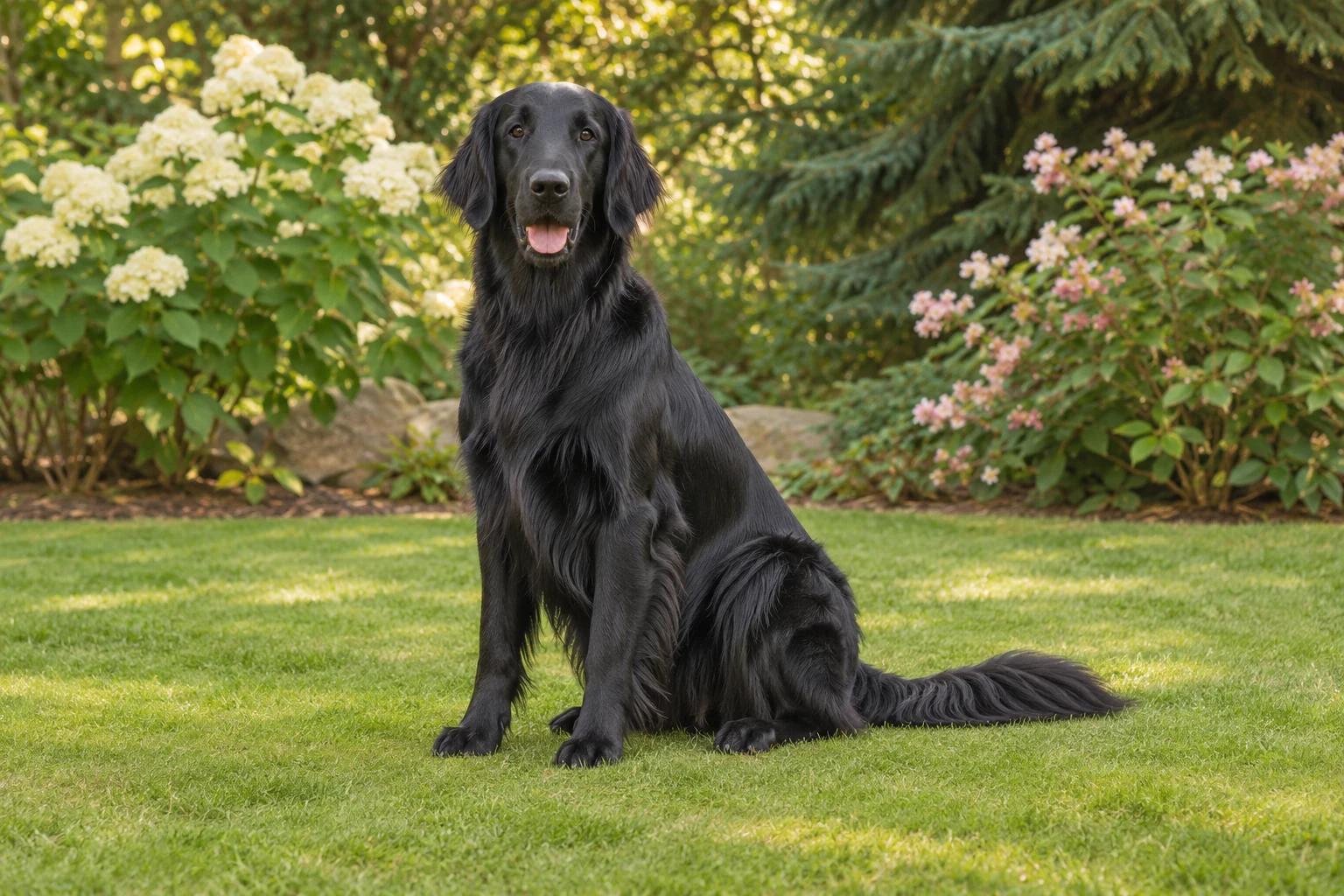
Flat coated retriever grooming is mostly about keeping a working coat comfortable and manageable, not creating a sculpted outline. The attractive finish is a bonus. A useful routine also lets you notice what came home in the feathering, which areas are becoming difficult to comb, and whether handling is getting easier or harder. Start with a small set of tools and a repeatable order rather than a drawer of products.
Flat coated retriever grooming: preserve the natural outline
The Flat-Coated Retriever Society of America standard describes a flat-lying coat with feathering and favors a natural presentation. That matters when explaining your wishes to a groomer: ask for a clean, brushed coat and discuss any tidying individually, rather than asking for an unfamiliar haircut by name. The UKC standard likewise distinguishes minor tidying from shaving or sculpting the body.
Those are descriptions of breed presentation, not instructions to ignore an individual dog's care needs. If a professional finds a tightly tangled area, ask what comfortable options are available. Maintaining a particular outline should not become a reason to pull through a painful knot at home.
For an overview of the breed beyond its coat, keep the Flat-Coated Retriever profile handy. The grooming plan should suit the dog in front of you and the outings you actually take.
Build a kit around jobs, not marketing labels
Before buying anything, ask a groomer to demonstrate a suitable brush and comb on your dog. You want to see how the tool moves through both the body coat and the longer hair, how much pressure to use, and when to stop. A demonstration is more useful than assuming that the stiffest brush must work best on a large retriever.
Set aside a washable mat, towels, the demonstrated tools, and a container for removed hair. Put everything within reach before inviting the dog over. A stable, nonslip place on the floor can be more practical than trying to lift a large dog onto an improvised table. Leave enough room for the dog to change position without stepping into your supplies.
Keep scissors out of the beginner kit unless a professional has taught you a specific, appropriate task. A knot close to skin is not a good opportunity to learn by trial and error. For nails, ears, and teeth, ask your veterinary team to demonstrate the individual routine and equipment rather than improvising from the coat-care process.
Follow the same route around the dog
A consistent sequence helps prevent the easy-to-see back from receiving all the attention. Start with an area the dog already tolerates, then work around the body in manageable sections. Check the longer hair on the chest, legs, and tail as separate jobs. Turn the dog or change your own position so you can see what you are doing instead of reaching blindly underneath.
VCA's breed overview highlights feathering as an area needing particular attention for tangles. Use that as a reminder to inspect it, not as a reason to keep combing after the dog becomes uncomfortable. A tool that catches repeatedly is information: stop and determine whether there is debris, a knot, or a handling problem.
For flat coated retriever coat care, a simple checklist can be more useful than timing every session. Write down which sections you finished and which need professional help. If you stop halfway through, you can return to the remaining section later without repeatedly brushing the easiest patch.
Make the return from an outing part of grooming
Imagine coming home from a damp woodland walk. Before the dog heads for its bed, use your prepared mat as a place to look over the coat and feet. Check for visible debris and note any area that is difficult to inspect. Keep the process calm and short enough that arriving home does not always predict a lengthy struggle.
A different outing calls for a different check. After a dry paved walk, you may have little to remove. After muddy paths, you may need towels and a more thorough cleanup. Let the condition of the coat determine the work instead of bathing automatically whenever the calendar reaches a particular day.
Ask your groomer or veterinarian which washing products and drying approach suit your dog. Have towels ready before starting, and plan where the dog will stand during rinsing. If bathing at home makes handling awkward, a professional appointment may be a better use of your budget than another bottle of shampoo.
Manage loose hair without promising a hair-free house
Flat coated retriever shedding needs a household plan as well as a brush. Put washable covers where the dog regularly rests, keep cleaning equipment accessible, and choose one storage place for grooming supplies. The objective is a routine you can maintain, not proof that every visible hair has been removed.
Compare the coat with its own usual appearance. If you notice a new bare area, irritation, or a sudden change that concerns you, contact your veterinarian. Do not respond by adding increasingly forceful brushing or changing several products at once. A brief note about when you first noticed the change can help you describe it clearly.
Agree who handles grooming on busy weeks. One person might do the post-walk check while another handles the fuller session. Recording what has already been done avoids two people repeating the same task while both assume somebody else checked the difficult area.
Make appointments easier to explain
When asking how to groom a flat coated retriever, bring specific questions to a groomer: which tool worked on the leg feathering, what kind of tidying is proposed, and which tasks should stay with the professional? A photo of the desired natural finish can start the conversation, but it should not override the dog's actual coat condition.
If your dog struggles to stay with you for handling, separate that learning project from the deadline to finish the whole coat. Our article on learning household skills discusses observable progress without waiting for an imagined maturity deadline. Prospective owners can use the breed quiz to consider grooming alongside the rest of daily life.
FAQ
Does a Flat-Coated Retriever need a sculpted haircut?
The breed standards favor a natural outline with limited tidying. Discuss the specific coat and any tangles with a professional rather than requesting a dramatic style change by default.
What part of the coat deserves extra attention?
Check the feathering separately from the body coat. Longer areas can be missed when a session consists only of brushing across the back, particularly after outdoor outings.
Can I finish grooming over several sessions?
You can organize routine coat care into manageable sections and record what remains. Painful tangles or skin concerns need professional advice rather than repeated attempts to finish at home.
Sources behind this article
Article source checked: November 15, 2026. Source checked 2026-11-15
Keep reading

Affenpinscher Grooming: A Practical Coat-Care Routine
Read article →