Flat coated retriever exercise needs: plan your week
Build a realistic Flat-Coated Retriever activity plan with walks, retrieving, mental engagement, and backup arrangements.
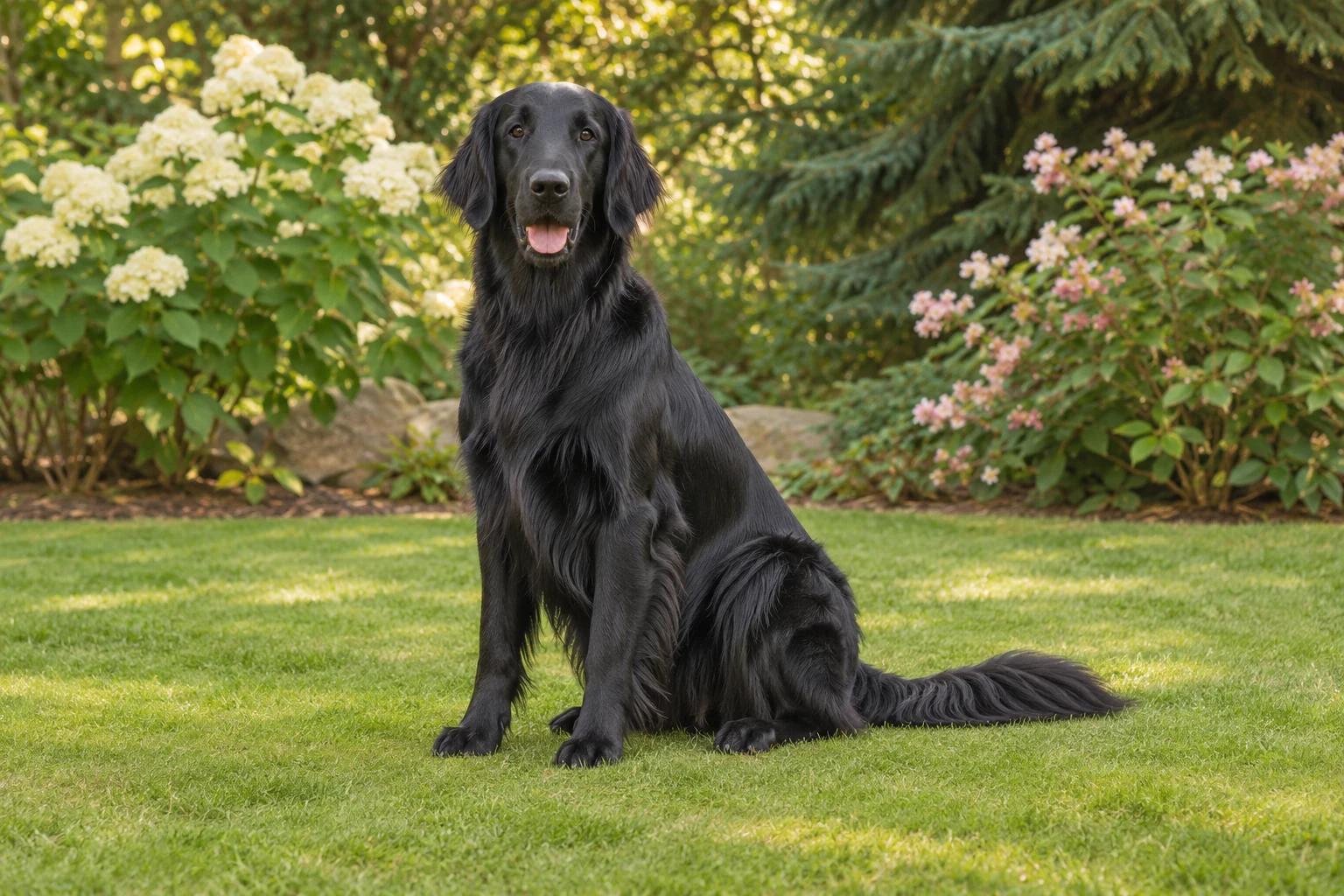
Flat coated retriever exercise needs are easier to plan when you stop treating every activity as interchangeable. A walk, a retrieving game, and time exploring a new scent each offer something different. The practical question is not simply whether you can fit an energetic dog into a weekend. It is whether ordinary weekdays contain enough purposeful activity, company, and recovery time for the individual dog you bring home.
Flat coated retriever exercise needs start with a workable week
The UKC breed standard describes enthusiasm for work and play. VCA's Flat-Coated Retriever overview identifies substantial daily exercise and engagement, including retrieving and structured play. Neither description gives you a personalized prescription for your dog's age, condition, and experience.
Before choosing activities, discuss appropriate exercise with your veterinarian. Then look at your actual calendar. Count preparation, travel, cleanup, and the handoff to anyone helping you, not just the minutes spent walking. An outing that requires a long drive may be enjoyable on Saturday but an unreliable foundation for Tuesday.
The Flat-Coated Retriever profile is a useful starting point for the overall commitment. Build your plan around regular opportunities rather than a single impressive session that leaves the rest of the week empty.
Give the daily walk more than one purpose
A flat coated retriever daily walk can have distinct sections without becoming a complicated training class. One section may be for reaching a suitable route. Another can allow unhurried sniffing where it is appropriate. A quieter stretch might be a place to practice staying connected with you around ordinary distractions.
Choose routes that you can shorten or leave easily. A circular route with no convenient exit makes it harder to respond when the weather changes, the dog seems uncomfortable, or an unexpected crowd appears. A familiar out-and-back route can be a better weekday choice than a destination chosen mainly for its scenery.
Write down what the route requires from the handler. Are there narrow gates, loose dogs, livestock, bicycles, or slippery banks? A route that works for one household member may not suit another. Share those details with a walker rather than assuming that the word energetic explains what the dog needs.
Use retrieving as a shared task, not an endless throw
Retrieving can offer a clear beginning, middle, and ending: notice an object, collect it, return, and exchange it. A simple planning exercise is to choose one part to practice rather than increasing distance every time. For example, place an appropriate toy nearby and work on an easy return in a secure space.
The parent-club standard describes a retriever working on land and water. That heritage can inspire activities, but it does not mean every individual enjoys every version of them or arrives with a finished retrieve. Observe what your dog actually chooses and what handling skills you still need.
Avoid turning a game into a test of how long the dog will keep chasing. Plan a stopping point before starting, keep the setting suitable, and ask your veterinary team about activities involving repeated impact or demanding turns. For a dog new to an activity, enthusiasm alone is not evidence that the challenge is appropriate.
Include problems the dog can solve
Physical distance is only one way to structure a shared outing. You might set out an easy search for a familiar toy in a secure area, practice finding a designated mat, or teach a simple sequence with a reward-based instructor. These are examples for discussing with a trainer, not requirements that every owner must adopt.
Make success understandable. If the task is finding a toy, start where it is easy to locate rather than hiding it somewhere inaccessible. If the task is returning to you, reduce competing distractions rather than calling repeatedly across a busy park. The point is an achievable problem, not a performance that looks impressive on video.
Keep a note of which activities your dog returns to willingly. That record can help you distinguish a game you enjoy inventing from one your dog finds engaging. It also gives a substitute carer concrete ideas beyond the instruction to tire the dog out.
Plan for the days when the ideal outing disappears
A realistic schedule includes rain, deadlines, broken transport, and a handler who occasionally cannot manage the usual route. Make a backup list before those days arrive. Identify a nearby manageable walk, a suitable secure space, and someone who already knows your dog and can help when needed.
Indoor activities are useful options, but do not label them a permanent replacement for outdoor exercise. A search game may fill part of a disrupted afternoon while you arrange the next appropriate outing. If disruptions become normal, revise the care arrangement rather than asking the dog to live indefinitely on the emergency version of the plan.
For water outings, investigate the location and supervision arrangements rather than assuming a retriever can handle any water. Entry and exit, local restrictions, and the dog's experience all belong in the decision. Ask qualified local professionals about suitability before adding unfamiliar water activities to the routine.
Read the individual, not just the activity label
The phrase flat coated retriever activity level describes a broad expectation, not a reason to explain every behavior as unused energy. A dog that cannot settle may need a different environment, clearer routines, or professional assessment rather than an automatic increase in exertion. A sudden change in willingness to exercise belongs with your veterinarian.
Track a few practical observations: which outing you took, how the dog participated, and what happened afterward. Do not turn this into a scorecard that requires improvement every day. Its purpose is to help you make useful adjustments and give professionals specific information if you need help.
For household behavior, see our separate article on teaching skills without waiting for maturity. If you are still deciding whether this commitment fits your life, use the breed quiz alongside a written weekday schedule.
FAQ
How much exercise does a flat coated retriever need?
Expect a substantial daily commitment, then ask your veterinarian to help tailor it to the dog's age, condition, and activities. A universal number of minutes cannot describe every individual or every kind of exercise.
Is a yard enough for a Flat-Coated Retriever?
A yard can provide a useful space for supervised games, but having outdoor space is not the same as planning shared activity. Consider what the dog will actually do there and who will participate.
Does every Flat-Coated Retriever need to swim?
Swimming is one possible activity, not an ownership requirement. Choose suitable options for the individual and the setting; a retriever's working background does not replace supervision, preparation, or professional guidance.
Sources behind this article
Article source checked: November 15, 2026. Source checked 2026-11-15
Keep reading

Afghan Hound Exercise Needs: Build a Workable Active Day
Read article →