Finnish Lapphund vs Swedish Lapphund: choosing a companion
Compare Finnish and Swedish Lapphund size, appearance, activity, voice, and double-coat care with practical questions for prospective owners.
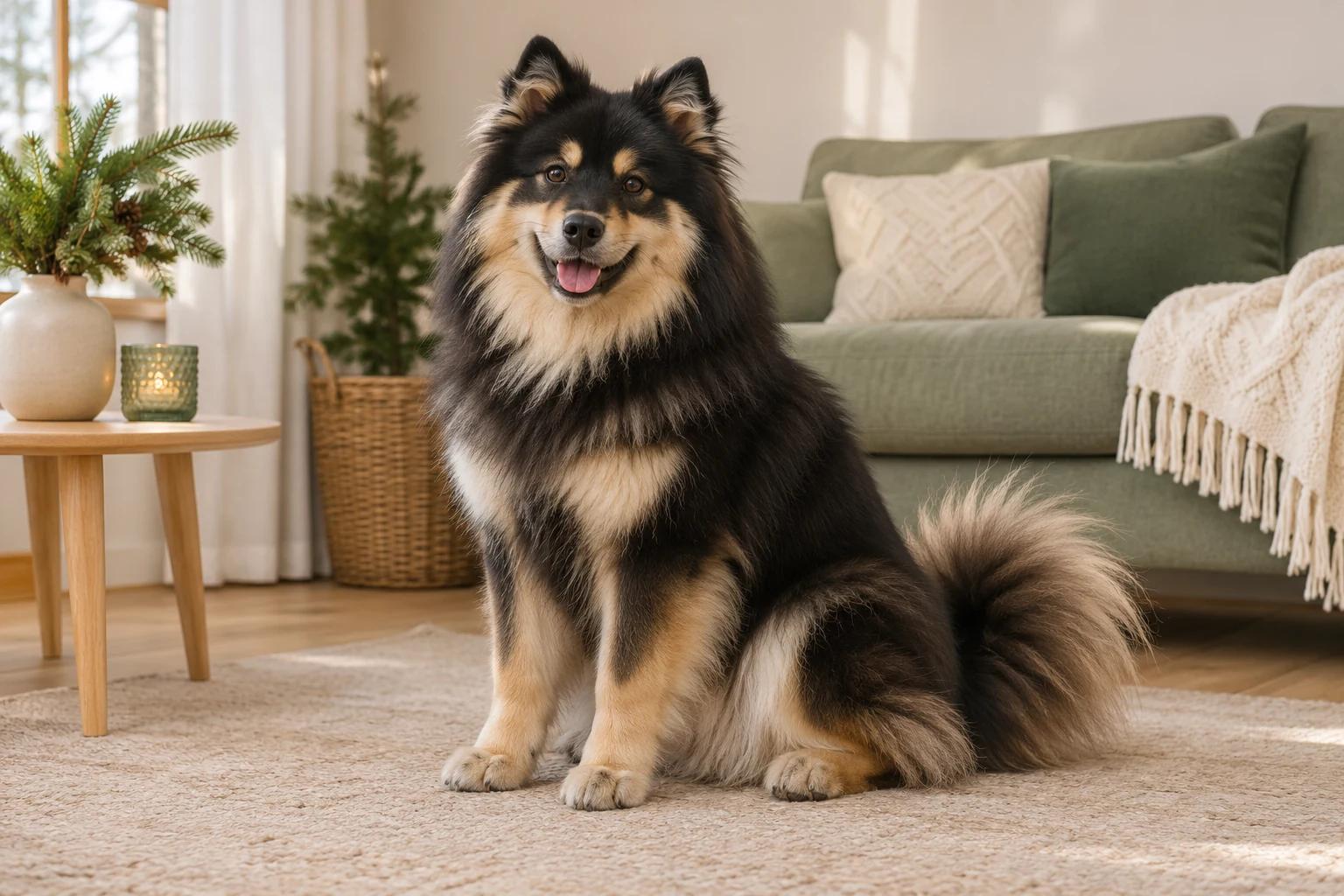
Finnish Lapphund vs Swedish Lapphund is not simply a choice between two colors of the same dog. They are distinct breeds with separate standards, although both have northern herding backgrounds and conspicuous double coats. For a prospective owner, the most useful comparison combines those differences with the daily realities of voice, coat care, and learning together.
Open the Finnish Lapphund profile and Swedish Lapphund profile as a starting point. Then use the questions below to find out what the particular dogs you meet are like away from their photographs.
Finnish Lapphund vs Swedish Lapphund: what you can see
The FCI Finnish standard allows a broad range of colors with a dominant basic color, and permits erect or semi-erect ears. The Swedish standard describes a usually black dog, sometimes with brownish shading, and small pricked ears. It also permits limited white markings.
These details explain why photographs may show different expressions even when the dogs have similar fluffy outlines. They do not establish temperament, health, or the background of an unknown dog. If identifying a dog matters, ask for records and information from its caregiver rather than relying on coat color alone.
Coat volume can also confuse a size comparison. Look at an adult standing naturally beside a person or familiar object, and ask for actual measurements. A close-up of a heavily coated head and a distant full-body photograph are not comparable evidence, however memorable the images are.
Size overlaps more than a simple ranking suggests
The site's Finnish Lapphund profile lists adults at 29–46 pounds, with males 18–21 inches tall and females 16–19 inches. The Swedish Lapphund profile lists 31–44 pounds and 16–20 inches. Those ranges overlap, so describing every Finnish Lapphund as larger than every Swedish Lapphund would be misleading.
For household planning, translate the numbers into equipment and space. Measure the footprint of a travel crate in your vehicle. Consider where a dog can stretch out without blocking a doorway. Check any housing weight limit before making a commitment rather than assuming a breed's average will settle the issue.
If considering a puppy, ask about the adult relatives and accept that their measurements provide context, not a precise forecast. If considering an adult, use that dog's actual size. The decision is easier when you compare the dog you would live with instead of two imaginary breed averages.
Compare your appetite for activity and learning
The live profiles place the Swedish Lapphund somewhat higher for activity and mental engagement, while the Finnish Lapphund sits around the middle for those tendencies. That is a useful prompt for questions, not a conversion chart for minutes of exercise. Both need a daily routine that includes more than being present in the same house.
The Swedish FCI standard presents a lively, attentive, willing worker and names several possible activities. The Finnish standard describes an intelligent, calm, friendly companion. Read these as broad breed descriptions. A relaxed individual Swedish Lapphund and a busy individual Finnish Lapphund are not contradictions that need explaining away.
Ask owners which activity they do on an ordinary workday and what happens when it is missed. Then ask what they enjoy most about that routine. A person who loves teaching small skills may experience a dog very differently from someone who wants every outing to be a silent, straight-line walk.
When deciding between Finnish Lapphund or Swedish Lapphund, choose a routine you want to share. Do not select the apparently more capable athlete and hope enthusiasm for training will arrive later. Equally, do not assume the apparently calmer option will need no teaching or planned engagement.
Voice deserves a separate decision
Both live breed profiles place vocal tendency toward the higher end of the scale. A Swedish Lapphund vs Finnish Lapphund comparison is therefore not a reliable way to find a quiet substitute. Shared walls, shift-working neighbors, and video calls should be part of the discussion before you fall in love with either dog.
Ask about specific triggers. Does the dog bark when another dog begins playing, when someone approaches the door, or while waiting for an outing? What helps it move on? A useful answer describes a sequence you can understand, not merely “they all bark” or “ours is fine.”
During a visit, notice the environment. A calm garden visit tells you little about an apartment hallway full of arrivals. If your home has an unavoidable source of excitement, discuss it directly with the caregiver and a reward-based trainer. Training can develop useful responses, but your housing plan should not require a guarantee of silence.
The double-coat commitment is shared
Both standards describe substantial double coats. The Finnish profile lists more shedding on its reference scale, but either choice calls for coat maintenance and household cleaning. The more useful question is whether you will learn to check the coat thoroughly and obtain help when your routine falls behind.
Ask to watch a small part of a normal grooming session. How is the dog positioned? Which areas need particular attention? What does the caregiver do between professional appointments? Compare the work rather than the finished appearance. A photographed coat has no visible calendar attached to it.
Do not make color a proxy for cleanliness. Black hair on pale fabric and pale hair on dark clothing are different visibility problems, not evidence of different care standards. Choose washable household materials and a realistic maintenance plan regardless of which breed attracts you.
Make the final comparison about evidence
The difference between Finnish Lapphund and Swedish Lapphund that matters most may emerge only when you meet individual adults. Keep separate notes for observed behavior, caregiver reports, and things you have not yet checked. This stops an attractive breed description from quietly becoming an assumption about a particular puppy.
Ask what support is available after placement and what happens if the match does not work. Discuss veterinary records with your veterinarian rather than treating a breed label as a health assurance. Use the breed match quiz to put your priorities in order, and read the Finnish Lapphund historical names article if similar names have made your research confusing.
FAQ
Are Finnish and Swedish Lapphunds the same breed?
No. They have separate breed standards. Their shared northern herding context and double coats create similarities, but coat colors, ear descriptions, and other standard details differ. Records are more reliable than appearance for identifying an individual dog.
Which Lapphund is smaller?
The Finnish Lapphund's published weight range extends both lower and higher than the Swedish Lapphund's; the breeds overlap in height and weight. Compare adult measurements and practical handling rather than assuming every Swedish Lapphund will be smaller than every Finnish Lapphund.
Is either breed a quiet option for shared housing?
Neither should be chosen on an expectation of silence. Both profiles indicate substantial vocal tendencies. Discuss the individual dog's triggers, the building environment, and a realistic management plan before committing to either breed.
Sources behind this article
Article source checked: November 15, 2026. Source checked 2026-11-15
Keep reading

Affenpinscher vs Brussels Griffon: Everyday Differences
Read article →