Field Spaniel temperament: life with a close companion
Explore Field Spaniel temperament, introductions, everyday routines, and practical questions to ask before choosing this sporting companion.
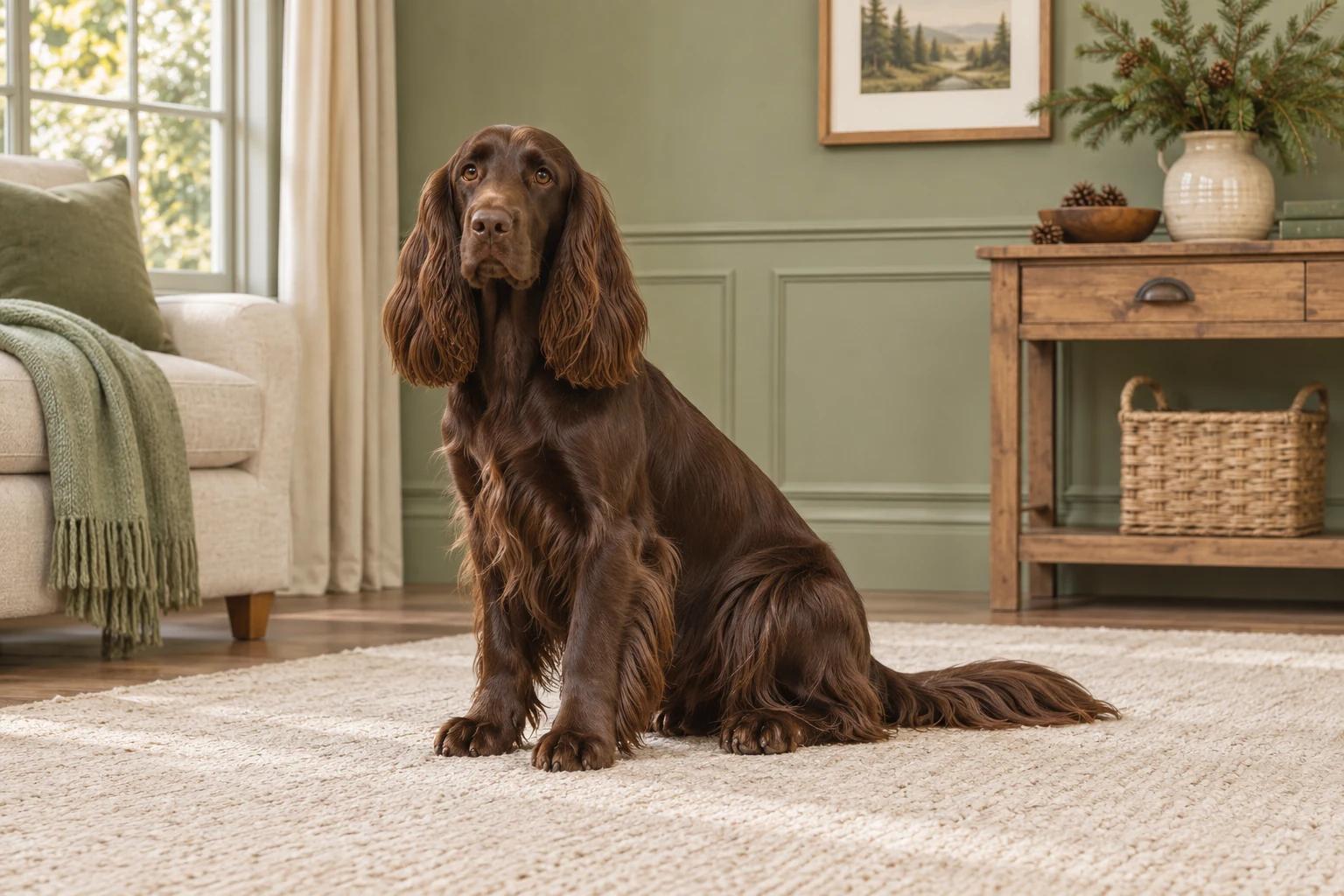
Field Spaniel temperament combines an interest in people with an active, curious approach to the world. The attractive part is companionship: a dog to join your ordinary day, not merely appear in weekend photographs. The practical question is whether your ordinary day has room for that partnership, including outdoor activity, patient teaching, and quieter time together.
The Field Spaniel profile gives the broader care picture. Here, the focus is on how to assess temperament in real situations rather than turn a handful of breed adjectives into a promise.
Field Spaniel temperament: companion and participant
The American Kennel Club's breed introduction describes sensitivity alongside lively participation in play and field activity. The American parent club's standard adds independence, intelligence, an affinity for people, and possible reserve at a first meeting. These ideas fit together: a dog can enjoy company without greeting everyone immediately or following every request automatically.
For a prospective owner, that suggests a better question than “Is the breed friendly?” Ask what the dog actually does when a visitor arrives, when someone sits down, and when the visitor leaves. A brief greeting followed by returning to a familiar person tells a different story from persistent jumping or hiding. Neither a photograph nor one excited arrival captures the full picture.
Arrange to observe an adult Field Spaniel after the initial excitement has passed. If possible, join a routine walk and then see the dog at home. You are looking for the transition between activities, not a perfectly rehearsed demonstration. Ask the caregiver what they did that morning so you understand the context of what you see.
The personality behind the appealing description
Field Spaniel personality is often discussed using soft words such as sweet or sensitive. Those words are useful only when translated into choices you can make. For example, decide how you will give instructions when you are rushed. If one person repeatedly calls from another room while another physically steers the dog, the household is offering very different information.
Choose a small shared vocabulary for coming over, waiting, and moving away from a doorway. Keep a note near the lead so everyone uses the same words. This is especially useful during the first weeks, when an unfamiliar home already contains plenty to learn. Clear routines make it easier to see what the dog understands and what still needs practice.
Independence also deserves a fair interpretation. A spaniel investigating the edge of a path is not necessarily making a statement about your relationship. Before labeling the dog stubborn, consider whether you have taught the requested behavior in that setting. Responding in the kitchen and responding beside interesting vegetation are different exercises.
Build a day with transitions, not constant entertainment
For this sporting spaniel, think in terms of shared outings and purposeful activities rather than assuming a garden provides a complete day. Your plan might include a walk with opportunities to investigate, a small training game, and time nearby while you work. These are planning examples, not a prescribed exercise quota.
A useful household exercise is to draw three columns: before work, during work, and after work. Put a real person's name next to each responsibility. If the middle column is blank, address that before choosing a dog. Affectionate companionship does not solve an absence schedule, and an enthusiastic evening cannot be assumed to compensate for every daytime arrangement.
Include an ending to activities. Put the toys away, offer access to a comfortable resting place, and make the next part of the day predictable. Otherwise you may unintentionally organize every interaction around starting another game. A companion dog needs to learn your ordinary pauses as well as your interesting invitations.
Greetings, visitors, and everyday sound
Initial reserve is among the Field Spaniel characteristics described in the standard. Let a new visitor sit down rather than requiring the dog to approach an outstretched hand at the doorway. Ask visitors to follow your plan and give the dog room to choose its distance. A voluntary approach is more informative than a greeting manufactured by pressure.
For a busy household, rehearse practical management before an actual gathering. Identify where the dog can rest, who will handle the entrance, and how guests will know not to open an internal gate. This is not about expecting a particular problem. It is about avoiding a situation in which the dog must improvise while everyone is distracted.
The breed profile places vocal tendency around the middle of its reference scale. Do not plan around silence. During a visit, ask which sounds prompt barking and what happens next. “Barks at deliveries, then returns to the room” is more useful information than “not very noisy.” Your shared walls and work calls make the context important.
Evaluate behavior without reducing the dog to a label
When discussing Field Spaniel behavior, request examples covering more than the best moments. Ask about handling after a muddy walk, settling after visitors, walking past other dogs, and spending time apart from familiar people. An adult dog's established routine can reveal details that a puppy assessment cannot yet provide.
Keep notes in ordinary language. Write “moved behind the chair when the brush appeared,” not “bad temperament.” The first observation gives a trainer or caregiver something concrete to discuss. For a sudden change or signs of discomfort, consult a veterinarian rather than assuming personality explains it. Individual dogs differ, and history and learning matter alongside breed tendencies.
If you enjoy the Field's companionship but are uncertain about your schedule, use the breed match quiz to organize the tradeoffs. The separate story of two historical setbacks explores the breed's past; it is not a forecast of an individual dog's behavior today.
FAQ
Is a Field Spaniel always outgoing with strangers?
No. The parent-club standard allows some initial reserve. Assess how the individual dog approaches unfamiliar people without forcing contact, and ask the caregiver what introductions normally look like at home and away.
Does a sensitive temperament mean a Field Spaniel cannot learn?
No. Sensitivity and learning ability are different things. Plan clear, manageable practice and observe which situations make concentration difficult. A training conversation is more useful when it names the task and setting rather than simply calling the dog sensitive.
Can a Field Spaniel suit someone who works from home?
Working from home may make shared routines easier, but availability matters more than the address. Check whether meetings allow outdoor breaks, whether someone can help during long calls, and where the dog will rest without being expected to stay involved all day.
Sources behind this article
Article source checked: November 15, 2026. Source checked 2026-11-15
Keep reading

Airedale Terrier Temperament: What Everyday Life Can Feel Like
Read article →