Entlebucher Mountain Dog exercise needs: a working plan
Plan Entlebucher Mountain Dog exercise with purposeful walks, learning, suitable activities and recovery rather than a single daily minute target.
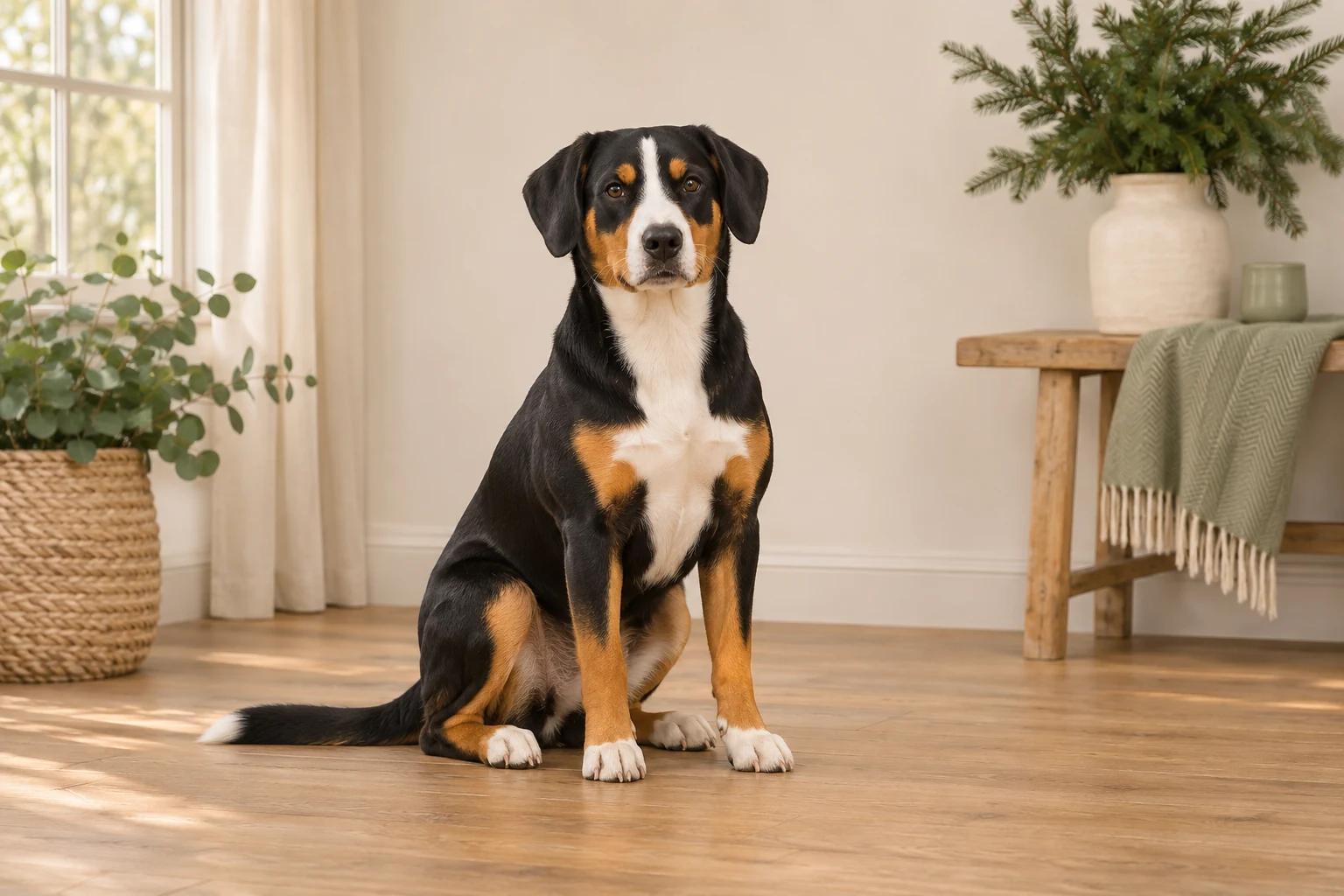
Explore the
Entlebucher Mountain Dog
Background, care, and everyday considerations.
View breed profile →Entlebucher Mountain Dog exercise needs are substantial, but a single number of minutes is not a complete plan. This is an active working breed, and the useful question is what your dog will do with you across an ordinary day. A long walk can contribute without replacing learning, exploration, shared activity and rest.
NEMDA describes high-energy dogs that enjoy running, playing and having something to do. It offers activities such as hikes and agility as examples, not a universal prescription. Your dog's age, current condition and experience should shape which activities are appropriate and how you introduce them.
Entlebucher Mountain Dog exercise needs: start with your week
Before adding a dog to your household, make a realistic activity calendar. Include the time spent getting ready and traveling to a suitable place. A walk that requires a drive, equipment preparation and cleanup takes more of the morning than the time recorded on a fitness app.
List the days when your schedule is most constrained. Who will provide care then? Where can the dog have a useful outing when your favorite route is inaccessible? If the entire plan depends on one person having an unusually flexible day, make a backup arrangement now.
The AKC's description of a purposeful, energetic cattle dog is a reminder not to choose this breed for a low-input routine. At the same time, more exertion is not the answer to every difficulty. Build a schedule you can sustain rather than competing with someone else's mileage.
Give the daily walk several useful parts
An Entlebucher Mountain Dog daily walk can combine movement, investigation and a little instruction. You might begin on a quiet stretch where you practice walking together, pause in an appropriate place to investigate and then return along a route with fewer distractions. That sequence is an example, not a required formula.
Choose the route for its usable space. A narrow pavement beside fast traffic may be suitable for getting somewhere but poor for practicing a new skill. A quieter area can give you room to step aside, reset and reward a response without constant pressure from passing people.
Keep the dog under appropriate control. Do not assume that working alongside people historically means an individual will reliably stay with you without training. Secure equipment and sensible route choices let you practice while managing the consequences of an unfinished skill.
Make the return home part of the plan. Put equipment away, provide the usual care and allow a transition to rest. If every walk ends in another burst of excitement at the door, teach that transition separately rather than endlessly extending the outing.
Add thinking without making everything harder
The Entlebucher Mountain Dog activity level is not only a matter of moving faster. A suitable search task or a short session learning a new response can give the dog something to solve with you. Begin with a version that is easy to understand.
For example, place a familiar appropriate toy where the dog can see it, invite them to find it and reward engagement. Later, make the location slightly less obvious. Keep the area safe and supervise the task; household clutter is not automatically suitable search material.
Another option is practicing a useful transition, such as returning to you before you change direction on a walk. You are building a shared activity with a practical result. If the dog becomes confused, simplify the arrangement rather than adding more instructions.
Rotate a few successful options instead of buying a new puzzle whenever the dog masters one. Familiar activities still have value. Novelty should help your routine, not become an expensive requirement to keep the dog occupied.
Explore sports as a learner, not as a shortcut
If agility or another organized activity interests you, begin with an instructor who can assess suitable foundation work. Ask what happens in an introductory class, how dogs rest between turns and how exercises are adapted. Do not set up demanding obstacles simply because you have seen an athletic adult perform them.
A sport can become a rewarding part of the week, but it does not excuse ignoring the other days. Write down what the dog will do between classes. The daily partnership is built during those ordinary periods, not only when an instructor is present.
Similarly, a hiking goal needs preparation. Discuss the dog's suitability with your veterinarian, learn the route and consider access to water, terrain and a way to turn back. Your own comfort is not a reliable measure of what the dog can manage in particular conditions.
Keep play from becoming an endurance test
Choose games with manageable starts and finishes. You might practice returning a suitable toy over a short distance in an appropriate area, then switch to a quieter task. You do not need to keep throwing until the dog stops asking.
Notice whether you can interrupt the activity comfortably and whether the dog can respond to familiar cues. If the game becomes frantic, change the setup and seek help if needed. Repeating an increasingly intense pattern is not the same as providing a thoughtful exercise outlet.
Plan rest deliberately. A place away from household traffic allows the dog to be present without being constantly recruited into activity. Do not treat every quiet interval as a sign that the day needs another event.
Review the plan instead of chasing a number
If you are asking how much exercise does an Entlebucher Mountain Dog need, start by discussing the individual with your veterinarian and the people who know their current routine. There is no single duration established by the breed descriptions that fits every age, condition and activity type.
Keep a short record of the outing, conditions and the dog's response afterward. Note changes such as reluctance to participate or difficulty settling, but do not diagnose the cause from the diary. Unexpected changes or signs of discomfort warrant veterinary assessment.
Use the record to ask better questions. Perhaps a particular location is too distracting, the weekly schedule is inconsistent or you need instruction in a skill that would make walks easier. The solution may involve organization or training rather than simply adding distance.
The Entlebucher Mountain Dog profile puts activity alongside other commitments. Our natural-tail and bobtail article covers a separate breed-identification question. Use the breed quiz to consider whether an involved exercise routine matches your life.
Sources checked November 15, 2026: AKC Entlebucher overview and NEMDA common questions. The schedule and activity examples are original applications, not a veterinary exercise prescription.
FAQ
Is access to a garden enough exercise?
A garden can be useful space, but access alone does not provide a complete activity plan. An Entlebucher needs an involved routine with suitable movement, shared activities and learning opportunities.
Does every Entlebucher need agility?
No particular sport is mandatory. Agility is one possible interest to explore with qualified instruction, provided it suits the individual dog. Choose activities you can maintain and both enjoy.
Should I keep increasing exercise until my dog is exhausted?
No. Exhaustion is not a useful daily target. Plan appropriate activity and recovery, and seek veterinary or qualified behavior advice if restlessness, discomfort or behavior changes concern you.
Sources behind this article
Article source checked: November 15, 2026. Source checked 2026-11-15
Keep reading

Afghan Hound Exercise Needs: Build a Workable Active Day
Read article →