English Springer Spaniel vs Welsh Springer Spaniel
Compare English and Welsh Springer Spaniels through daily routines, introductions, coats and the questions that matter when meeting individual dogs.
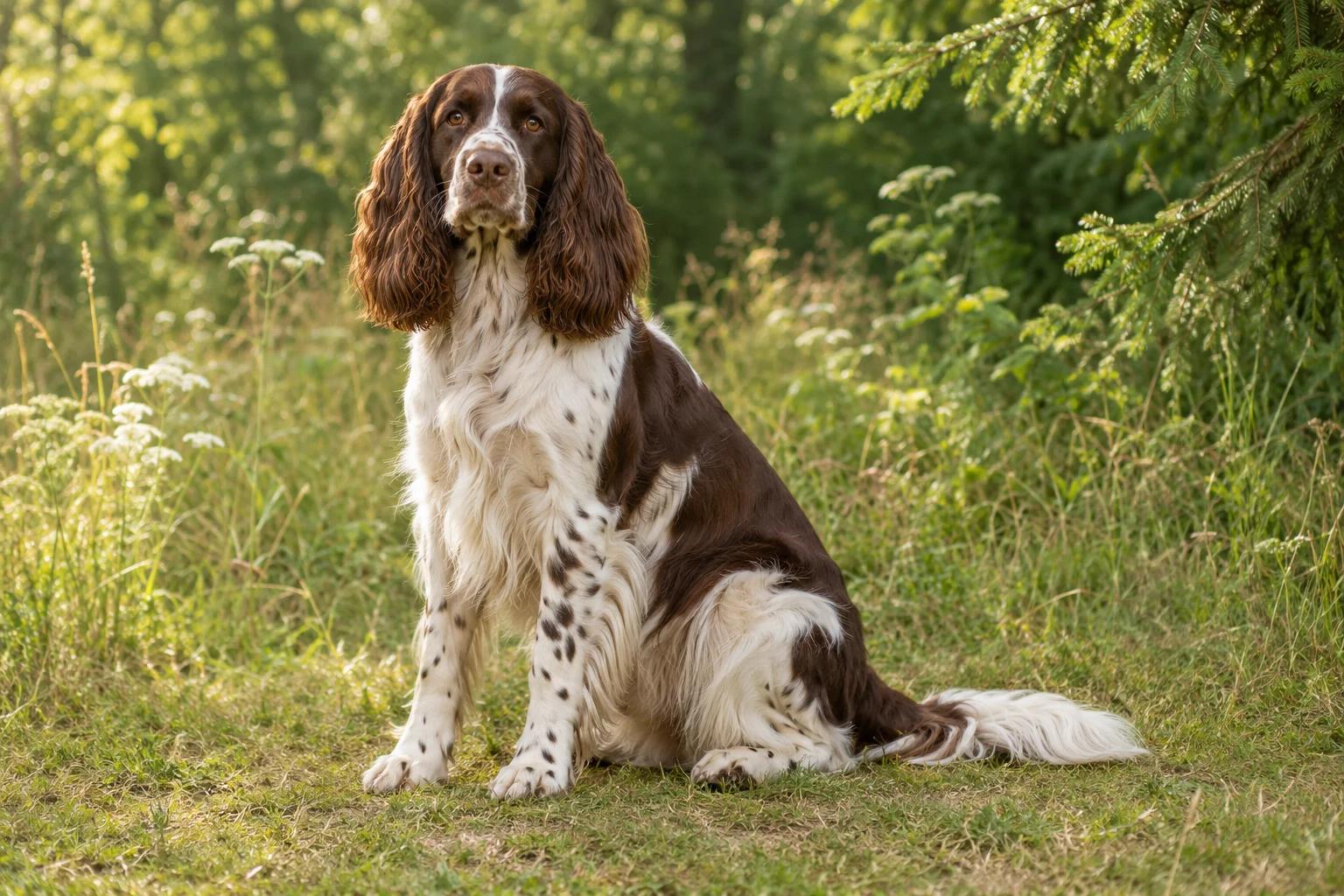
Explore the
English Springer Spaniel
Background, care, and everyday considerations.
View breed profile →English Springer Spaniel vs Welsh Springer Spaniel is not simply a choice between two colors of the same dog. They are distinct breeds with overlapping sporting interests and different breed descriptions. Both deserve an active ownership plan, but the way a particular dog meets strangers, works with you and settles into your home matters more than a photograph.
If you are choosing an English Springer Spaniel or Welsh Springer Spaniel, start with a week you can actually provide. Include ordinary workdays, visitors, bad weather and coat maintenance. Then use the comparison to prepare questions rather than to award one breed the title of easiest spaniel.
English Springer Spaniel vs Welsh Springer Spaniel: the useful differences
The Welsh Springer standard describes an active, affectionate dog that can be reserved with strangers. ESSFTA describes English Springers as generally sociable. That contrast is a starting point for introductions, not a rule that every English Springer greets everyone or every Welsh Springer wants distance.
Imagine a friend arriving at your home. With an outgoing dog, your main task might be keeping the greeting from becoming a rush at the door. With a more reserved dog, you might need to give the visitor time to sit down while the dog observes without pressure. Either way, a gate, a quiet resting place and a visitor who follows instructions are more useful than a temperament slogan.
Ask the breeder or rescue for examples: what happened when a new visitor arrived last week? How did the dog respond to someone carrying a bag or wearing outdoor clothing? A concrete description gives you more to work with than “friendly” or “shy.”
Size helps with equipment, but does not settle the choice
The English parent club lists adult reference heights of 20 inches for males and 19 inches for females. For weight, the current My Breed Atlas profile gives males at 45–55 pounds and females at 40–50 pounds. The Welsh standard gives ideal shoulder heights of 18–19 inches for males and 17–18 inches for females. These are reference descriptions, not a promise about a puppy's final measurements.
For a household, the difference between English Springer Spaniel and Welsh Springer Spaniel size is less important than whether the individual dog fits your arrangements. Measure the vehicle space, doorway and resting area. Check the actual adult's dimensions when choosing equipment instead of purchasing by breed name alone.
Do not infer that the slightly shorter reference height makes the Welsh Springer a low-activity alternative. Its standard describes a compact working dog built for endurance. If your plan depends on choosing the smaller-looking dog so you can provide less engagement, revisit the plan before choosing either breed.
Compare the outing you want to share
Both breeds invite questions about outdoor life. The AKC describes the English Springer as an energetic bird dog; the Welsh standard identifies an active flushing spaniel. For a companion home, that translates into a need to examine what you enjoy doing together, rather than assuming a garden supplies a complete routine.
Picture your preferred Saturday walk. Is it an open path with room for controlled exploration, a crowded promenade or a busy park full of unpredictable encounters? Ask about the particular dog's experience in a similar setting. A dog that works beautifully in one environment may need instruction and management in another.
Then consider Wednesday. Can someone provide purposeful activity and company without relying on a long weekend expedition to compensate? Make space for learning as well as movement. A short session practicing a return to you or a simple search game can give the outing a shared purpose.
If you hope to try a sport, ask a local instructor about a suitable introductory session. You do not need to choose a competitive career before bringing a dog home. You do need a realistic route from curiosity to safe participation.
Coat differences belong in the maintenance conversation
The Welsh standard describes a red-and-white coat with moderate feathering, intended not to obstruct work. English Springers have a medium double coat and shed, according to their parent club. Neither description means you can ignore the areas where equipment rubs or vegetation collects.
Rather than choosing from a clean studio photograph, ask to see the dog after an ordinary outing. What needs brushing? How much debris comes home? Which parts of the coat are maintained professionally? A demonstration can reveal whether the routine fits your patience and schedule.
When comparing Welsh Springer Spaniel vs English Springer Spaniel coats, separate color preference from work. Liking red and white is a valid aesthetic preference, but it does not tell you whether you will enjoy checking feathering after a wet walk. Equally, a shorter-looking individual coat does not remove ear, nail or dental care from ownership.
Give each dog the same fair meeting
Prepare a small set of observations rather than staging a test. Watch the dog enter the space, engage with their familiar person and recover after ordinary activity. Ask what a quiet day looks like. If possible, observe more than one meeting so an unusually busy or subdued moment does not become your entire impression.
Do not insist on touching a dog immediately to prove sociability. Let the handler explain how introductions normally work. If the dog is enthusiastic, ask how they are helped to settle. If they keep some distance, ask whether that is typical and what helps them become comfortable.
Bring the same household description to each conversation. Mention time alone, transport, other animals and visiting people honestly. Avoid presenting a different idealized life to each breeder because you are excited about their dogs. The comparison only works if the home you are describing stays the same.
Make the final decision about a relationship
Choose the dog whose observed needs and support arrangements fit the life you can sustain. A breed tendency can guide your questions; it cannot answer questions about one animal's history, preferences or adjustment to your home.
Read the English Springer Spaniel profile and Welsh Springer Spaniel profile together. Our English Springer field and bench article explains another label that should lead to questions, not shortcuts. The breed quiz can help you identify which everyday commitments deserve more thought.
Sources checked November 15, 2026: ESSFTA FAQ, AKC Welsh Springer standard and AKC English Springer overview.
FAQ
Is the Welsh Springer a smaller English Springer?
The Welsh Springer is a distinct breed, not a size variety of the English Springer. Its standard has its own description of build, coat and temperament, although both are sporting spaniels.
Which breed is more outgoing with strangers?
Breed descriptions generally present the English Springer as sociable and the Welsh Springer as more reserved with strangers. Assess the individual dog's actual introductions rather than treating that tendency as a prediction.
Which Springer needs less activity?
Neither breed should be selected as the low-activity version of the other. Both have working sporting backgrounds. Discuss the particular dog's daily routine and suitable activities with the people who know them.
Sources behind this article
- English Springer Spaniel Field Trial Association: Frequently Asked Questions ↗
- AKC: Welsh Springer Spaniel standard ↗
- AKC: English Springer Spaniel ↗
Article source checked: November 15, 2026. Source checked 2026-11-15
Keep reading

Affenpinscher vs Brussels Griffon: Everyday Differences
Read article →