English Springer Spaniel grooming: a practical coat plan
Plan English Springer Spaniel grooming around feathering, outdoor debris, shedding and comfortable handling without chasing a show-ring finish.
Explore the
English Springer Spaniel
Background, care, and everyday considerations.
View breed profile →English Springer Spaniel grooming works best when you separate two jobs: maintaining the coat between outings and deciding how you want it trimmed. A tidy silhouette cannot compensate for knots underneath the ears, while a practical companion coat does not need a show-ring finish. Start with comfort, access to the skin and a routine you can repeat after an ordinary walk.
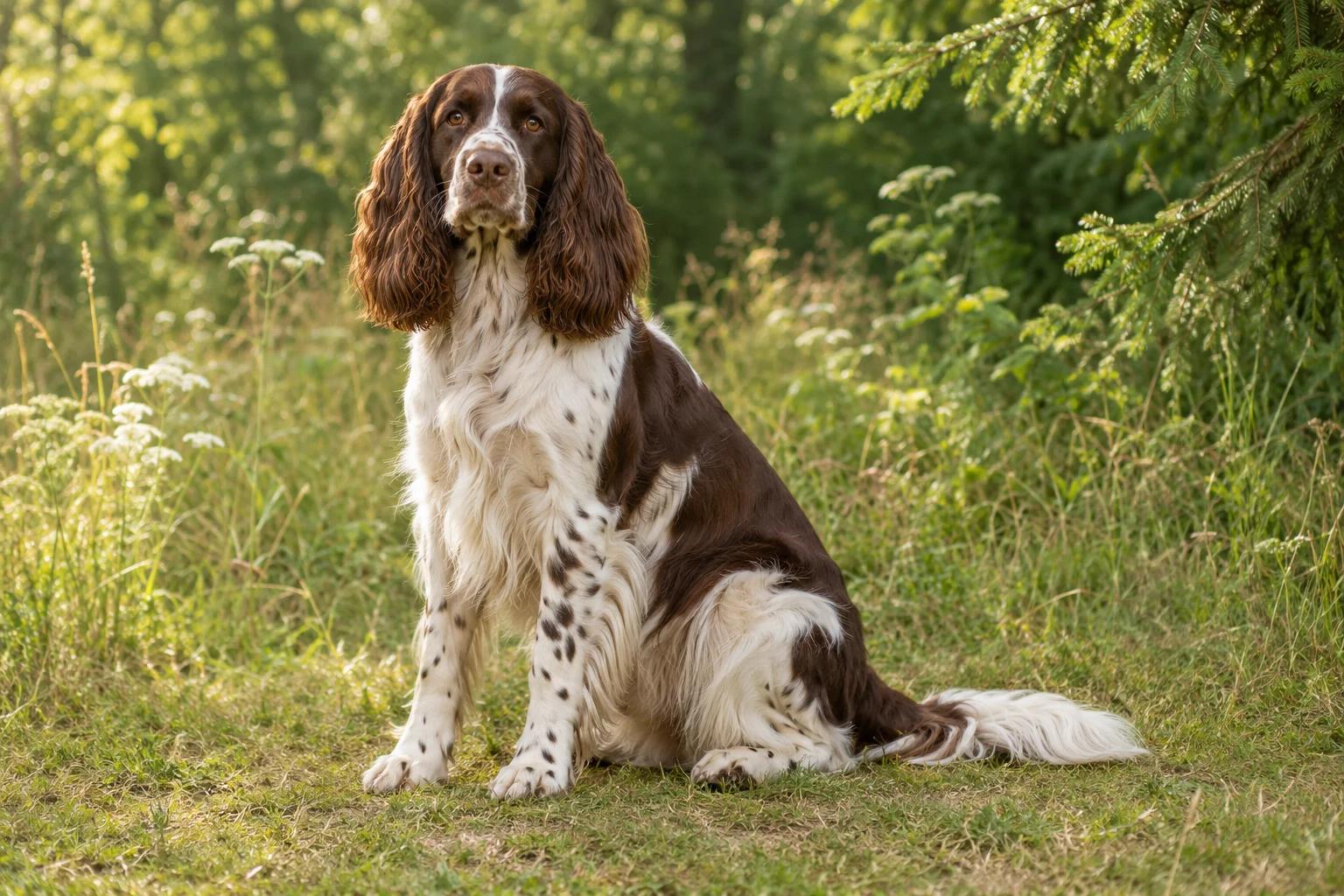
Your Springer’s feathering is part of the planning problem. Grass, damp leaves and small pieces of vegetation can travel home with the dog. Put the grooming kit where you return from outings, rather than somewhere that turns every check into a separate expedition.
English Springer Spaniel grooming starts with a coat map
The English Springer Spaniel Club of Canada describes a coarser outer layer, softer undercoat and longer hair on areas including the legs, chest and underside. Use those different textures to divide the job. The body coat and the long furnishings do not necessarily need the same handling or the same tool.
Ask a groomer familiar with spaniels to demonstrate on your own dog. Watch how they separate a small section, support the hair and check whether a comb passes through without pulling. Buying a large collection of tools is less useful than learning what one brush and one comb should accomplish.
Make a simple map of the places that need attention after your usual route. A meadow walk may leave debris along the legs and underside. A harness may hide a small tangle where it rests against the coat. Check beneath equipment rather than assuming the visible surface tells the whole story.
Organize care around three different occasions
Returning from an outing
Begin with a brief visual inspection while your dog is settled on a non-slip surface. Look at the feathering, feet and outside of the ears. Remove only loose debris that comes away comfortably. If material is embedded, close to the skin or painful to touch, stop and ask an appropriate professional for help.
This is not the time to force a full grooming session after every walk. The purpose is to notice a developing problem before it disappears beneath more hair. Keep an absorbent towel near the door and give damp equipment somewhere to dry separately from the dog’s bedding.
A regular brushing session
Choose a quieter time when you are not rushing to leave home. Work through manageable sections and pause before the dog becomes frustrated. The ESSFTA notes that Springers shed and benefit from brushing; the practical question is whether your method reaches the coat rather than simply polishing its top.
Use a comb as a check, not as a way to drag through resistance. If it catches, inspect the area instead of pulling harder. A groomer can show you which minor tangles are reasonable to work on and which need professional attention. Do not cut close-fitting mats out with household scissors.
A professional appointment
Bring a clear description of your routine: woodland walks, swimming outings, harness use and how much brushing you can genuinely maintain. Ask what work will remain between appointments after the proposed trim. A haircut that photographs well but cannot be maintained in your household is not a useful plan.
Make the trimming conversation specific
“How to groom an English Springer Spaniel” can mean anything from brushing the ears to preparing a competition coat. Tell the groomer you are discussing a companion dog and describe the result you want in practical terms. For example, you may want to reduce debris collecting underneath while retaining a recognizable spaniel outline.
Ask them to show you what they mean by shortening feathering, tidying feet or thinning an area. Photographs help, but the pictured dog may have a different amount or texture of coat. Agree on the actual work before the appointment, including what happens if the groomer discovers tight mats.
Avoid deciding on a dramatic clip solely because a phrase such as “summer cut” sounds convenient. Discuss the condition of the coat, your maintenance capacity and any skin concerns with the appropriate professional. You do not need an argument about the one correct spaniel haircut; you need a manageable plan for this dog.
Treat shedding as a household task, not a failure
English Springer Spaniel shedding is part of ownership. The Canadian club notes that seasonal undercoat loss can make loose hair more noticeable and that brushing does not remove every hair from the home. Set your expectations accordingly rather than repeatedly changing shampoos in search of a hair-free result.
Think about where the dog rests after an outing. A washable cover on the preferred chair may save more work than a complicated cleaning routine applied to the entire house. Keep grooming tools clean and put collected hair directly into a bin so it does not become another cleaning job.
Separate changes in household hair from changes in the dog. Unexpected bald areas, persistent scratching or uncomfortable skin are reasons to contact your veterinarian, not reasons to intensify brushing or experiment with treatments. Ordinary coat maintenance should not become home diagnosis.
Include ears, feet and handling without improvising treatment
English Springer Spaniel coat care includes noticing what the coat conceals. Look at the outside of the ears and ask your veterinarian to demonstrate any ear-care routine appropriate for your dog. Do not introduce cleaners or instruments into the ear simply because another Springer owner recommends them.
The same principle applies to nails and dental care: arrange a demonstration and a plan rather than waiting until a problem is obvious. Let handling practice happen outside maintenance sessions. Showing the brush, touching a foot briefly and rewarding calm participation can be easier to teach when no urgent grooming job is waiting.
Record areas your dog dislikes having touched and tell the groomer. A sudden change in tolerance deserves investigation. The goal is not to finish every task at any cost, but to make routine care workable over the dog's life.
The English Springer Spaniel profile puts coat care alongside activity and companionship. Read our field and bench article for the limits of predicting maintenance from a label. If you are still comparing ownership demands, use the breed quiz.
Sources checked November 15, 2026: ESSCC Grooming and Care and ESSFTA FAQ. These sources establish coat characteristics; the household organization is original editorial guidance.
FAQ
How often should I groom an English Springer Spaniel?
Use a consistent brushing routine and add checks after outings that collect debris. The right frequency depends on your dog's actual coat, activities and trim; ask a spaniel-experienced groomer to assess it.
Will brushing stop a Springer shedding?
Brushing can collect loose hair but will not eliminate English Springer Spaniel shedding. Plan for coat care and household cleaning rather than expecting a grooming product to remove the issue entirely.
Can I maintain the coat without a show trim?
A companion Springer does not require show presentation. Agree on a maintainable style with your groomer, and keep brushing and inspection in the routine whatever length you choose.
Sources behind this article
- English Springer Spaniel Field Trial Association: Frequently Asked Questions ↗
- English Springer Spaniel Club of Canada: Grooming and Care ↗
Article source checked: November 15, 2026. Source checked 2026-11-15
Keep reading

Affenpinscher Grooming: A Practical Coat-Care Routine
Read article →