Egyptian Mau vs Bengal: markings, size and everyday play
Compare Egyptian Mau vs Bengal through current male and female weights, coat patterns and practical play expectations without assuming a universal ranking.
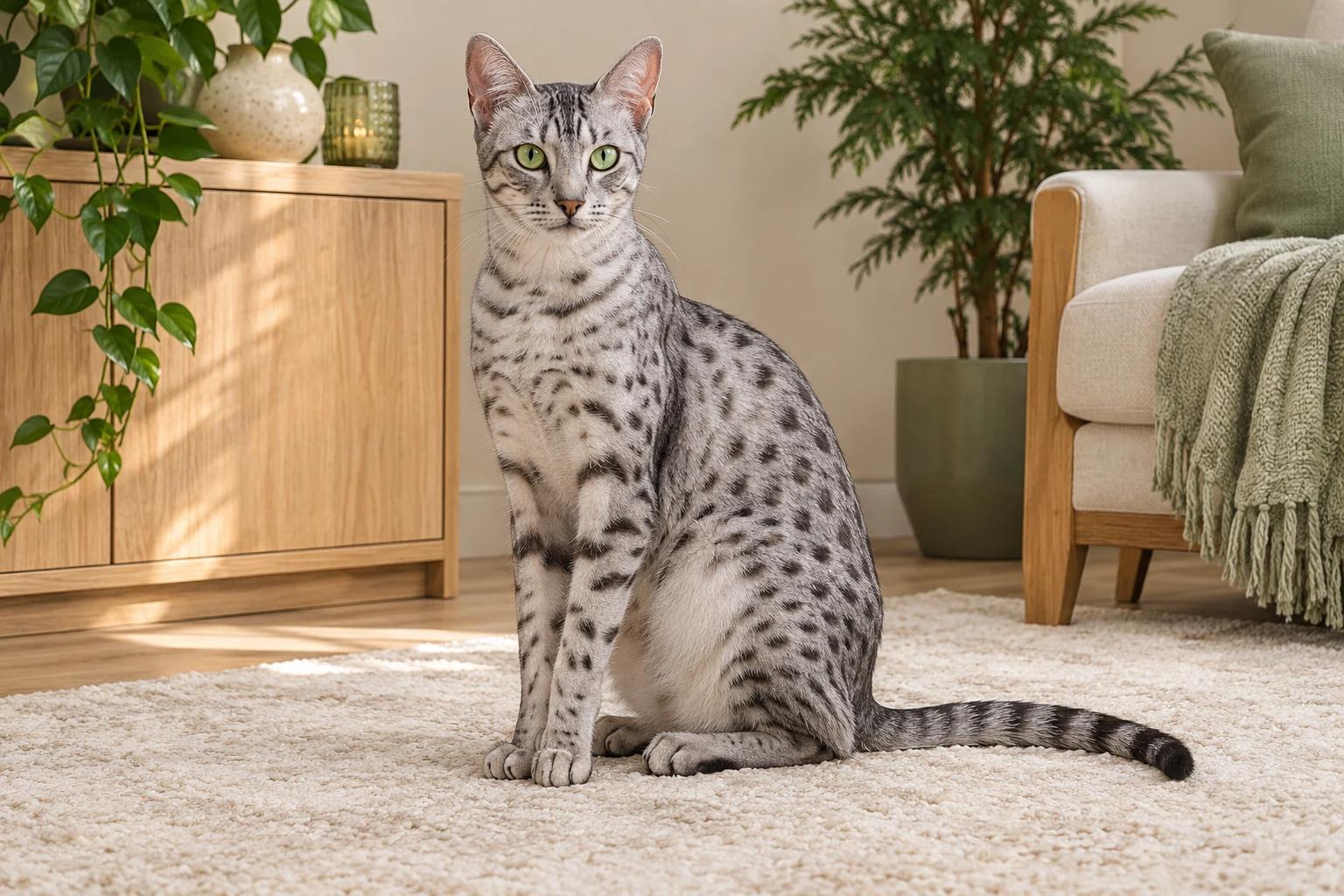
Egyptian Mau vs Bengal is not a choice that a photograph can settle. Before deciding which breed appeals to you, separate the questions of adult weight, visible markings and everyday interaction. A cat can fit your preferred appearance without fitting what you want from companionship. Equally, two individuals from different breeds can fit the same weight reference without being interchangeable choices for your home.
Egyptian Mau vs Bengal: compare like with like
The current Egyptian Mau profile gives an adult range of 7–13 pounds overall, with females at 7–9 pounds and males at 9–13 pounds. The Bengal profile gives 6–15 pounds overall, with females at 6–12 pounds and males at 9–15 pounds.
Those intervals overlap substantially. The entire female Mau reference falls within the female Bengal interval, and the entire male Mau reference falls within the male Bengal interval. An eight-pound female or an eleven-pound male could fall within either breed's corresponding reference.
The Bengal interval extends farther, but that is not the same as saying every Bengal is heavier than every Mau. Comparing a twelve-pound Bengal female with a seven-pound Mau female describes two possible individuals, not a fixed difference between the breeds. Reversing the individuals could reverse the result.
For a useful Bengal vs Egyptian Mau size comparison, keep sex and adulthood visible. A kitten's current weight does not tell you which adult endpoint it will reach. Nor does the midpoint of a published interval become a prediction simply because it is easy to calculate.
These figures are references, not targets for feeding or a home assessment of condition. Your veterinarian can interpret an individual cat's weight. Choosing between Egyptian Mau or Bengal candidates should not become a contest to find the biggest or smallest example in a range.
Recognize the Mau's markings and outline together
The CFA Egyptian Mau description describes separate spots that vary in shape and size, distributed without a regular pattern. Silver, bronze and smoke are the three exhibition colors. The silver and bronze coats have a dense, resilient texture; smoke is finer and silkier.
The standard describes a medium-long, muscular body and proportionately longer hind legs. The head is a slightly rounded wedge, with medium-to-large ears and green eyes. General balance matters more than size alone.
For someone comparing cats, that means looking beyond the presence of spots. The outline, head and coat are parts of the same animal. Two cats can both be spotted without having the same proportions or the same pattern arrangement.
Avoid treating the most dramatic marking as the entire difference between Egyptian Mau and Bengal. The Mau's spots are not required to be identical circles, and symmetry on both sides is not the point of the description. Variation within the pattern is part of what you are seeing, rather than evidence that a particular cat is an inferior companion.
The Bengal offers another pattern vocabulary
LOOF's Bengal description distinguishes spotted coats, including rosettes, from marbled coats. Its rosette description includes a darker outline around a lighter center, with open or closed forms. Marbling creates a different, extended arrangement rather than a collection of separate dots.
This gives you a more useful starting point than calling every marking a spot. When someone says they like Bengals, they may have a particular coat arrangement in mind. Ask which one, rather than assuming all Bengals look like the first example they saw.
LOOF also describes the established Bengal as active, curious and friendly. That is a companionship description, not a reason to treat a domestic pet as a miniature wild animal. Appearance should not dictate how you handle or interact with an individual.
For the practical decision, place those two interests side by side: attraction to the coat and interest in living with the cat. You can appreciate the pattern without making it the deciding factor. The daily relationship will involve the individual animal, not only the feature that first caught your eye.
Consider an actual game, not an activity contest
The GCCF's Egyptian Mau account describes playful cats that may retrieve thrown toys and enjoy a high activity center. It also mentions water interest in some individuals. These are possibilities to explore, not requirements every Mau must satisfy.
A useful question for a prospective owner is whether they enjoy participating in a game. Fetch, when an individual offers it, involves a repeated exchange rather than simply leaving a toy on the floor. Climbing equipment offers a different kind of activity from a game with a person. Neither substitutes automatically for the other.
Do not use a Mau's disinterest in a particular thrown toy to conclude that the breed description is wrong or that the cat lacks personality. It may prefer another activity. Likewise, the mention of water is not an instruction to put a reluctant cat near a running tap.
This is a practical way to evaluate the Mau without awarding either breed a universal “more active” title. Consider the activities the individual already enjoys and whether you would enjoy sharing them.
Make the final choice about the cat
A breed comparison helps narrow a search; it does not replace meeting the candidates. Our cat breed quiz can help organize your preferences. For a separate introduction topic, see letting an Egyptian Mau meet visitors. Keep that question distinct from deciding which breed interests you in the first place.
Frequently asked questions
Is a Bengal always heavier than an Egyptian Mau?
A Bengal is not always heavier than an Egyptian Mau. Current female references are Mau 7–9 pounds and Bengal 6–12; male references are Mau 9–13 and Bengal 9–15.
Must a Mau have identical round spots?
Egyptian Mau spots can vary in size and shape, according to CFA.
Must an Egyptian Mau enjoy water?
Egyptian Maus need not enjoy water; don't make reluctant cats participate.
Sources behind this article
Article source checked: November 16, 2026. Source checked 2026-11-16
Keep reading

Abyssinian vs Somali: Coat, Size and Everyday Company
Read article →