More wrinkles are not the goal for a Dogue de Bordeaux
Read the Dogue de Bordeaux standard’s limits on exaggerated features and connect them with Raymond Triquet’s preservation work, without mistaking appearance for a health clearance.
An imposing breed still has limits
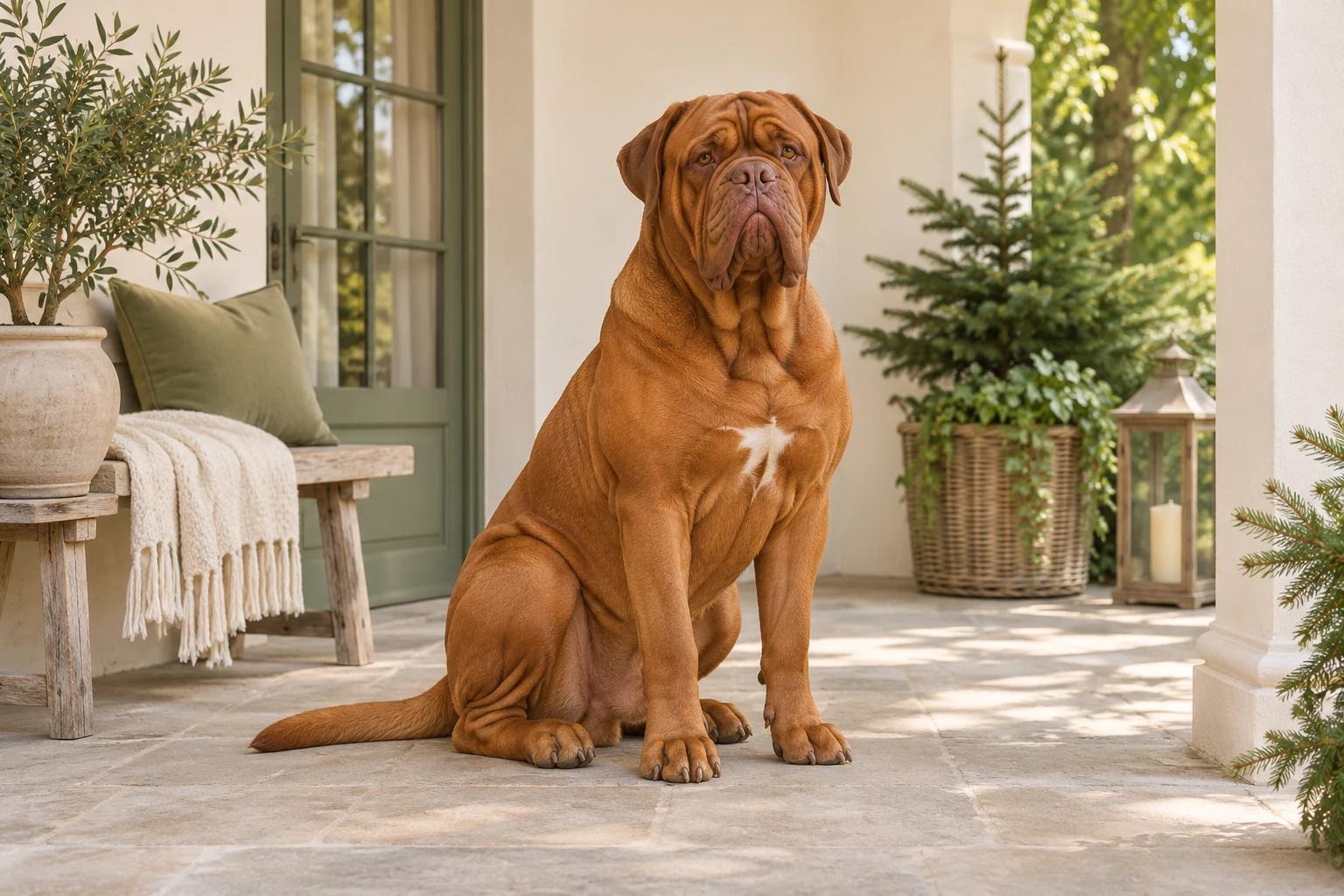
The Dogue de Bordeaux's large head and facial folds are hard to miss. A photograph emphasizing those features can leave the impression that more must always be better. The AKC standard says otherwise: it describes a harmonious outline and explicitly faults an excessively large head, certain exaggerated folds and other extreme features.
Its skin description also calls for looseness without excessive wrinkling. These details matter because they appear in the same document that describes the breed's characteristic mass and power. Reading only the most dramatic phrases produces a different picture from reading the standard as a whole.
Preservation involved defining boundaries
AKC's historical account credits Raymond Triquet with a major role in reviving the Dogue de Bordeaux after its postwar decline. It describes his work with the dog Mowgli de la Maison des Arbres and his contribution to modern breed standards. The account also emphasizes his concern about exaggerated specimens losing the athletic character he valued.
That history gives the standard's limits a practical context. Preserving a breed did not simply mean amplifying its most recognizable details. It involved describing proportions and function closely enough that future enthusiasts could distinguish characteristic features from excess. The article's historical account is not a claim about any particular breeder or dog today.
Read the whole description, then ask wider questions
When comparing information about Dogues, notice whether the discussion focuses entirely on head size and wrinkles or also addresses movement, proportion and everyday comfort. Ask the person caring for a dog to explain its routine and provide relevant health records. A conformation description can help you understand terminology, but it cannot replace an individual veterinary assessment.
For example, a prospective owner may save a striking close-up and request a puppy that will look exactly like it. Stepping back to consider the whole adult dog changes that conversation: how it moves, how it is cared for and what is actually known about its health. The standard offers reasons to resist the idea that the most exaggerated photograph is automatically the best example. It does not certify health from appearance or promise how a puppy will develop.
Sources behind this article
Article source checked: October 20, 2026. Source checked 2026-10-20
Keep reading
Dogue de Bordeaux training: cooperation before strength
Read article →