Dogo Argentino vs Dogue de Bordeaux: practical fit
Compare the athletic Dogo Argentino and stockier Dogue de Bordeaux through activity, size, household care and everyday expectations.
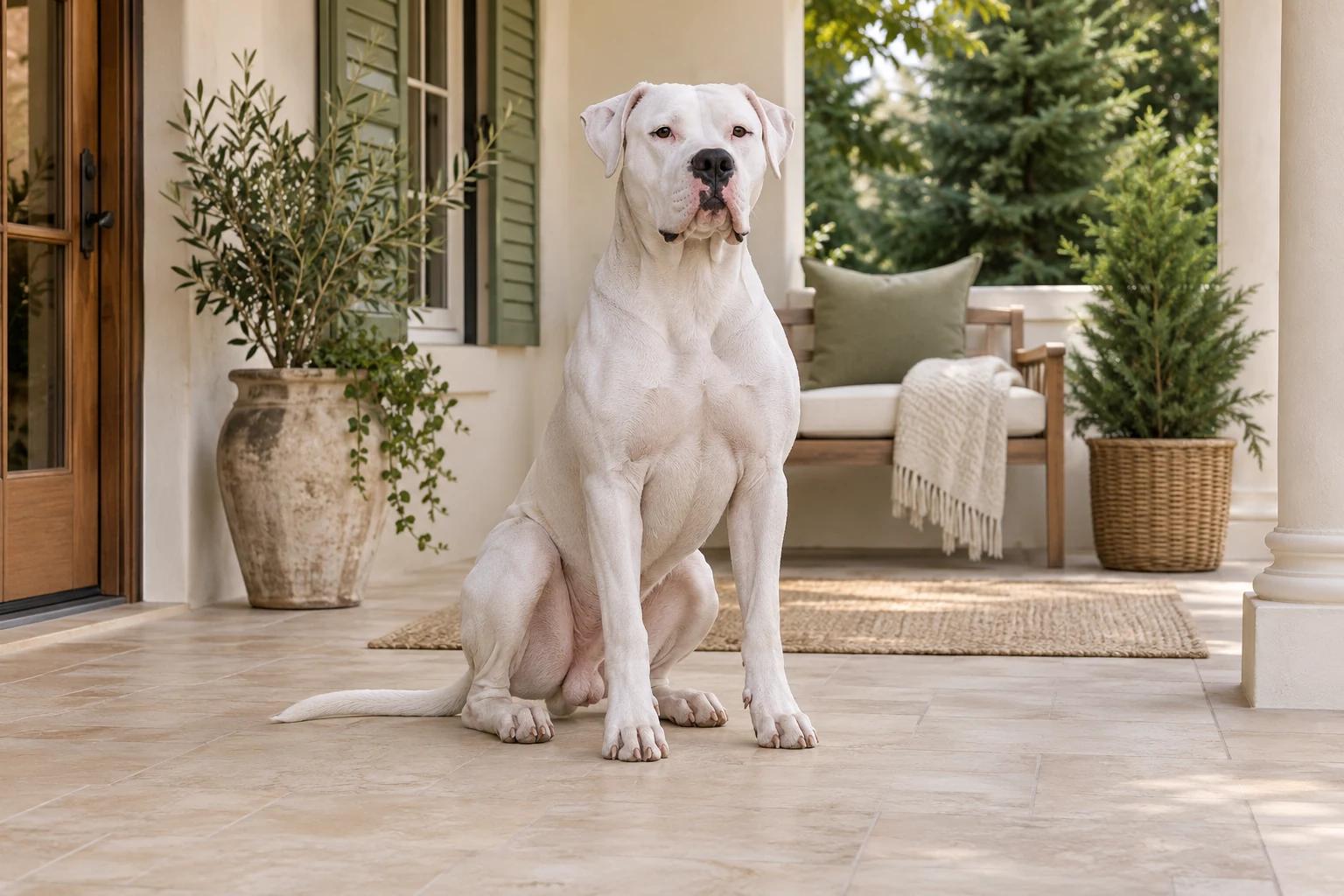
Dogo Argentino vs Dogue de Bordeaux can sound like a choice between similar names, but it is a comparison of distinct breeds. The Dogo Argentino is the white-coated Argentine hunting athlete. The Dogue de Bordeaux is the fawn French guardian with a stockier outline. Their shared physical strength does not make their daily ownership demands interchangeable.
Read the Dogo Argentino profile alongside the Dogue de Bordeaux profile. Then compare what each would require on an ordinary weekday, including the less photogenic details: transport, visitor routines, cleaning and who handles the last outing.
Dogo Argentino vs Dogue de Bordeaux: different starting points
The FCI Dogo standard identifies a big-game hunting breed with an agile, muscular frame. The AKC Dogue standard describes a stocky, powerful guardian and a calm, affectionate temperament ideal. This contrast helps frame questions, not predict every dog's behavior.
For the Dogo, investigate the practical outlets you can offer an active dog and the environments where you can train comfortably. For the Dogue, investigate the realities of living with a broad, heavy companion and managing social situations without relying on physical persuasion. Neither should be chosen simply because its appearance seems reassuring or impressive.
The better match is the dog whose needs you can meet repeatedly. A memorable weekend with an adult of either breed is useful experience, but it is not the same as maintaining that routine through work deadlines, bad weather and holidays.
Build and weight change the logistics
My Breed Atlas lists the Dogo Argentino at 88–99 pounds. For the Dogue de Bordeaux, the reference gives males at 110–145 pounds and females at 99–120 pounds. These are adult breed reference ranges, not a target or guaranteed outcome for an individual dog.
Do not reduce that difference to whether you have enough floor space. Consider the car opening, a narrow turn between rooms and where the dog can rest without blocking access. Think about assistance if the dog cannot walk normally, and who can manage it when your usual caregiver is unavailable.
Try a practical rehearsal before buying equipment. Measure the usable transport area and mark the intended bed space. Review the manufacturer's dimensions rather than relying on a product photograph featuring a vaguely similar dog. Equipment that fits the home but not the animal is not a successful compromise.
The activity comparison favors different routines
The live Atlas profiles rate the Dogo's activity needs higher than the Dogue's. Both profiles also identify meaningful mental engagement. A lower activity rating for the Dogue therefore does not mean it is a decorative companion that needs no teaching or outings.
If your ideal day includes varied outdoor activity and you enjoy maintaining a training project, the Dogo may be worth investigating further. That interest must be backed by suitable spaces and capable handling. Athletic appearance is not permission to impose a demanding fitness plan on a puppy or unconditioned adult.
If you prefer a less physically intense routine, the Dogue may seem more appealing. Still ask owners what their dogs actually do each day and how they manage walks and learning. Have a veterinarian guide activity appropriate to the individual. Neither breed should receive an exercise prescription based only on a comparison article.
Dogue de Bordeaux vs Dogo Argentino training
Both dogs need practical manners before their strength makes small habits difficult. Prioritize waiting while equipment is fitted, moving away from an entrance and walking through shared spaces under control. A dog who can do these tasks calmly will be easier to live with than one who performs elaborate tricks but rushes every doorway.
Ask a trainer about the places you actually use: a communal lift, a pavement with little passing room or a home where tradespeople visit regularly. A workable plan should include management when you cannot run a lesson. Gates and separate resting areas should not depend on a guest remembering unfamiliar cue words.
Avoid selecting methods based on how tough the breed looks. Reward-based teaching and clear arrangements do not become less relevant when the dog is muscular. If fear, threats or repeated lunging arise, get qualified behavior support rather than making the exercises more confrontational.
Visitors, children and resident animals
Guardian heritage and affection for familiar people are not the same as universal comfort with visitors. Arrange arrivals so either dog can remain apart while you open the door. Tell guests what will happen before they enter, particularly if they might otherwise lean over the dog or reach toward its face.
Ask about the individual dog's experience with other animals. The Dogo's pack-hunting background does not prove it will accept every household pet, and a calm-looking Dogue is not automatically compatible with an unfamiliar dog. Discuss introductions and management with the caregiver and a qualified professional when needed.
Children require adult supervision and clear separation when supervision is unavailable. Give the dog a resting space that is not part of a play route. Do not use family-affection descriptions to excuse rough handling or assume either breed will tolerate every interaction.
Coat, drool and the work nobody photographs
Both profiles describe short coats with notable shedding. Short hair changes the kind of grooming involved, not whether hair enters the home. Plan accessible cleaning supplies and washable bedding rather than assuming a smooth coat means no maintenance.
The Dogue profile rates drooling higher than the Dogo profile. Consider whether towels near water bowls and cleaning around resting areas would fit your tolerance for household mess. Meet adult dogs indoors if possible. A brief encounter outside may conceal exactly the details that matter to daily comfort.
Routine handling is another consideration. Ask how each dog accepts equipment, grooming and ordinary examination. A cooperative care routine is valuable when the dog is too substantial to reposition casually. Your veterinarian and trainer can help with an appropriate approach if those tasks are difficult.
Choose the life, not the name
The central difference between Dogo Argentino and Dogue de Bordeaux ownership is not a single trait. It is how activity, physical build and the individual dog's social experience combine with your circumstances. Write down your limits before you meet an appealing puppy.
For anyone choosing a Dogo Argentino or Dogue de Bordeaux, the breed quiz provides a useful discussion prompt. Dogo research should also include the existing guide to BAER records and CHIC numbers, without confusing paperwork with a complete assessment of future suitability.
FAQ
Are the Dogo Argentino and Dogue de Bordeaux related names for one breed?
No. They are distinct breeds with different origins and working backgrounds. The Dogo Argentino comes from Argentina; the Dogue de Bordeaux is French.
Which breed is heavier?
The Atlas reference gives the Dogue a higher upper adult weight endpoint: 145 pounds compared with the Dogo's 99 pounds. Their overall ranges touch at 99 pounds. Individual dogs vary, so obtain actual measurements when planning handling and equipment.
Which breed needs more exercise?
The Atlas activity rating is higher for the Dogo Argentino. Both need an individual daily routine with movement and mental engagement, adjusted with veterinary guidance where appropriate.
Sources behind this article
- FCI: Dogo Argentino standard 292 ↗
- American Kennel Club: Dogue de Bordeaux standard ↗
- FCI approximate standard weights — adult-weight reference ↗
- AKC approximate standard weights — adult-weight reference ↗
- PetMD adult reference — adult-weight reference ↗
- Dogzone adult reference — adult-weight reference ↗
Article source checked: November 15, 2026. Source checked 2026-11-15Article source checked: November 18, 2026. Source checked 2026-11-18
Keep reading

Affenpinscher vs Brussels Griffon: Everyday Differences
Read article →