Doberman Pinscher vs Rottweiler: choosing daily life
Compare Doberman and Rottweiler build, activity, training and household logistics without relying on guardian-breed stereotypes.
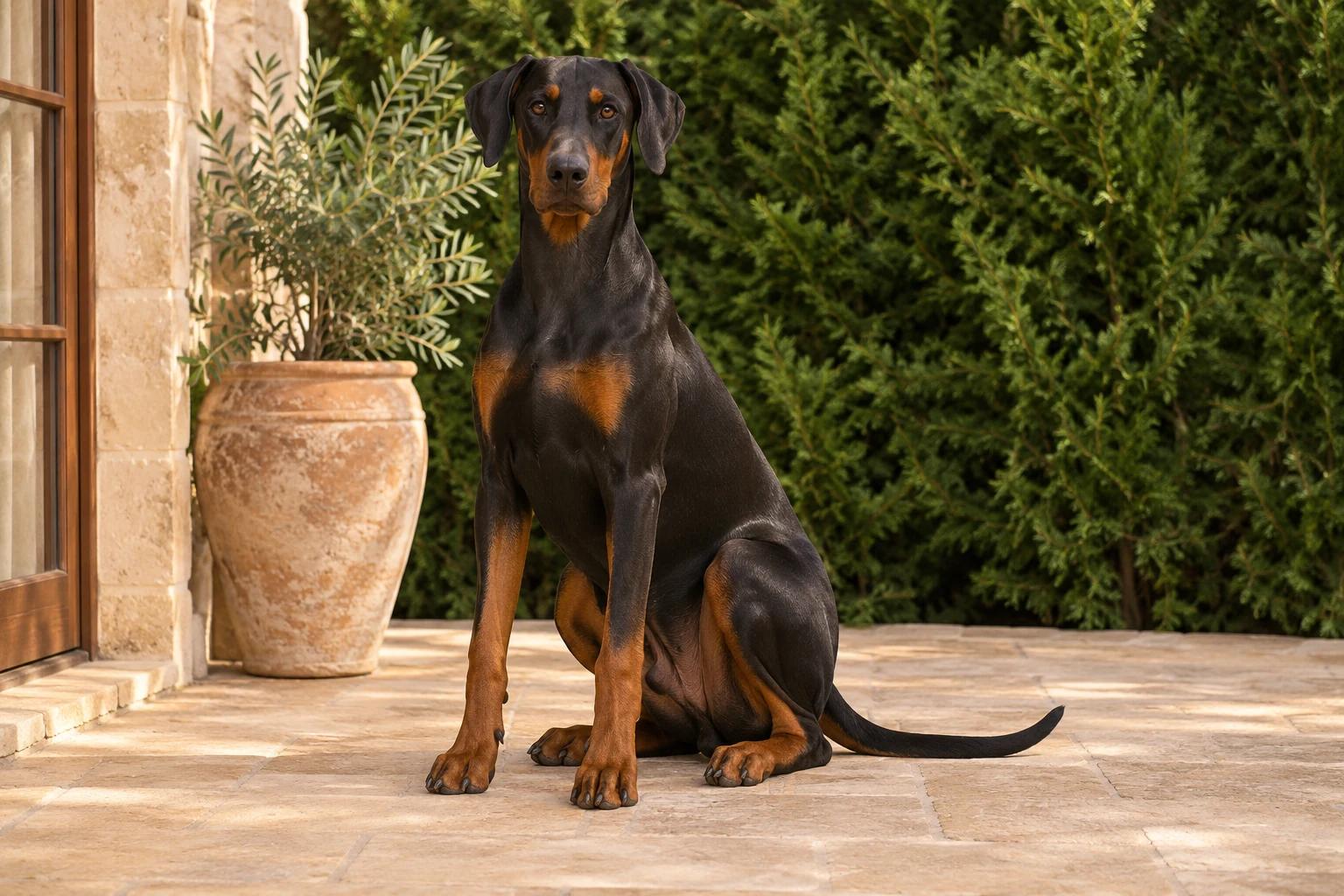
Doberman Pinscher vs Rottweiler is a comparison between two substantial working dogs, not a contest to find the more impressive guardian. Both require capable handling and deliberate teaching. The useful distinction is how each dog's build, pace and everyday needs fit the life you actually lead.
Start with the Doberman Pinscher profile and Rottweiler profile, then compare adult dogs in person. A photograph cannot show how a dog waits while its owner talks, moves through a doorway or responds when an outing ends.
Doberman Pinscher vs Rottweiler: the main distinction
The AKC Doberman standard describes a square, muscular athlete with an alert, energetic character. The AKC Rottweiler standard emphasizes a substantial, slightly longer-than-tall dog and a calm, confident, reserved temperament ideal. These are breed descriptions, not predictions for every puppy.
For a prospective owner, the distinction suggests different questions rather than a simple ranking. With the Doberman, investigate the pattern of activity and attention across the day. With the Rottweiler, pay particular attention to managing physical substance in confined spaces. Both conversations must also cover manners, social experience and the dog's individual history.
Do not translate calm into effortless or athletic into permanently frantic. Those shortcuts hide the work an experienced owner has already done. Ask to see ordinary routines, not only a carefully staged demonstration of obedience.
Size means more than shoulder height
The live profiles list Doberman males at 26–28 inches and females at 24–26 inches. Rottweiler males are listed at 24–27 inches and females at 22–25 inches. Height therefore overlaps substantially, while the dogs' outlines and substance differ. A taller-looking dog is not automatically the more difficult dog to accommodate.
Test the spaces that matter in your home. Can an adult turn comfortably in the entrance without blocking the stairs? Can you pass its bed without stepping over it? Can the car accommodate secure transport while leaving enough room for the people and equipment that usually travel with you?
Do not buy every item according to a breed label. Check the actual dog's measurements against the manufacturer's fit guidance. Pay attention to openings as well as interior dimensions: a spacious boot is not useful if entry is awkward. If lifting might become necessary, think about how you would obtain assistance rather than assuming one adult can manage alone.
Plan activity by the day, not the weekend
Both breeds need substantial daily activity and opportunities for learning. Compare the individual dogs' established routines rather than relying on a breed ranking to prescribe exercise. Neither dog should be expected to meet its needs merely through access to an unused garden.
Imagine a wet Tuesday when work runs late. Who goes out with the dog, and what alternative activity can you realistically provide? If the answer depends on a single enthusiastic person never becoming ill or busy, the plan needs another layer before either breed comes home.
For someone who actively enjoys regular training and varied outings, a Doberman may fit that preference. Someone drawn to a Rottweiler should still want a working partnership rather than a dog selected mainly for an imposing appearance. Meet adults whose routines resemble yours and ask what their owners have changed to make the arrangement work.
Training: compare the setup, not toughness
The question of Rottweiler vs Doberman Pinscher training often gets framed as which needs a firmer owner. A better question is which dog you can teach consistently in the places you live. Both are strong enough that pulling, rushing doors and exuberant greetings should be addressed early.
Before choosing, identify a reward-based trainer and discuss your actual environment. A fourth-floor lift, a shared entrance or a narrow pavement may shape the training priorities more than differences between the breeds. Ask how classes provide space for dogs that are not comfortable working close together.
Build household agreement too. One person should not encourage rough greetings while another struggles to stop them. Clear arrangements for visitors, food preparation and moving through gates make daily expectations easier to follow. Neither breed benefits from being treated as an adversary whose behavior must be defeated.
Visitors and other animals require individual evidence
A reserved Rottweiler does not need to greet every guest, and a Doberman's responsiveness to its family does not promise instant comfort with strangers. Arrange a place where either dog can remain apart during arrivals. A practical visitor routine includes where the dog waits and who is responsible for it.
Ask breeders or rescue caregivers concrete questions. Has the dog lived with another dog, and under what conditions? What happens when visitors stand up to leave? How does it respond to a person carrying a large object through the hall? These details are more useful than a broad claim that a dog is friendly.
Homes with children need active adult supervision and spaces where dogs can rest undisturbed. Neither a breed label nor a family-affection score establishes safety. If other animals already live with you, discuss compatibility and introductions before making a commitment rather than assuming they will settle the issue themselves.
Coat care and household comfort
Both breeds have relatively straightforward coat-care profiles, but straightforward does not mean hair-free. The Doberman's coat lies very close; the Rottweiler's standard describes a denser outer coat with undercoat. Plan regular attention to the coat and normal household cleaning for either.
Consider where wet walking equipment, towels and bedding will go. A useful setup includes washable surfaces near the entrance and a resting place outside the main traffic route. These modest arrangements often improve daily life more than choosing accessories that match a dog's dramatic appearance.
Keep health research separate from aesthetic comparisons. Ask for individual records and discuss them with your veterinarian. Doberman readers can use the existing Holter and echocardiogram guide to organize that conversation; it is not a reason to assume anything about a particular dog.
Choosing a Doberman Pinscher or Rottweiler
The practical difference between Doberman Pinscher and Rottweiler ownership is a combination of physical fit, activity preferences and the individual dog available to you. Write down three non-negotiable constraints before visiting breeders or rescues. Include time alone, who can handle walks and the limitations of your housing.
Use the breed quiz as a prompt for those questions, not a verdict. If both breeds appeal, take time to meet several adults. If neither fits your routine without heroic assumptions, broadening the shortlist is a better outcome than forcing a choice.
FAQ
Is a Rottweiler bigger than a Doberman?
Their shoulder-height ranges overlap, and Dobermans can be taller. Rottweilers have a more substantial build. Compare actual adult measurements and household handling requirements rather than relying on height alone.
Which breed needs more activity?
Both breeds need substantial daily movement and learning opportunities. Compare individual routines rather than assuming every Doberman needs more activity than every Rottweiler. Age, health and experience should shape the plan with appropriate veterinary guidance.
Which is better for a first-time owner?
Neither is automatically an easy first dog. A realistic schedule, competent support, suitable housing and a well-matched individual matter more than selecting a winner from the two breed names.
Sources behind this article
Article source checked: November 15, 2026. Source checked 2026-11-15
Keep reading

Affenpinscher vs Brussels Griffon: Everyday Differences
Read article →