Dandie Dinmont Terrier vs Dachshund: Daily Life
Compare Dandie Dinmont Terrier vs Dachshund size, coat work, household noise, and practical questions for choosing an individual dog.
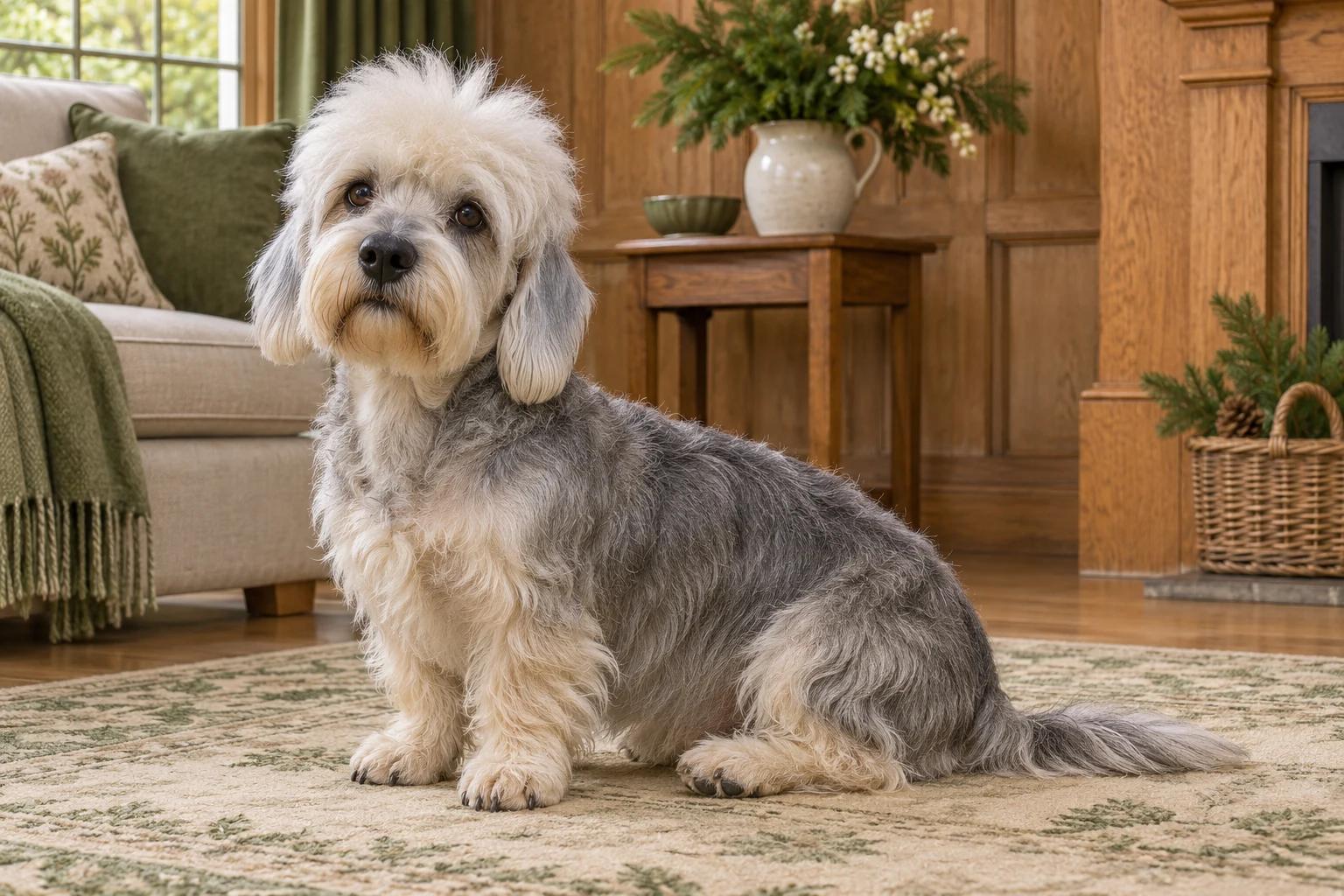
Dandie Dinmont Terrier vs Dachshund is a comparison between two low-built dogs, not two versions of the same pet. Their outlines may lead you toward similar equipment questions, but coat work, size options, and household expectations make the choice more specific. Begin with the kind of day you can provide, then investigate individual dogs that might fit it.
The Dandie Dinmont Terrier profile and Dachshund profile offer the reference details. Neither breed name can tell you exactly how a puppy will mature or how an adult will respond in your home.
Dandie Dinmont Terrier vs Dachshund: define the comparison
The American Kennel Club's Dandie overview presents a sturdy, compact terrier with a dignified character. Its Dachshund overview emphasizes a bold dog with two sizes and three coat types. That variety is the first practical difference: “Dachshund” alone is not a sufficiently detailed shopping list for equipment or grooming.
For an adult Dandie, Atlas lists 8–11 inches and 18–24 pounds. Its Dachshund reference distinguishes standards at 8–9 inches and 16–32 pounds from miniatures at 5–6 inches and 11 pounds or under. These are reference ranges, not promised adult measurements for a puppy. The standard Dachshund weight range overlaps the Dandie's rather than falling neatly below it.
If your decision depends on lifting the dog, traveling in a carrier, or meeting a housing limit, work with actual measurements and the relevant rules. Do not make a commitment on the assumption that a low dog must be very light.
Picture the entrance, car, and sleeping area
A useful Dachshund vs Dandie Dinmont Terrier exercise is to walk through the home at dog level. Where is the outdoor exit? Is the floor slippery beside it? Can a resting dog avoid the route everyone uses? Both breeds deserve arrangements that account for their bodies rather than simply fitting a bed into the smallest remaining space.
Measure a carrier or travel restraint against the individual dog's length and height, following its manufacturer's instructions. A weight rating alone does not tell you whether the dog can rest comfortably. If you are considering a puppy, ask what can be adjusted or replaced as it grows.
For access questions, such as stairs or furniture, discuss the actual dog with your veterinarian. Avoid assuming that one breed comparison can provide a universal movement rule. Your aim is a workable daily setup, not an unsupported promise that a particular home feature prevents future problems.
The coat decision is not just long versus short
A Dandie brings a distinctive coat-care commitment. The Dandie Dinmont Terrier Club of America discusses regular brushing and professional grooming. Before deciding, find out whether a suitable groomer is available locally and what home work they expect between appointments.
For a Dachshund, identify the coat type at the outset: smooth, longhaired, or wirehaired. Ask the caregiver to show you the dog's current routine and explain any professional work. A smooth coat and a wire coat should not lead to the same assumptions merely because both dogs share a breed name.
Compare complete routines rather than photographs. One household may prefer brief, frequent coat checks; another may be comfortable booking specialist appointments. Include travel to the groomer, handling practice, and the time required after wet outings. Neither dog's lower shedding reference is an allergy assurance or a reason to neglect skin and coat checks.
Noise can matter more than floor space
Atlas records a higher vocal tendency for the Dachshund than the Dandie. That gives you a useful question to investigate, not a guarantee of a quiet Dandie or a noisy individual Dachshund. Ask about barking at doors, outside movement, unfamiliar sounds, and departures.
For shared-wall housing, describe the building rather than simply asking whether the breed is suitable for flats. An entry buzzer beside the dog's resting place presents a different problem from a quiet ground-floor entrance. Ask a caregiver how the actual dog responds to comparable events and what management already helps.
Make a plan that does not depend on silence. You may need to change access to a window, create a calmer resting area, or practice a routine for deliveries. If noise tolerance is very low, an adult dog with a documented history in a similar setting may offer more usable information than a general puppy prediction.
Outings and learning belong in both plans
Both Atlas profiles place activity needs in the middle of the reference scale. Do not turn that into a precise exercise prescription or assume the dogs need identical outings. Age, condition, interests, and experience affect what an ordinary day should contain.
When choosing a Dandie Dinmont Terrier or Dachshund, ask yourself whether you enjoy walking with a dog that wants to investigate. Build time for exploration into the outing instead of treating every stop as a delay. Secure equipment and sensible boundaries matter when the environment becomes more interesting than your destination.
For learning, request examples of what the dog already knows and where those skills work. A familiar indoor cue is not the same as reliable attention beside a busy path. You are comparing the support each individual needs, not awarding one breed a prize for obedience.
Make the final choice with evidence from ordinary life
The most useful difference between Dandie Dinmont Terrier and Dachshund may be the particular dogs available to you. A settled adult with a familiar routine can present a different ownership proposition from a puppy of either breed. Ask about time alone, visitors, handling, and any resident animals before discussing appearance preferences.
If you have children, include adult supervision and a protected resting place in either plan. If you have another pet, ask how introductions can be assessed rather than assuming the smaller dog will automatically be easier. Be clear about limitations so that a breeder or rescue can help evaluate the match honestly.
Use the breed match quiz to organize priorities, then revisit any answer that depends on wishful thinking. For background rather than a decision shortcut, explore the Dandie Dinmont's unusual name. Choose the daily arrangement you can sustain, not just the silhouette you find most appealing.
FAQ
Is a Dandie smaller than a Dachshund?
Not always. The Dandie's Atlas weight range overlaps that of a standard Dachshund, while miniature Dachshunds are listed separately at a lower size. Compare the actual dog or the relevant variety rather than treating all Dachshunds as one size.
Which breed needs less grooming?
That depends partly on the Dachshund coat type and the Dandie's chosen coat presentation. Ask for a demonstration and an appointment plan for each dog. A simple-looking coat does not eliminate routine care.
Which breed is quieter?
Atlas records a lower vocal tendency for the Dandie than the Dachshund, but individual behavior and surroundings matter. Ask specifically about household triggers and time alone before relying on that general comparison.
Are these breeds interchangeable for a small home?
No. Coat-care access, noise tolerance, the dog's individual routine, and the household's handling arrangements can change the fit. Small floor area is only one part of the decision for either breed.
Sources behind this article
- American Kennel Club: Dandie Dinmont Terrier ↗
- American Kennel Club: Dachshund ↗
- Dandie Dinmont Terrier Club of America: FAQ ↗
Article source checked: November 15, 2026. Source checked 2026-11-15
Keep reading

Affenpinscher vs Brussels Griffon: Everyday Differences
Read article →