Dandie Dinmont Terrier Grooming: A Practical Plan
Plan Dandie Dinmont Terrier grooming around coat texture, home brushing, professional appointments, and comfortable handling.
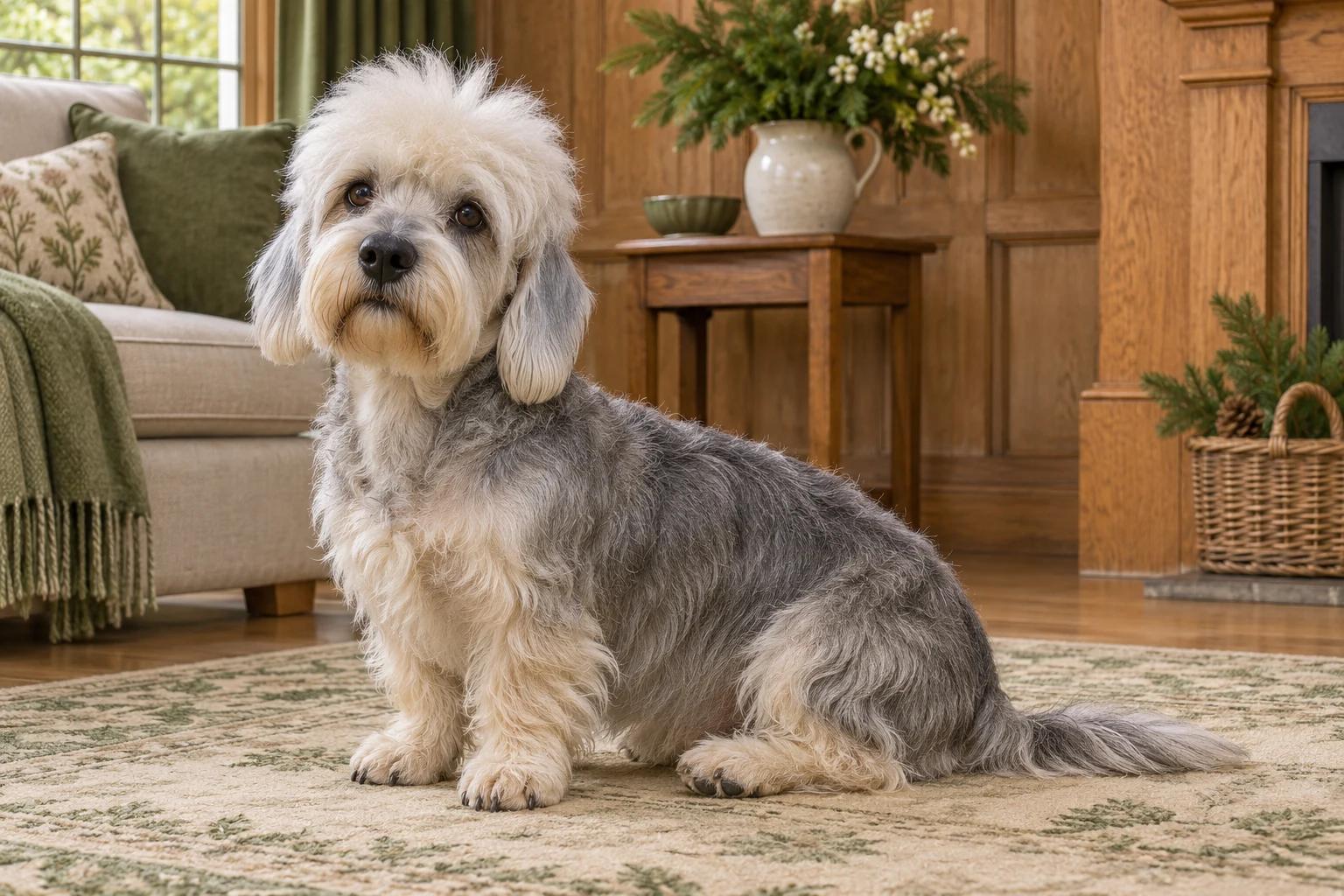
Dandie Dinmont Terrier grooming involves more than keeping a distinctive head tidy. The body coat and soft topknot need thoughtful handling, while professional coat work adds a separate commitment to everyday upkeep. A useful plan tells you what to do at home, what to leave to a skilled groomer, and how to notice when the plan needs changing.
Start with the Dandie Dinmont Terrier profile for the wider ownership picture. Low loose-hair levels do not remove the need to budget time, money, and patient handling for this breed's coat.
Dandie Dinmont Terrier grooming starts with the coat you have
VCA's Dandie Dinmont Terrier overview distinguishes the crisp body coat from the softer hair on the head. It describes brushing and combing, hand stripping for conformation presentation, and the possibility that clipping changes coat color and texture. Those distinctions matter when you discuss the result you want with a groomer.
Do not book a vague “terrier tidy” and assume everyone means the same thing. Explain whether you want a manageable companion trim or are maintaining a coat for showing. Ask what technique the groomer proposes, what maintenance it entails, and whether they have worked with Dandies before. A photograph of your own dog after a successful appointment is more useful than a heavily styled picture of another dog.
Coat work should serve the individual dog's comfort and circumstances. If a coat is tangled or the dog is struggling with handling, discuss practical options rather than insisting on an appearance at any cost. Veterinary advice takes priority when skin sensitivity or another health concern affects grooming.
Build a small, usable home kit
Ask the groomer to demonstrate appropriate tools on your dog. Buying a large collection before you understand the coat can leave you with several brushes that perform the same task and none you feel confident using. A useful demonstration includes how lightly to work, where to begin, and how to check that an area is actually free of tangles.
Keep the kit together with a washable mat, towel, and a note of the most recent appointment. Choose a stable, nonslip place where you can work without twisting your back or reaching awkwardly. For a low, long-bodied dog, an uncomfortable handling position can make a short task much harder for both of you.
If you use a raised surface, stay beside the dog throughout. Never leave it unattended while fetching a tool. Floor-level work may be simpler for many owners, provided the dog is comfortable and you can see the area you are checking.
Home brushing is inspection as well as styling
The Dandie Dinmont Terrier Club of America FAQ recommends regular brushing and discusses periodic professional grooming. Treat that as a framework, not an appointment calendar that fits every coat. Your dog's activities, chosen presentation, and tendency to tangle will shape the details.
Divide Dandie Dinmont Terrier coat care into manageable areas. You might check the body first, then the softer head hair, then places where equipment or movement produces friction. Ask your groomer to identify those areas directly on your dog. Work carefully rather than sweeping a brush over the surface and assuming the job is finished.
If the comb catches, stop and look. Pulling repeatedly does not tell you whether you have found a tangle, debris, or sensitive skin. Do not cut close-fitting mats with household scissors. A groomer can assess coat problems, while redness, pain, sores, or persistent irritation belong with a veterinarian.
Make cooperation part of the routine
Learning how to groom a Dandie Dinmont Terrier also means learning when to pause. Practice showing the brush, touching a comfortable area, and finishing before the dog becomes frustrated. The first useful accomplishment may be standing calmly on the mat rather than completing a whole coat session.
Give handling a recognizable beginning and end. Put the tools away when you finish instead of repeatedly restarting whenever the dog walks past. This makes the task easier to organize and helps you avoid turning a relaxed evening into an unpredictable series of interruptions.
Keep notes about what worked. Perhaps the dog was more comfortable on the floor, preferred a different body position, or managed a shorter session well. Share those observations with the groomer. They are more actionable than simply reporting that the dog “hates grooming.” Sudden changes in tolerance should be discussed with a veterinarian rather than dismissed as stubbornness.
Shedding, dirt, and bathing are different questions
Dandie Dinmont Terrier shedding is relatively low in the Atlas reference, but low shedding is not zero maintenance. Loose hairs, outdoor debris, and tangles each create a different task. Nor can a coat description tell you whether a person with allergies will be comfortable around a particular dog.
After a muddy outing, check what actually needs attention before deciding on a full bath. Keep a towel near the entrance and look at the lower coat and feet. Ask your groomer how to handle routine dirt without disrupting the coat-care approach you have chosen.
For baths, request product and technique guidance appropriate to your dog. Set out the towel before starting, provide secure footing, and rinse and dry as instructed. Do not use a universal bathing interval to override an individual skin-care plan. If odor returns quickly or the dog is persistently itchy, a veterinary conversation is more useful than simply washing more often.
Plan the professional visit before it becomes urgent
A grooming budget needs two components: appointments and the upkeep between them. Ask what condition the coat should be in when you arrive and what would make the appointment longer or more difficult. Book ahead if local Dandie experience is limited, rather than waiting until the coat becomes unmanageable.
At collection, ask for one or two clear home priorities. “Check this area with this tool” is easier to carry out than an elaborate routine you cannot remember. Record the chosen trim or coat method so that a different groomer does not have to guess next time.
The coat is only one part of a suitable match. Use the breed quiz to weigh it against your available time and other care commitments. The Dandie Dinmont naming story offers enjoyable background, but everyday coat care should be based on the dog in front of you, not a picture or a color name.
FAQ
Does a pet Dandie need a show coat?
No. Discuss the dog's needs and your maintenance capacity with a groomer experienced in the breed. Ask about the effects of the proposed method on coat texture and future care before choosing a presentation.
How often should I brush my Dandie?
Use regular checks and your groomer's demonstration to establish a routine for the actual coat. Increase attention when tangles or debris accumulate rather than treating a generic weekly schedule as a guarantee that all areas are clear.
Is clipping the same as hand stripping?
No. They are different methods, and VCA notes that clipping can alter the Dandie's coat color and texture. Have an experienced groomer explain the practical consequences for your dog instead of assuming the methods are interchangeable.
What if my Dandie resists grooming?
Stop before handling becomes a struggle, review the surface and technique, and work in smaller steps. Ask a groomer or qualified reward-based trainer for help. New pain, skin changes, or sudden handling sensitivity need veterinary attention.
Sources behind this article
Article source checked: November 15, 2026. Source checked 2026-11-15
Keep reading

Affenpinscher Grooming: A Practical Coat-Care Routine
Read article →