Curly Coated Retriever vs Flat Coated Retriever: daily life
Compare Curly and Flat Coated Retrievers by size, greetings, coat care, playfulness and everyday teaching needs.
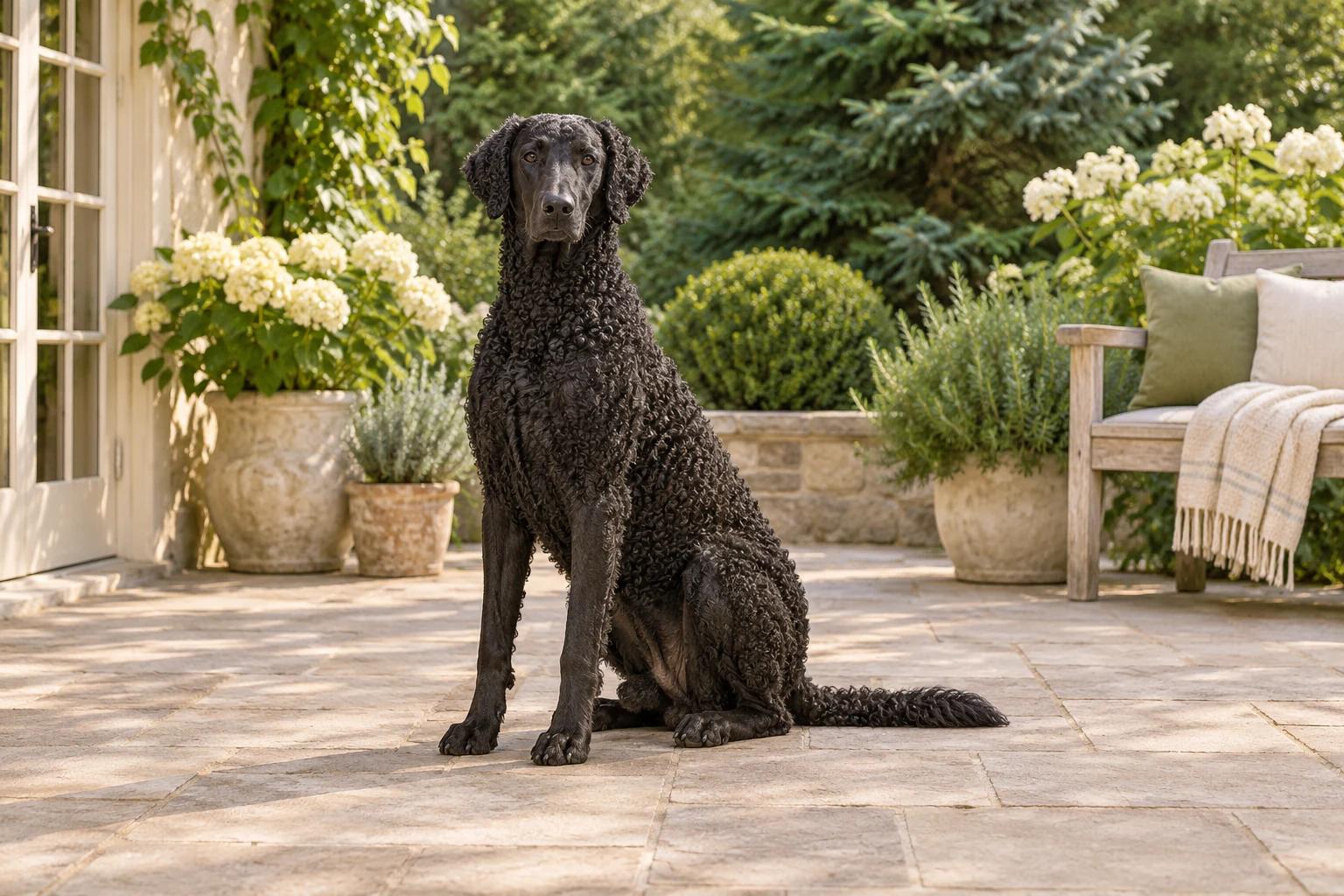
Curly Coated Retriever vs Flat Coated Retriever is more than a choice between two coat textures. The My Breed Atlas profiles describe different greeting tendencies and physical outlines, alongside shared needs for activity and companionship. A Curly may present a taller frame and a more measured introduction to strangers; the Flat-Coat's reference profile puts greater emphasis on outgoing playfulness.
Compare the Curly-Coated Retriever profile with the Flat-Coated Retriever profile, then picture the ordinary day rather than a retrieving demonstration. Your visitors, travel setup and interest in teaching will help separate the two choices.
Curly Coated Retriever vs Flat Coated Retriever: greetings differ
The Curly profile places openness to unfamiliar people in the middle of the reference scale, while the Flat-Coat profile places it at the high end. This is a meaningful distinction for households where guests arrive frequently or where the dog regularly accompanies people into shared spaces.
VCA's Curly guide describes family attachment alongside a more independent manner and possible reserve with strangers. The AKC Flat-Coated Retriever description emphasizes a cheerful, willing gundog. These broad tendencies invite different questions, not predictions about every individual greeting.
With a Curly, ask how the dog prefers to meet an unfamiliar person and whether a quiet introduction helps. With a Flat-Coat, ask how the household manages enthusiasm and what the dog does after the initial greeting. Reserve and exuberance can both need thoughtful arrangements; neither is a complete set of manners.
Size changes the practical footprint
My Breed Atlas lists Curly males at 25–27 inches and females at 23–25 inches, with a weight range of 51–90 pounds. Flat-Coat references are 23–24.5 inches for males, 22–23.5 inches for females and 55–79 pounds overall. The ranges overlap, but the Curly description has higher height and weight endpoints.
The UKC Curly standard also describes an upstanding, high-legged appearance. A side-by-side photograph can suggest that difference, but actual measurements remain more useful when you choose equipment or plan vehicle space.
Check where a bed or travel enclosure would sit and how the dog would turn and enter. Include your own route past it. Neither breed is a small dog whose equipment can be assumed to fit into whatever gap remains. Wearable gear also needs individual measurements rather than a generic retriever size.
If handling a larger dog would be difficult, consider that before choosing from a puppy photograph. Ask about adult relatives and discuss realistic arrangements, without treating those relatives as a guarantee of the puppy's final size.
The coats call for different conversations
The Curly has short, close curls, while the Flat-Coat profile describes a medium-length smooth coat. This visible contrast should change the questions you ask a groomer, not merely the style you request.
The Curly Coated Retriever Club's coat guide notes that loose hair can remain within curls. For a prospective Curly owner, seeing little hair around the home is therefore not sufficient evidence that the coat needs no attention. Arrange a breed-specific demonstration of maintenance rather than transferring a routine from another retriever.
For a Flat-Coat, ask to see how its actual coat is maintained after ordinary outings and which areas need attention. Compare the demonstrations and the dog's handling experience, not just the appearance immediately after a professional appointment.
Both need owners who notice changes and seek appropriate help. The coat names do not provide a complete care schedule, and a shorter visible coat does not remove the need for handling skills. Choose a routine you understand well enough to carry out between appointments.
Plan activity without turning the comparison into a quota
Both site profiles emphasize active ownership. The useful question is whether you can provide suitable outings and engagement consistently, including on workdays when the ideal excursion does not happen. Ask your veterinarian about activity appropriate to the actual dog's age, condition and circumstances.
The Flat-Coat profile places training responsiveness above the Curly's reference rating. That is not a guarantee about either individual learner. Both need clear communication and worthwhile tasks, with deliberate learning given a visible place in the household plan.
If you are considering a Curly Coated Retriever or Flat Coated Retriever, describe a normal evening. Is there room for a short learning game after the outing? Do you enjoy teaching an exchange, a waiting position or a return? Can the dog then move into a quieter routine while the household does something else?
Do not assume that retrieving interest means the whole evening should be repeated throws. Begin and end activities clearly, use appropriate equipment and choose environments you can manage. A shared sporting identity does not settle the details of an individual exercise plan.
Playfulness and independence shape the relationship
The Flat-Coat profile sits at the high end for playfulness, with the Curly also described as playful but a step lower. Combined with the greeting distinction, this can produce different expectations about how the dog joins household activity.
A Flat Coated Retriever vs Curly Coated Retriever visit is most informative when you see more than the excited opening moments. Ask what happens once the game ends, when the owner sits down or when a visitor leaves. You want to understand transitions, not just enthusiasm.
For a Curly, an independent manner should not be treated as a promise of effortless time alone. For a Flat-Coat, a willing reputation should not be treated as a promise that rules require no teaching. Ask caregivers for concrete examples of the routine the individual already knows.
Choose the work you want to repeat
The difference between Curly Coated Retriever and Flat Coated Retriever becomes useful when it changes your preparation. With the Curly, think carefully about the larger potential footprint, patient introductions and specialist familiarity with its curls. With the Flat-Coat, examine your enthusiasm for an outgoing, playful companion and a routine that includes purposeful learning.
The existing Curly working-certificates article explains formal retrieving achievements separately. Titles are not a substitute for learning how a dog lives in a home. Use the breed match quiz to organize your priorities, then compare them with firsthand information about the dogs you might choose.
FAQ
Is the Curly-Coated Retriever larger than the Flat-Coated Retriever?
The My Breed Atlas ranges overlap, but the Curly reference has higher height and weight endpoints. The Curly's listed weight reaches 90 pounds, compared with 79 pounds for the Flat-Coat. Individual measurements still determine equipment fit and practical handling arrangements.
Which breed is more outgoing with strangers?
The Flat-Coat profile records greater openness to new people, while the Curly profile allows for a more measured introduction. Ask about the individual dog's greeting experience. Neither an outgoing nor a reserved tendency supplies trained manners automatically.
Can I use the same coat routine for both breeds?
Do not assume so. The Curly's short curls and the Flat-Coat's smoother, medium-length coat require different assessment. Have a breed-experienced professional demonstrate maintenance on the actual dog, including how to recognize a problem that needs help.
Sources behind this article
- UKC: Curly-Coated Retriever Standard ↗
- VCA: Curly-Coated Retriever ↗
- Curly Coated Retriever Club: Curly Coat ↗
- AKC: Flat-Coated Retriever ↗
- Dogzone adult reference — adult-weight reference ↗
- Embark adult reference — adult-weight reference ↗
Article source checked: November 15, 2026. Source checked 2026-11-15Article source checked: November 18, 2026. Source checked 2026-11-18
Keep reading

Affenpinscher vs Brussels Griffon: Everyday Differences
Read article →