Curly Coated Retriever grooming: care for close curls
Plan Curly Coated Retriever grooming around its close curls, retained loose hair, comfortable handling and breed-experienced guidance.
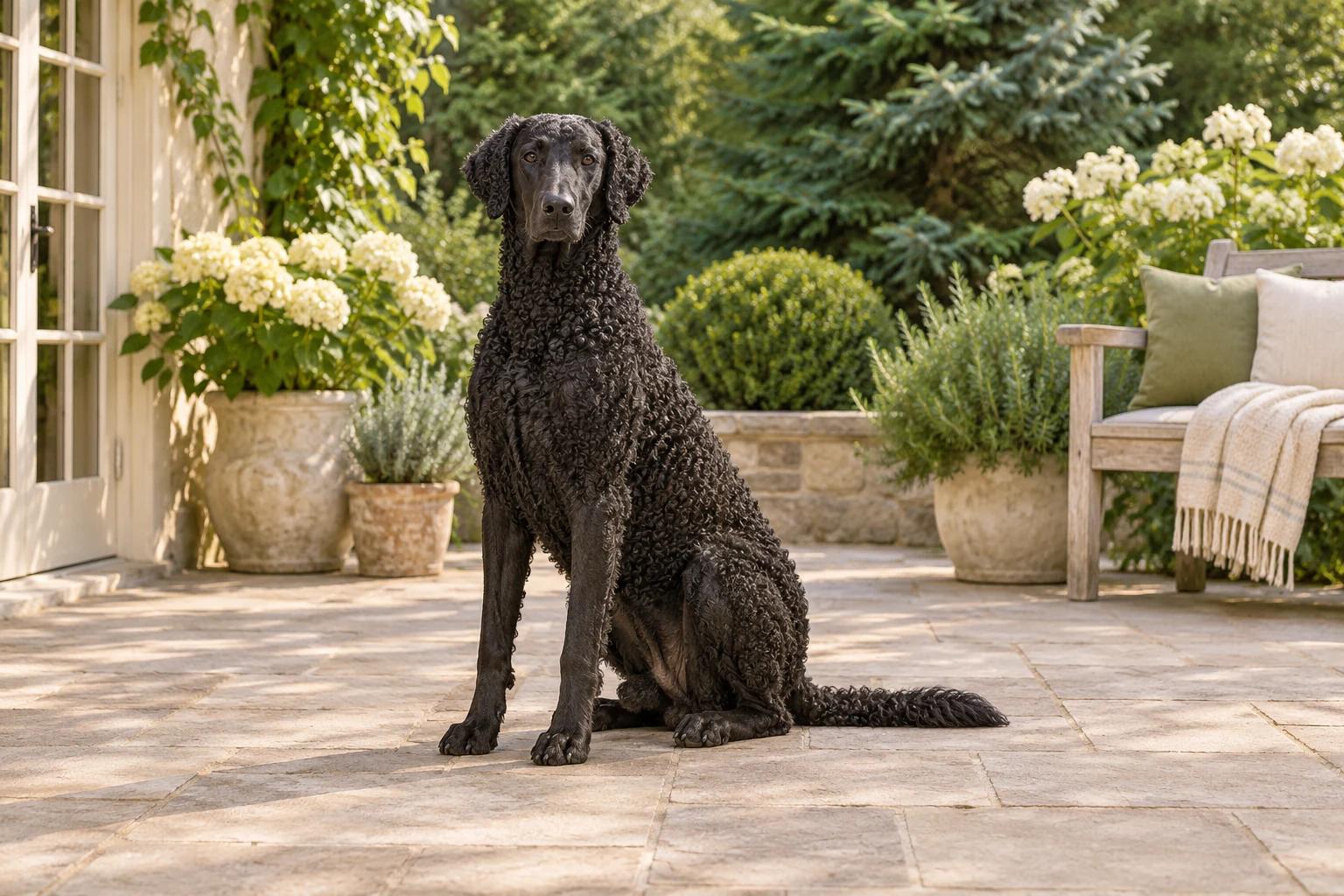
Curly Coated Retriever grooming starts with recognizing the coat in front of you: short, close curls rather than a long coat that happens to be curly. The useful goal is a clean, manageable coat and comfortable handling, not applying a familiar routine from a different curly-haired breed.
The Curly-Coated Retriever profile records relatively low grooming frequency. That does not mean leaving the coat unobserved between adventures. Build a small, repeatable care routine with guidance from someone who actually works with this breed, especially before buying tools or attempting a new technique.
Curly Coated Retriever grooming should preserve the natural outline
The UKC breed standard describes small, tight curls across the body and smooth, short hair on the face, front of the forelegs and feet. These differences are useful landmarks: not every part of the dog will look or feel the same.
Ask a breed-experienced groomer or knowledgeable breed mentor to show you a maintained coat at close range. Look beyond a finished show photograph. Ask how they recognize retained loose hair, what they check after outdoor activity and which tasks a companion owner can reasonably do at home.
Do not assume the word “curly” identifies one universal tool kit or haircut. Explain that this is a Curly-Coated Retriever when arranging an appointment, and ask about the professional's experience with its natural coat. A clear conversation before work begins is more useful than trying to correct an unsuitable plan afterward.
Little hair on the floor does not tell the whole story
The Curly Coated Retriever Club's coat guide explains that loose hair can remain held within curls. An owner may therefore see little hair dropping out while the coat still needs attention. That distinction is central to Curly Coated Retriever shedding: household cleanup and the condition of the coat are related questions, but not interchangeable ones.
Include gentle, hands-on observation in the routine your breed professional demonstrates. Ask what a manageable curl should feel like and how to recognize an area that needs help. You should leave the demonstration knowing what to notice, not merely admiring how the finished dog looks.
If an area feels compacted or you are unsure whether debris is caught near the skin, stop improvising. A professional can assess the problem and show an appropriate approach. Do not keep pulling at a difficult area or reach for scissors simply because the coat is short.
Give outdoor mess a practical destination
Set up a place where your Curly can pause after a wet or dirty outing without immediately crossing the whole house. Choose secure footing and enough room for the dog to stand and turn. Keep suitable towels and the equipment recommended for your dog's routine nearby.
Ask your breed professional to demonstrate how they handle ordinary mud, moisture and loose debris while respecting the coat's texture. Have them explain which parts can be managed at home, which need an appointment and how the approach changes with the actual condition of the coat.
The household arrangement is your part of the job. Keep a clear path from the entrance, make the waiting place familiar before a messy day and avoid balancing supplies around a moving dog. A workable station can make modest care tasks easier without turning every walk into a salon session.
Bathing questions should be specific
If you are asking how to groom a Curly Coated Retriever, a useful bathing consultation is more detailed than “Which shampoo?” Describe what prompted the question: ordinary dirt after an outing, a coat that feels different or a planned professional groom.
Ask which dog-appropriate product suits the task, how it should be used according to its instructions and how the coat should be finished afterward. Do not substitute household cleaning products or add treatments because an online photograph shows a particularly tight curl.
Also ask what should change the plan. A normal cleanup question is different from unusual odor, discomfort, redness or patchy hair loss. Those observations warrant veterinary advice rather than repeated washing or a stronger product. Grooming can help you notice a change without explaining its cause.
Make handling a skill before it becomes urgent
Curly Coated Retriever coat care is easier to organize when the dog knows where to stand and how a session begins and ends. Teach arriving at a nonslip mat, pausing while you touch an easy area and taking a break. Build the duration gradually instead of demanding a complete inspection the first time.
Because this is a substantial dog, arrange the area so you can work without awkward reaching or unstable furniture. An improvised raised platform is not necessary for routine home practice. Ask the professional to demonstrate a setup that suits both your dog and your own physical comfort.
Include other routine handling in the conversation, such as comfortably presenting a paw for inspection. If you are unfamiliar with nail care, ask a veterinarian or groomer for help rather than making the first attempt a hurried experiment. Keep medical or painful areas outside the training exercise.
Keep a simple record of what changes
A brief note can make professional advice more useful: where you noticed the change, when it appeared and whether the dog seemed uncomfortable. A dated photograph may help show the location, but it cannot replace feeling the coat or examining the skin when that is needed.
Avoid turning every difference into a diagnosis or a breed-wide rule. The purpose of the record is to explain what you observed, not prove that a particular supplement, season or product caused it. Bring the information to the appropriate professional and follow the individual plan you are given.
For most household planning, the important commitment is straightforward: notice, maintain what you have been shown and ask for help before a difficult area becomes a struggle. The breed match quiz can help you weigh that work alongside activity and companionship. The separate Curly working-certificates article covers formal retrieving achievements, not coat-care requirements.
FAQ
Does low grooming frequency mean a Curly needs no coat care?
No. Low frequency is not an instruction to ignore the coat. Learn a breed-appropriate maintenance routine and how to recognize retained hair or debris. The right home tasks should be demonstrated on the actual dog rather than borrowed from another coat type.
Why is there little loose hair even though the coat needs attention?
Loose hair can stay within the curls instead of immediately appearing on furniture or floors. The Curly Coated Retriever Club discusses this distinction. Ask a breed-experienced professional to show you how to assess the coat without pulling at difficult areas.
Should I diagnose a patchy coat as a grooming problem?
No. Patchy hair loss, unusual skin changes or discomfort need veterinary assessment. Record what changed and when, and avoid experimenting with treatments or supplements. A grooming appointment and a medical evaluation answer different questions.
Sources behind this article
Article source checked: November 15, 2026. Source checked 2026-11-15
Keep reading

Affenpinscher Grooming: A Practical Coat-Care Routine
Read article →