Croatian Sheepdog vs Border Collie: everyday differences
Compare Croatian Sheepdogs and Border Collies by activity, learning, visitor reserve, companionship and overlapping size ranges.
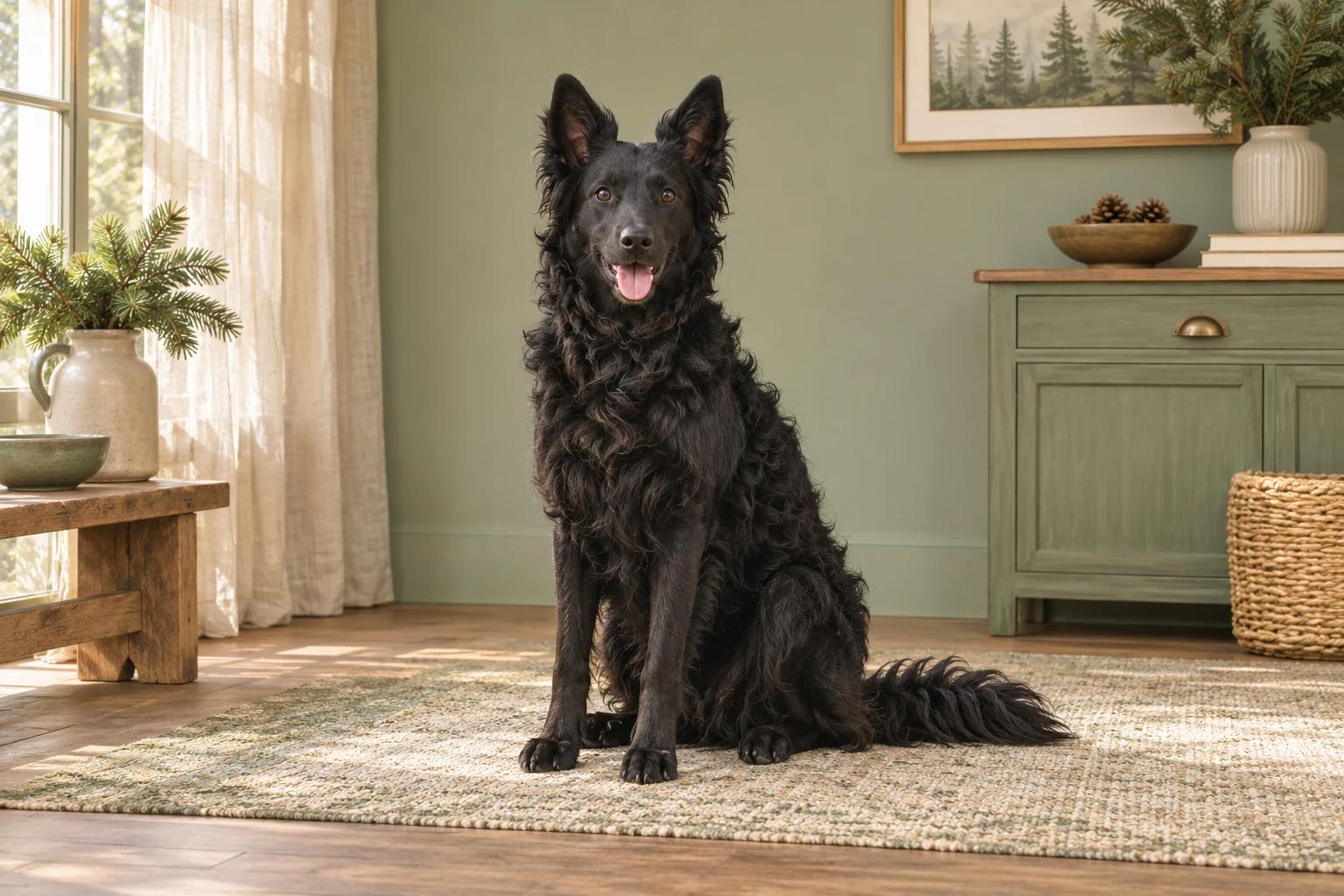
Croatian Sheepdog vs Border Collie brings together two herding breeds whose everyday reference profiles are not interchangeable. My Breed Atlas places the Border Collie higher for activity and training responsiveness. It describes the Croatian Sheepdog as more watchful and more reserved around unfamiliar people. Those differences can change the household plan even where the dogs' size ranges overlap.
Read the Croatian Sheepdog profile alongside the Border Collie profile. Then compare how each would fit your visitors, working hours, available space and interest in teaching. A shared herding label is a starting point, not a complete account of ownership.
Croatian Sheepdog vs Border Collie: shared heritage, different emphasis
The AKC Croatian Sheepdog page describes an agile dog in a sheep-herding setting. The AKC Border Collie page emphasizes work focus and the need for owners to provide occupation. Both descriptions make purposeful interaction relevant, but they do not establish identical daily demands.
The site activity references sit in the middle of the scale for the Croatian Sheepdog and at the upper end for the Border Collie. This is the clearest planning contrast: a Border Collie shortlist should prompt especially careful thought about how learning and activity will fit into ordinary days.
That is not a reason to offer the Croatian Sheepdog little to do. Plan suitable outings, practice and opportunities to explore for either dog. The distinction helps set priorities without inventing a precise number of exercise hours or assuming every individual follows the same pattern.
Compare the teaching you enjoy providing
The Border Collie profile also places training responsiveness above the Croatian Sheepdog's reference rating. This does not turn one breed into a smarter purchase or the other into a difficult dog. It means that expectations about communication should be grounded in the particular learner and its motivation.
If you like observing small changes, teaching new tasks and adjusting your approach, the Border Collie's learning emphasis may be appealing. Ask yourself whether you enjoy the process when progress is uneven, not only watching a polished demonstration by an experienced handler.
For a Croatian Sheepdog, clear household skills and consistent practice deserve attention without assuming instant cooperation. The UKC standard describes an attentive, lively dog. A practical application is to decide what the dog should do when a gate opens or a visitor arrives, then teach that action in a manageable setting.
Neither breed's background qualifies an untrained dog for livestock work. If that is your aim, it requires its own expert assessment and instruction. A companion comparison cannot establish working readiness from a breed name or a promising video.
Arrivals may be the more important difference
The Croatian Sheepdog profile leans toward reserve with strangers and has a strong watchfulness emphasis. The Border Collie profile places openness to new people higher and watchfulness lower. For a home with frequent visitors, those reference differences deserve more attention than the resemblance between two athletic silhouettes.
A Croatian Sheepdog plan might begin with a quiet waiting area away from the entrance and introductions that do not require contact. Ask guests to settle before expecting the dog to join them. Make sure the dog has room to observe and move away.
The Border Collie's more open reference does not remove the need for greeting manners or supervision. Ask about the actual dog's response to arrivals, movement and a busy room. Openness to people is not the same as being able to settle while those people walk around carrying bags.
When considering a Croatian Sheepdog or Border Collie, sketch your normal visitor routine. If the front door opens straight into the main living area, think about how you would create space. A practical arrangement can matter more than whether you own a large house.
The size descriptions overlap but do not match
My Breed Atlas lists the Croatian Sheepdog at 16–20 inches and 29–44 pounds. The Border Collie profile lists males at 19–22 inches, females at 18–21 inches and weight at 30–45 pounds. The Border Collie height reference extends higher, while the adult weight ranges are close and overlap.
This difference may affect the range of equipment you consider, yet it does not justify buying a harness or travel enclosure from breed name alone. Measure the individual dog and check the manufacturer's dimensions, instructions and load limits.
The Croatian Sheepdog's reference size does not make it a small lap companion. The UKC description identifies a rectangular body, so standing height alone does not capture its resting footprint. For either breed, leave room to turn and move past beds or travel equipment rather than filling every available gap.
Companionship and play have different accents
The Border Collie profile rates affection and playfulness higher. The Croatian Sheepdog profile leaves more room for companionship that includes independent time and sharing a room without constant contact. These are tendencies to explore, not a prediction that one dog will be loving and the other distant.
Ask caregivers for examples after the day's main activity is finished. Does the dog request more interaction, rest nearby or settle elsewhere? What happens when the person changes rooms? Observe the transition rather than using an excited greeting as the whole personality assessment.
A Border Collie vs Croatian Sheepdog decision can become clearer if you know your own preference here. Some people enjoy frequent invitations to engage; others value quieter proximity alongside shared activities. Either arrangement still requires teaching, care and an individual relationship.
Do not let the coat hide the larger decision
Both site profiles describe medium-length, wavy double coats. There are visible distinctions, but the shared texture category does not mean identical maintenance or equipment fit. Ask for the actual care routine rather than expecting the appearance to tell you the work involved.
For the Croatian Sheepdog's ear presentation, the existing ear-forms article answers that separate question. Ear shape is not a shortcut to choosing a temperament or estimating training ability.
The main difference between Croatian Sheepdog and Border Collie for household planning is the balance of occupation, visitor management and companionship. Use the breed match quiz to organize those priorities, then ask breeders or rescues for specific accounts of the dogs you might bring home.
FAQ
Does the Croatian Sheepdog need the same routine as a Border Collie?
The My Breed Atlas profiles place the Border Collie higher for activity. Both need purposeful interaction and suitable outings, but the references do not support treating their demands as identical. Build a routine for the individual dog rather than copying an exercise quota.
Which breed is more open to new people?
The Border Collie profile records greater openness, while the Croatian Sheepdog profile suggests more reserve and watchfulness. These tendencies guide questions about introductions. They do not guarantee a particular dog's greeting behavior or replace careful visitor arrangements.
Are the breeds similar in size?
Their reference ranges overlap. The Border Collie's listed height extends higher, while the adult weight ranges are close. The Croatian Sheepdog is listed at 16–20 inches and 29–44 pounds. Measure a specific dog for equipment and space planning rather than assuming the breeds are interchangeable.
Sources behind this article
Article source checked: November 15, 2026. Source checked 2026-11-15
Keep reading

Affenpinscher vs Brussels Griffon: Everyday Differences
Read article →