Croatian Sheepdog temperament: attentive home life
Understand Croatian Sheepdog temperament through watchfulness, reserved greetings, independent company and a practical household routine.
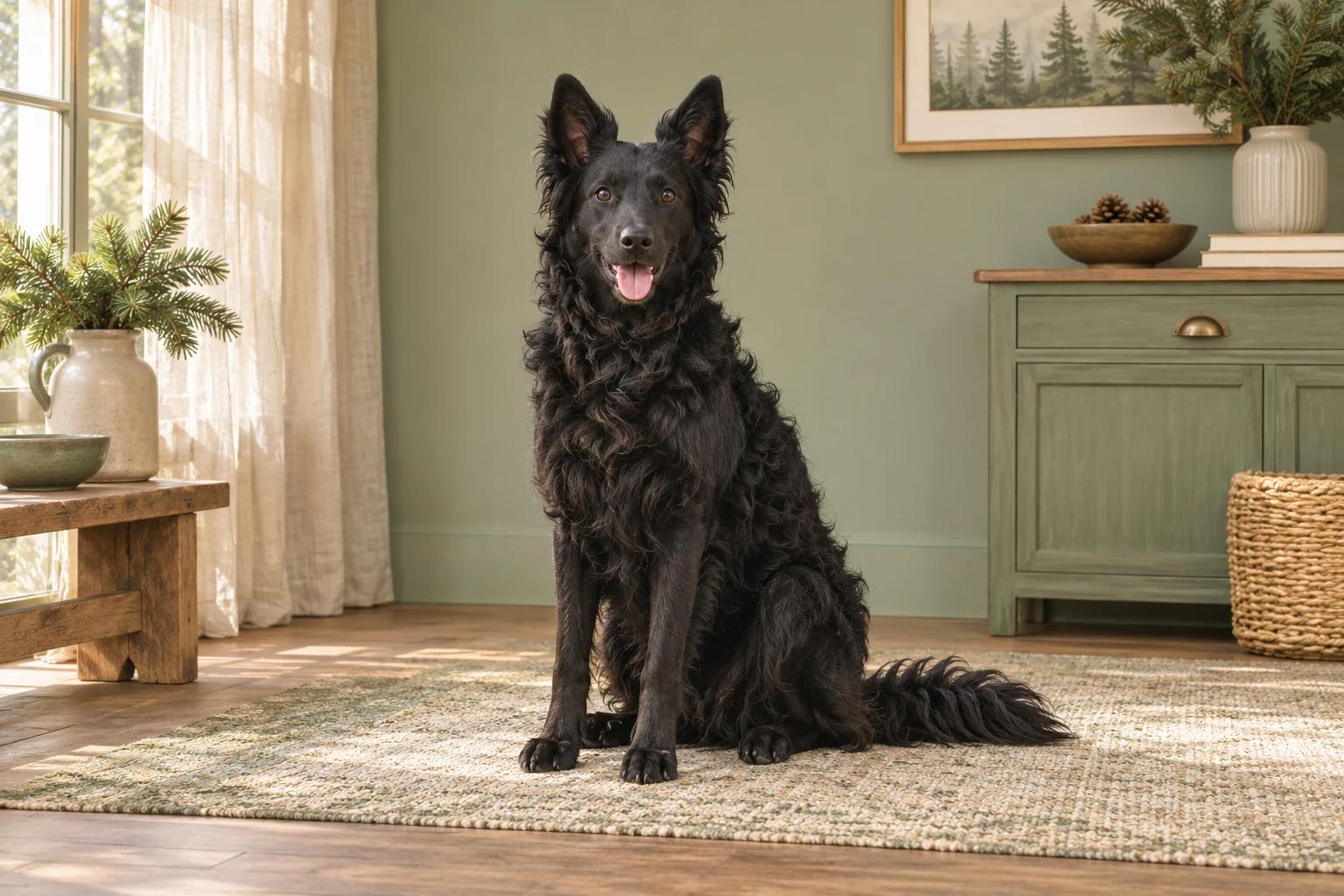
Croatian Sheepdog temperament combines an attentive working-dog background with a household profile that deserves more thought than “friendly herding dog.” My Breed Atlas describes watchfulness, some independence in companionship and a need for patient introductions to new people. A suitable home gives those tendencies practical direction instead of expecting instant sociability or constant affection.
Start with the Croatian Sheepdog profile, then investigate the individual dog's experience. The breed name can tell you where to begin asking questions. It cannot tell you how a particular dog will respond when the doorbell rings or a new caregiver arrives.
Croatian Sheepdog temperament: attentive does not mean automatically easy
The UKC breed standard describes a lively, attentive dog. The AKC breed page places it in an agile sheep-herding context. Those descriptions help explain why simply providing a place to sleep is not the whole ownership plan.
They do not establish that a companion dog is ready to work livestock or will understand a household's rules without teaching. An attentive dog may notice the passing van, the opening gate and the arrival of a stranger before the person has decided what to do. Your role is to make those events understandable and manageable.
A useful starting question is, “What do I want the dog to do when this happens?” For a delivery, the answer might be moving with you away from the entrance. For a visitor, it might be resting behind a gate while the person settles. Those are actions you can teach and arrange, unlike a general request to be less watchful.
Familiar company need not mean constant contact
The site profile leaves room for companionship with independence. A Croatian Sheepdog personality may be easier to understand if you distinguish sharing space from asking for touch. Resting in the same room can be participation even when the dog is not seeking a lap or frequent petting.
Provide a resting place that allows observation without putting the dog in every person's route. A bed immediately beside the front door may invite repeated interruptions. A position farther into the room can keep the dog included while making arrivals easier to manage.
Ask a breeder or rescue how the dog spends a quiet evening. Does it choose proximity, move between rooms or settle in a preferred corner? How does it respond when someone approaches while it rests? Concrete accounts help you plan the arrangement without treating a style of companionship as either better or worse.
Introductions should not depend on a stranger's confidence
The profile's reserved tendency around unfamiliar people makes a deliberate greeting plan especially useful. Do not ask a visitor to prove that the dog is friendly by approaching more insistently. Give the dog distance, an exit route and a familiar person to follow.
Prepare before the visitor arrives. Decide where the dog can wait while the door opens and where bags and coats will go. Avoid putting the resting area in a narrow passage that everyone must cross. Once the room is settled, allow an introduction at a pace the dog can manage.
If the dog chooses to observe without contact, visitors can leave it alone. Repeated reaching, calling or offering hands can make a supposedly low-pressure introduction quite demanding. If reactions are difficult to manage, consult a qualified reward-based professional rather than improvising a series of forced meetings.
Plan for watchfulness in the layout of the home
Croatian Sheepdog characteristics include a high watchfulness tendency in the site reference. That matters when a window overlooks a public footpath or a garden boundary runs beside a busy route. Before trying to train through every passing event, look at what the dog can see and where it spends time.
You may be able to move the resting place or arrange a quieter part of the house for periods when the surroundings are busy. Practice an attention turn and movement away from the view during easy moments. Do not wait until the dog is already absorbed in the activity outside to introduce a new instruction.
Keep a record if a pattern develops: what appeared, how close it was and how the dog recovered. The recovery is informative. A brief response followed by returning to rest is different from a prolonged period of watching and reacting. Share those details when seeking help; they are more useful than describing the dog only as protective.
Give activity a purpose without inventing a workload
The My Breed Atlas activity reference sits in the middle of its scale. Avoid turning the sheepdog name into an automatic demand for extreme exercise. Instead, arrange regular outings and manageable opportunities to think, explore and cooperate.
For example, a walk can include finding a comfortable place to pause, following a change of direction and returning attention before moving on. At home, a simple search task or practiced household skill can provide a different kind of engagement from physical movement. Choose tasks you enjoy repeating and adapting.
Equally, do not assume a garden supplies all the interaction needed. Ask what actually happens during outdoor time. Is someone involved, does the dog explore, or does it spend the period monitoring the boundary? The amount of available space does not explain how that space is used.
Learn the dog's response to change
Croatian Sheepdog behavior during a familiar routine may not tell you how it handles a new caregiver, travel or a crowded event. Introduce changes in manageable pieces and preserve familiar resting and handling arrangements where possible.
When researching ownership, ask about the dog's previous transitions and what support helped. Do not assume that a calm handover or an energetic demonstration represents the whole personality. A useful account includes both ordinary successes and situations that still need work.
Appearance offers a separate set of questions. The existing Croatian Sheepdog ear-forms article explains an anatomical feature, not a temperament test. Use the breed match quiz to consider household routine, visitors and your interest in teaching alongside the distinctive look.
FAQ
Are Croatian Sheepdogs outgoing with every visitor?
The My Breed Atlas profile describes a tendency toward reserve with unfamiliar people. Arrange introductions with space and let the dog observe without forced contact. Ask about an individual dog's actual greeting history rather than relying on a broad breed label.
Does a Croatian Sheepdog need constant physical affection?
Companionship can include sharing a room without seeking continuous touch. Learn where the individual dog chooses to rest and how it invites interaction. A preference for some space should not be confused with a lack of relationship.
Does the herding background make a Croatian Sheepdog ready for livestock?
No. Breed history does not establish an individual's training, experience or suitability for a particular job. Household ownership planning and livestock work are different questions. Seek appropriately qualified instruction before considering any real working role.
Sources behind this article
Article source checked: November 15, 2026. Source checked 2026-11-15
Keep reading
Croatian Sheepdog size: height, weight and practical fit
Read article →