Coton de Tulear vs Havanese: compare daily commitments
Compare Coton de Tulear and Havanese size, coat texture, playfulness and company needs, with practical questions for a close breed decision.
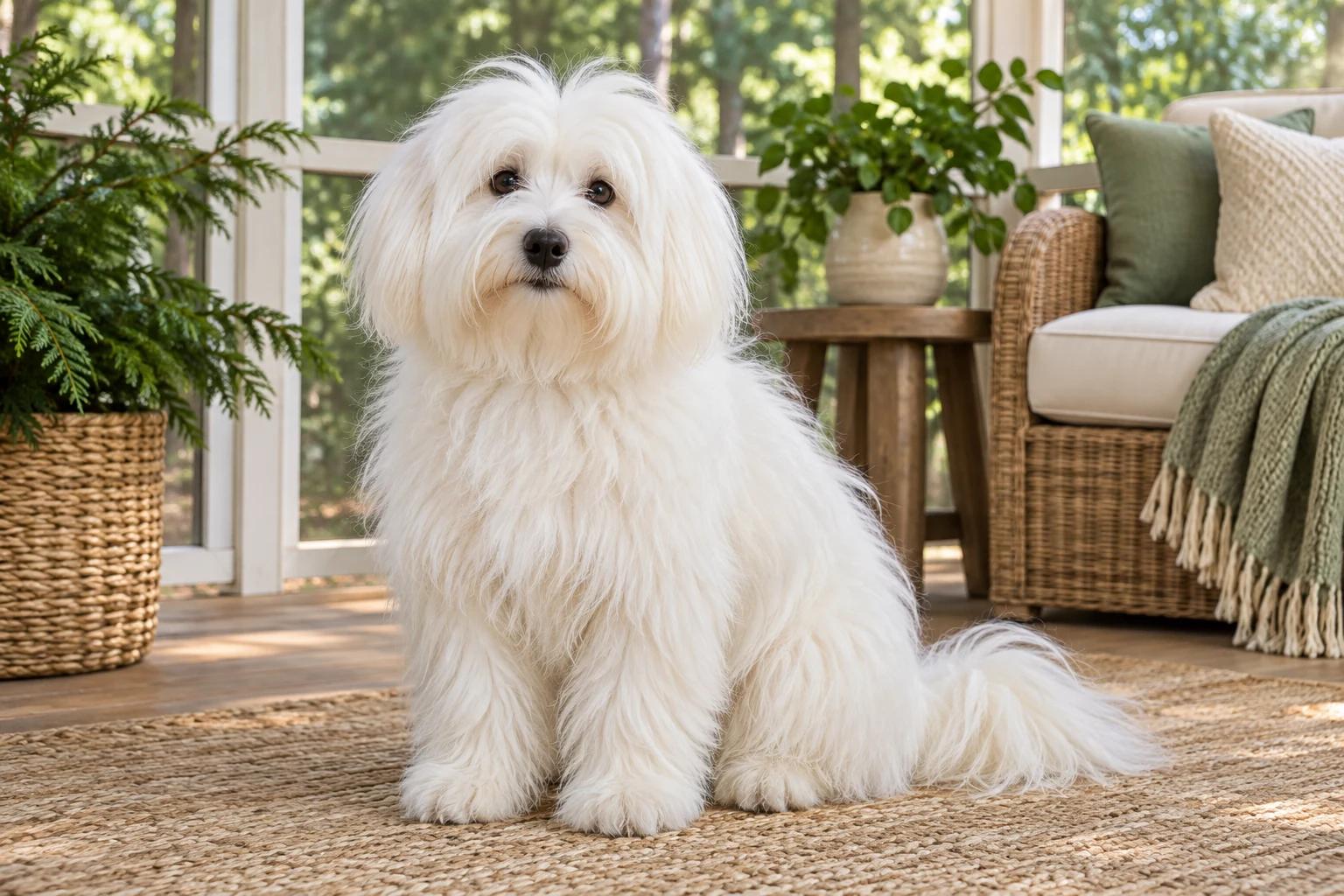
Coton de Tulear vs Havanese is often a close decision because the two breeds share much of the same small-companion appeal. Their My Breed Atlas size descriptions overlap, and both profiles emphasize sociability, learning and regular coat care. The useful differences concern coat texture, the shape of the size ranges and some playful tendencies, not a simple division into an active dog and a quiet ornament.
Begin with the Coton de Tulear profile and Havanese profile. Then compare actual dogs and care routines. With this pair, recognizing what is similar is as important as finding a distinction dramatic enough to headline a comparison.
Coton de Tulear vs Havanese: different coats, shared commitment
The UKC Coton standard describes a soft, dense, cottony texture. The Havanese site profile describes a long, silky double coat. “Fluffy small dog” therefore hides a meaningful difference in what you will handle during care.
Ask a groomer to show you both textures if possible. Look at how the hair separates, which areas require close attention and what changes when the coat is kept shorter. You do not need to become an expert before choosing, but you should understand the maintenance behind the appearance you prefer.
The Coton profile puts particular emphasis on frequent grooming; the Havanese profile also calls for a regular routine. Do not convert that distinction into a promise that one will be effortless. Actual length, condition, handling skills and professional support determine the work in your home.
Both profiles place shedding toward the lower end of their reference scales. That does not erase grooming. The amount of hair visible on a sofa is a different question from whether you can comfortably maintain a long coat. Compare the time at the grooming station as well as the time spent cleaning the room.
Size overlap matters more than a categorical winner
My Breed Atlas lists male Cotons at 10–11 inches and 9–13 pounds, and females at 9–10 inches and 8–11 pounds. The Havanese profile gives 8.5–11.5 inches and 7–13 pounds. These descriptions overlap considerably, so either breed can occupy much of the same equipment-shopping category.
That does not make every harness or carrier interchangeable. Fit depends on the dog's measurements and the product's design, not just a shared “small” label. Check the space to stand, turn and rest where relevant, along with the manufacturer's instructions and limits.
If a strict building or travel restriction influences your choice, do not treat either published range as a guarantee for a puppy. Ask about the actual dog's measurements and the applicable rules. The shared upper weight endpoint of 13 pounds does not mean every dog from either breed will have the same dimensions.
Playfulness is a useful nuance, not a lifestyle verdict
The two site profiles rate activity and responsiveness to training at the same levels. Those similarities support a comparable basic plan: suitable outings, play, opportunities to learn and time to settle. They do not support assigning one breed a much more demanding exercise schedule from the name alone.
The Havanese profile places playfulness a step above the Coton's already playful description. The AKC Havanese page likewise presents a lively, sociable companion. That may appeal if you enjoy including games in everyday interaction, but it is not a promise about how often a particular dog will initiate them.
The AKC Coton page also emphasizes companion participation and a playful manner. Choosing a Coton therefore does not mean opting out of teaching or expecting a dog to watch life pass from a cushion. The difference is one of tendency within a broadly shared companion pattern.
Sociability is not a substitute for a workday plan
Both profiles place strong emphasis on affection and openness to people. When considering a Coton de Tulear or Havanese, picture the hours when company is available and the hours when it is not. A dog can enjoy people without already knowing how to manage your particular schedule.
Ask a breeder or rescue what the dog has actually experienced. Has it rested while somebody worked in another room? What happens during a brief departure? What support was needed when the household changed its routine? These answers are more informative than assuming either breed will adapt because it is small and companionable.
Similarly, introduce visitors in a way that gives the dog room to approach or move away. Sociability is not a requirement to accept every hand reaching down. A comfortable greeting routine is something you arrange and teach, not something a high reference score supplies automatically.
Appearance should not dominate the shortlist
The difference between Coton de Tulear and Havanese that first attracts attention is often visual. A full Coton coat has its own texture and outline; Havanese coats can present a different flow and finish. But an appealing photograph rarely shows the appointment schedule, home maintenance or dog's handling experience.
For Coton puppy appearance questions, read Your Coton puppy's markings may not stay the same. Keep that separate from a care decision. An adult color expectation will not tell you whether you enjoy coat work or can provide company on an ordinary weekday.
A useful Havanese vs Coton de Tulear visit includes seeing the dog away from the most exciting greeting. Observe the transition after a small game, the response to routine handling and the caregiver's way of arranging rest. You are looking for a workable relationship, not asking either dog to win a performance contest.
Make the close decision with concrete priorities
If coat texture is the deciding feature, first confirm that you like maintaining it as well as looking at it. If size is the deciding feature, recognize the overlap and investigate individual measurements. If you want lively companionship, both deserve consideration, with the Havanese profile leaning further toward playfulness.
Use the breed match quiz to sort those priorities, then add firsthand information. For these two breeds, a sensible final choice may depend more on the specific dog, support available and care arrangement than on finding a sweeping difference the reference profiles do not establish.
FAQ
Is a Coton de Tulear larger than a Havanese?
The My Breed Atlas size descriptions overlap substantially. The male Coton and overall Havanese weight references share an upper endpoint of 13 pounds; that does not establish which individual will be larger. Measure an individual dog for equipment and avoid treating puppy size estimates as guarantees.
Which breed needs more exercise?
The site profiles rate activity equally for these breeds. Plan a sustainable mix of outings, learning and play rather than assuming a large difference. Age, experience and individual needs still shape the appropriate routine.
Is either coat maintenance-free because shedding is low?
No. Both profiles describe long coats with regular care needs. The Coton's cottony texture differs from the Havanese's silky coat description, but neither eliminates grooming work. Ask for a practical demonstration of the routine you would be taking on.
Sources behind this article
Article source checked: November 15, 2026. Source checked 2026-11-15
Keep reading

Affenpinscher vs Brussels Griffon: Everyday Differences
Read article →