Clumber Spaniel vs Sussex Spaniel: Everyday Differences
Compare Clumber and Sussex size, grooming, drool cleanup, activity references, and household handling before choosing.
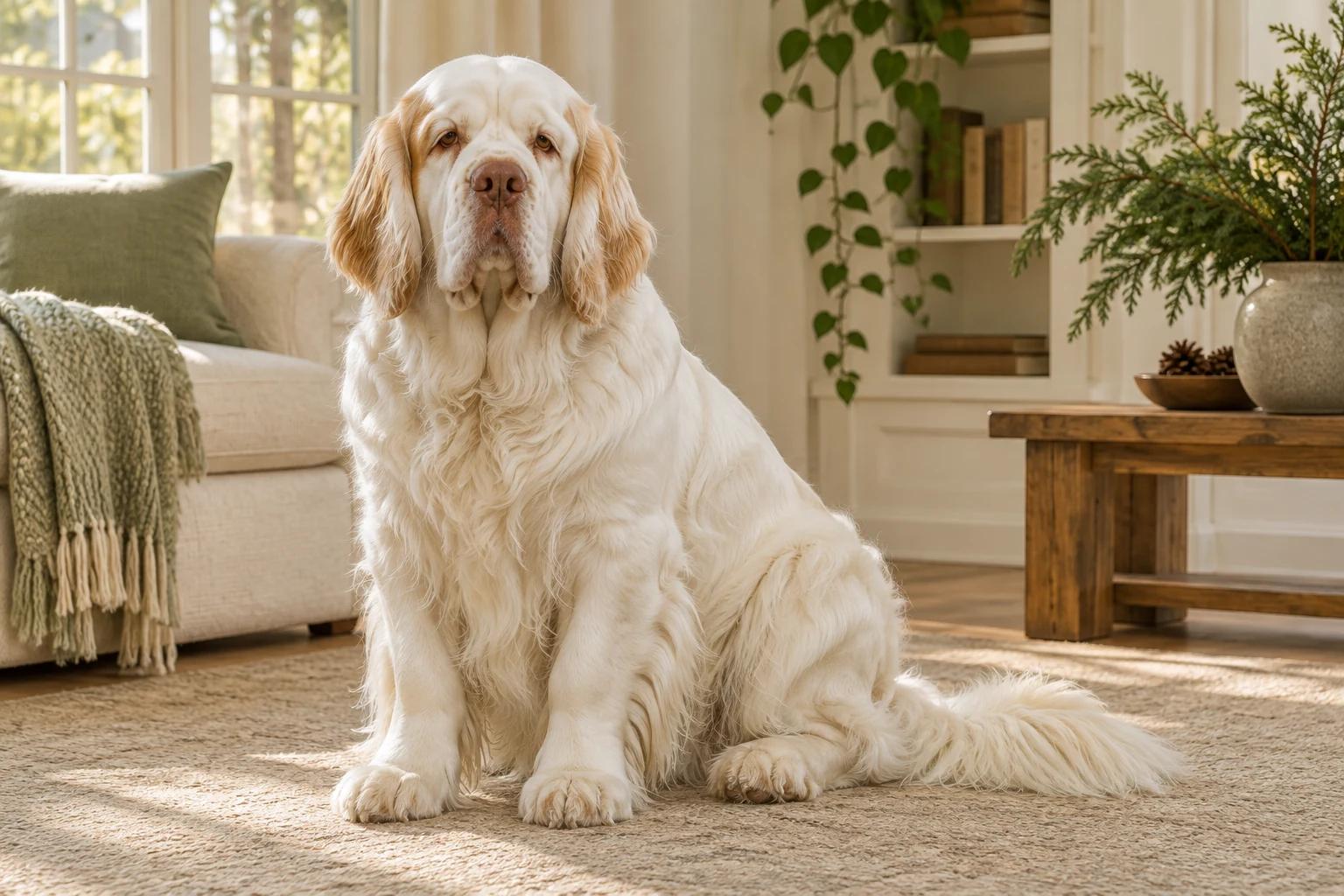
Clumber Spaniel vs Sussex Spaniel compares two low-built sporting companions with very different physical scales. Both can attract people who like a substantial spaniel without a tall silhouette. Yet the Clumber is considerably heavier, while the Sussex brings a smaller outline and a different coat appearance. Those contrasts matter when choosing transport, arranging grooming, and deciding what your household can comfortably manage.
Clumber Spaniel vs Sussex Spaniel: a meaningful size gap
The Clumber profile lists males at 18–20 inches and 70–85 pounds, with females at 17–19 inches and 55–70 pounds. The Sussex profile lists 13–15 inches and 35–45 pounds. These reference ranges do not overlap for either height or weight. Calling both low-set dogs can hide a sizeable practical difference.
For the Clumber, the figures are also supported by the UKC standard. They do not mean that every dog must fit a precise point inside a range. They do mean you should not assume that equipment and handling arrangements suitable for a Sussex will work unchanged for a Clumber.
Measure the usable space in your vehicle, the entrance to the transport enclosure, and the area where the dog will sleep. Consider how you would manage an unexpected need for assistance, and discuss suitable handling with a professional rather than relying on an improvised lift. A low shoulder height should not disguise the weight you may need to accommodate.
Coat appearance and maintenance
The Clumber's predominantly white coat with lemon or orange markings contrasts with the Sussex's golden-liver coat. The breed profiles also distinguish the Clumber's silky coat description from the Sussex's double coat. If appearance drew you to one breed, use a visit to move beyond color: ask to see the tools and the actual maintenance routine.
Both breeds share a middle-range shedding rating on the site. That does not establish that two individuals will leave the same amount of hair in your home or require identical care. Compare the actual coat condition, activities, and tools used rather than expecting coat color or a spaniel label to tell you the maintenance workload.
VCA's Clumber account notes drooling and dribbled water. My Breed Atlas also rates the Clumber's drooling tendency above the Sussex's. If you dislike wiping surfaces, consider this alongside hair rather than treating all cleaning as one task. A coat brush will not deal with a wet floor beside the water bowl.
Ask a groomer to explain what you can manage at home and what should be booked professionally. Do not choose between the breeds based on a photograph that shows neither the underside of the coat nor the laundry afterward. The more useful comparison is between two complete care routines.
Plan activity and learning for the individual
Both breeds need a routine that includes suitable activity and opportunities to learn. Their sporting background is a reason to ask about purposeful outings, not to assume either dog wants nothing but a sofa. Meet the individual dog and discuss its established routine rather than treating a breed label as a complete schedule.
The AKC Sussex introduction describes a steady hunter and affectionate house companion. The Clumber's UKC description also includes enthusiasm for work and play. Those descriptions support planning for both engagement and rest, rather than using their low outlines as an exercise prescription.
Try writing one feasible weekday for each dog. Include outings, a little learning, an opportunity for play or investigation, and care while you are occupied. Where does the plan change because of size or grooming? Where does it remain the same? This exercise can reveal that the main practical distinction is handling and maintenance, not a completely different way of spending every afternoon.
Learning and household participation
The Clumber profile places responsiveness to training somewhat higher than the Sussex profile. Treat that as a modest tendency, not a ranking of intelligence or a promise that a Clumber arrives obedient. In either case, the skill you need has to be taught in the setting where you will use it.
For example, getting ready to leave involves more than knowing a sit cue. The dog needs to be comfortable with equipment, remain manageable while you open the door, and move with you through the exit. Practise those pieces separately before expecting the complete sequence on a rushed morning. The Clumber's extra bulk makes a clear entrance routine especially useful in a narrow hall.
When weighing Sussex Spaniel vs Clumber Spaniel learning styles, ask each carer what rewards work and where attention becomes difficult. See an ordinary lesson if possible. A specific answer about toys, food, or distractions is more useful than being told that a breed is stubborn or clever.
Shared company, different household constraints
Both profiles describe strong interest in family company. Neither tells you how long an individual can be left or how it will respond to every visitor. Ask for an account of departures, returns, and quiet evenings. If your schedule involves long absences, a care plan matters whichever breed you prefer.
A difference between Clumber Spaniel and Sussex Spaniel ownership may become clearest in a small home. The Clumber needs more physical room to turn and settle without obstructing people. The Sussex's smaller dimensions may ease that issue, but do not settle questions about outdoor access, grooming space, building rules, or time alone.
Visit with those constraints in mind. Watch where the dog rests relative to the people in the room, how it moves through a doorway, and how the carer puts on equipment. You are not asking the dog to pass a personality exam. You are learning what ordinary tasks will look like when you take responsibility for them.
Choosing between them
If you are deciding on a Clumber Spaniel or Sussex Spaniel, start with the non-negotiable difference: physical scale. Then compare coat work, drool cleanup, and the specific dog's learning and companionship history. Do not manufacture a temperament gulf to justify a preference that is really about size or appearance.
The breed match quiz can organize your priorities. Our Clumber history article explores a separate question about the breed's past. For this decision, present-day care demonstrations and realistic home measurements will take you further than an appealing historical story.
FAQ
Which breed is smaller, the Clumber or Sussex Spaniel?
The Sussex is smaller in the site's adult reference figures: 13–15 inches and 35–45 pounds, compared with the Clumber's larger sex-specific ranges. Measure the individual dog before choosing equipment or transport arrangements.
Is the Sussex more active than the Clumber?
Both breeds need suitable activity and learning opportunities. Compare the actual dogs' daily routines and interests rather than assuming every Sussex will need more or less exercise than every Clumber. Your veterinarian can advise on appropriate activity for the individual.
Which breed needs more grooming planning?
Both breeds need coat maintenance and shed. The Clumber adds a stronger drooling tendency to the cleaning comparison. Ask to see the complete routine for each dog, including the tools, handling, and work between professional appointments, rather than assuming either coat is the easier one.
Sources behind this article
Article source checked: November 15, 2026. Source checked 2026-11-15
Keep reading

Affenpinscher vs Brussels Griffon: Everyday Differences
Read article →