Clumber Spaniel Grooming: A Practical Home Routine
Plan Clumber coat care, post-walk checks, shedding cleanup, and professional grooming without a one-size-fits-all timetable.
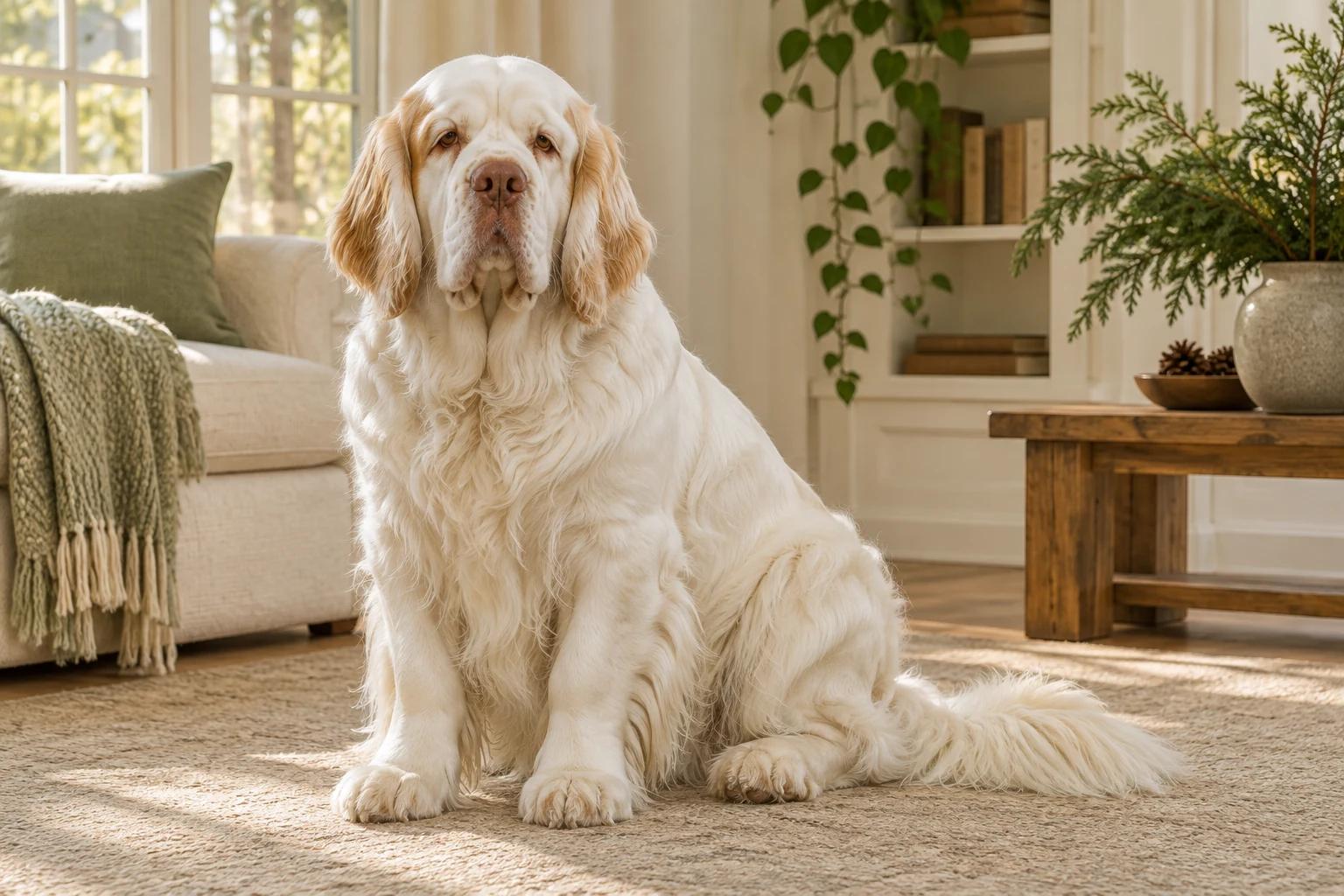
Clumber Spaniel grooming is easier to keep up with when you organize it around access to the coat, not the pursuit of a spotless white dog. This is a substantial, low-built spaniel with furnishing hair and everyday opportunities to collect outdoor debris. A useful home routine lets you inspect that coat comfortably, keep tools close by, and recognize when a groomer should take over.
Clumber Spaniel grooming: begin with the dog and workspace
The UKC Clumber standard describes a dense coat, ear feathering, and a neck frill. Those details matter more to a home-care plan than a photograph of a perfectly presented show dog. Work out how you will reach the different areas without asking the dog to balance on furniture or requiring yourself to bend awkwardly throughout the session.
A clear floor area with secure footing can be a practical starting point. Put your tools within reach before inviting the dog over. Keep the route out free so you can pause rather than hold the dog in place to finish one more section. If standing access is difficult for either of you, ask a professional groomer to demonstrate an appropriate setup.
Do not assume that being mellow means a Clumber will accept unfamiliar equipment immediately. Let the dog investigate the space, introduce brief handling, and reward cooperation. You can practise the arrival and departure from the grooming area without attempting a full brush-through. That small rehearsal can reveal practical problems before you are halfway through the coat.
Learn the route through the coat
VCA's Clumber overview supports regular brushing. Rather than adopting one universal timetable, ask an experienced groomer to show you the tools and technique suited to your dog's present coat. Ask what a completed section should feel like and how to check your work without dragging a tool through resistance.
A repeatable route helps prevent missed areas. You might work across one accessible body area, then check the furnishings, then move to the next side when the dog is ready. Keep a simple note if you stop partway through. Otherwise it is easy to brush the most convenient patch repeatedly while postponing the awkward areas.
Clumber Spaniel coat care should not become a contest with a knot. Stop if a tool catches or the dog becomes uncomfortable. Dense tangles close to the skin are a reason to seek professional assistance, not to reach for scissors. Explain where the problem is and how the dog responded when you tried to inspect it.
Make the post-walk check useful
Place a towel and a washable mat near the entrance you actually use. After an outing, look over the lower coat and feet before the dog settles onto bedding. The aim is to notice wet or soiled areas and obvious debris, not to perform a prolonged grooming session at the doorway every time.
If you can remove loose surface debris gently, do so. If material is caught tightly, leave removal to someone with the appropriate skill. Do not pull through it because you want to get the dog indoors quickly. You can contain the mess with a washable resting area while arranging help.
Keep walking equipment in the same review. Look at the places a harness covers when you take it off, and ask your fitter or groomer about any rubbing or coat-catching you observe. A grooming routine is more useful when it includes the parts of the dog hidden beneath straps during the outing.
Shedding and drool are different chores
Clumber Spaniel shedding is part of the household plan; the breed profile places it in the middle of its reference scale. Brushing and housecleaning address different parts of the job. Removing loose coat during grooming does not mean there will be no hair on fabric afterward.
Use bedding covers you can remove easily, and consider whether your preferred upholstery is convenient to clean. Put the cleaning tools where you need them rather than storing everything at the far end of the house. A manageable routine is one that still works when the dog has been out and you have a busy evening.
VCA also notes drooling and water dribbles. Keep a clean cloth available for gentle external wiping and attend to wet floors promptly. This is not the same task as coat brushing. Separating the two prevents a quick wipe after drinking from being mistaken for the day's entire care routine.
Do not turn a change in drooling, coat appearance, or comfort into a do-it-yourself diagnosis. Discuss new or concerning changes with your veterinarian. Grooming gives you a chance to notice things; it does not replace assessment.
Bathing and professional appointments
Before a home bath, check whether you can manage the whole process, including access, rinsing, drying, and a non-slip exit. A large, low dog may be awkward to assist in a household tub. If your setup depends on an uncertain lift, use a professional service rather than improvising when the dog is already wet.
Ask the groomer about suitable products and technique for your dog. Do not choose whitening products simply because the coat is white, or apply skin treatments to solve a cosmetic concern. Your veterinarian should advise on skin problems. A clean, comfortable coat is a more useful goal than changing the natural appearance of markings.
When booking, describe the dog's experience accurately. Say which areas it accepts, where it becomes uncomfortable, and whether you need a demonstration of home maintenance. Request an agreed plan for tangles or difficult handling rather than leaving the groomer to infer your priorities.
Build a routine you can repeat
If you are learning how to groom a Clumber Spaniel, start by separating three jobs: routine coat work, small after-outing checks, and professional assistance. Give each a place in the household plan. One long appointment cannot replace every check between visits, and daily checking does not mean you must complete every task daily.
The breed match quiz can help you compare care commitments with your available time. For a different side of the breed, our Clumber history article examines its estate connection. That background is interesting, but the grooming decision is very immediate: can you comfortably reach and maintain the coat on the dog in front of you?
FAQ
How often should I brush a Clumber Spaniel?
Plan regular brushing and adjust with a groomer's help to the individual coat, activities, and tendency to tangle. A fixed schedule is less useful than checking whether the whole coat is being maintained comfortably between sessions.
Can grooming stop Clumber Spaniel shedding?
Grooming does not eliminate shedding. Include loose-hair removal, washable bedding, and household cleaning in your plan. Ask a veterinarian about unexpected changes in the coat or shedding pattern rather than simply brushing harder.
Should I cut out a difficult mat at home?
Do not cut close to the skin or pull through a resistant mat. Stop and ask a professional groomer for help. Describe the location and the dog's response so the groomer can plan appropriate handling.
Sources behind this article
Article source checked: November 15, 2026. Source checked 2026-11-15
Keep reading

Affenpinscher Grooming: A Practical Coat-Care Routine
Read article →