Chinese Shar Pei vs Chow Chow: Coat, Space and Company
Compare Chinese Shar Pei vs Chow Chow coat care, overlapping height, visitor routines and training expectations before choosing a companion.
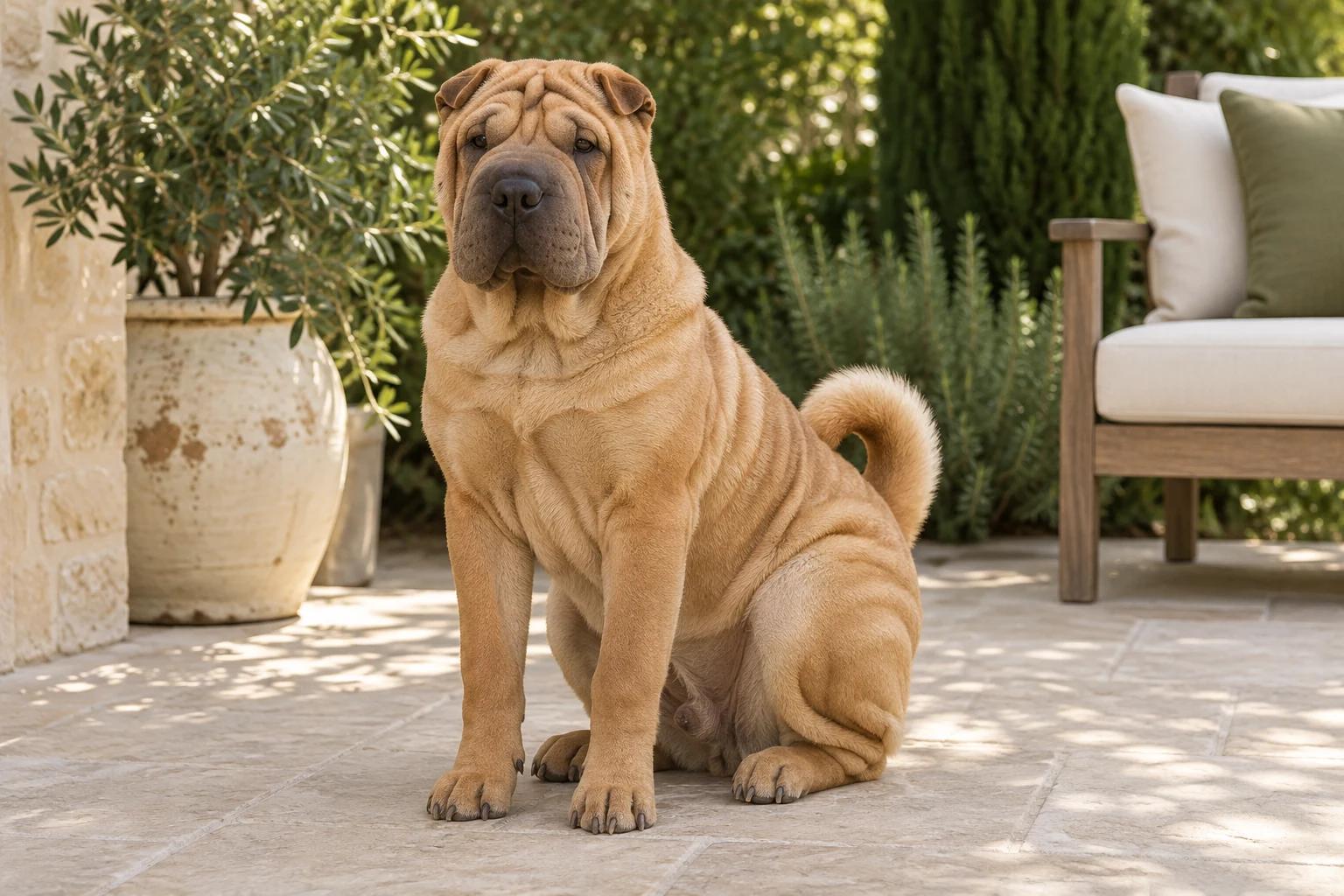
Chinese Shar Pei vs Chow Chow is a comparison between two distinctive dogs, not two versions of the same companion. Their compact outlines and serious expressions can obscure the practical differences: a short, harsh Shar-Pei coat versus a double-coated Chow, small folded ears versus upright ears, and different expectations around grooming and unfamiliar people.
Begin with the Chinese Shar-Pei profile and Chow Chow profile. Then compare the work you would do in an ordinary week. Appearance can start a shortlist, but it should not finish one.
Chinese Shar Pei vs Chow Chow: coat is the clearest contrast
The UKC Shar-Pei standard describes a short, harsh coat and small ears lying against the head. The UKC Chow Chow standard describes upright ears and two coat varieties, both double-coated. The rough Chow has a pronounced ruff and feathering; the smooth variety lacks that full outline but still has an undercoat.
That distinction changes the questions to ask a groomer. For a Shar-Pei, ask which brush suits the actual coat and how to introduce routine handling comfortably. For a Chow, ask to be shown how to work through the coat in sections and how to recognize areas you have missed beneath the surface. Do not assume a smooth Chow has the same coat-care workload as a short-coated Shar-Pei simply because neither has a flowing silhouette.
Request a demonstration on the dog you are considering, if available. Watching a caregiver prepare the equipment and work through one small area can reveal more than a description such as “easy to groom.” Note whether you can comfortably reach the places that need attention and whether you have a suitable work area at home.
A short coat is not a reason to skip a care budget. For Shar-Pei owners, the separate skin-fold care article explains why changes in comfort belong in a veterinary conversation. That is a different responsibility from keeping a Chow's coat organized; neither task should be reduced to an appearance preference.
Similar height does not mean identical equipment
The breed profiles list an adult height of 18–20 inches for the Shar-Pei and 17–20 inches for the Chow. There is substantial overlap, so the Chow's fuller outline should not be read as proof that every Chow is taller. The UKC Chow standard also places mature height at 17–20 inches.
Measure the individual before purchasing a harness, transport crate, or fitted item. Coat volume can make a photograph a particularly poor sizing tool for a Chow. For either breed, ask the supplier how the product is measured rather than ordering from a breed label printed on the packaging.
Try the home logistics as well. Where would the dog turn around beside the entrance? Can the resting area remain undisturbed when people cross the room? Is the vehicle opening accessible for the individual dog? Those questions concern usable space, not a contest over which breed looks more substantial.
Reserved companionship, with a difference in emphasis
UKC describes the Chow as dignified and reserved toward unfamiliar people. The My Breed Atlas profiles also place the Chow lower on openness to new people than the Shar-Pei. That makes visitor routines a particularly useful point of comparison, although neither profile predicts the response of a particular dog.
For someone weighing Chinese Shar Pei or Chow Chow, the household's social rhythm matters. If friends arrive casually throughout the day, consider whether you can organize entries and provide a separate resting space. If gatherings are planned and infrequent, the same management tasks may fit more easily into the routine.
The Shar-Pei is not automatically the outgoing option. Ask its caregiver about a recent introduction and what helped it settle. For the Chow, ask the same question rather than assuming reserve means a complete lack of interest in people. You are comparing the kind of support each individual needs, not awarding points for the fastest greeting.
A realistic example is a home office with occasional clients. A resident dog does not need to participate in appointments. The better fit may be the dog with an established, comfortable resting routine away from that room, regardless of which breed description initially seemed more appealing.
Training plans should not be ranked by the scowl
The stored breed profiles give both dogs the same middle rating for responsiveness to training. There is no useful basis here for announcing that one is the obedient choice and the other is impossible. Compare actual skills and the conditions in which those skills have been practiced.
Ask how the dog moves away from a doorway, accepts walking equipment, and comes back when called in a secure space. Then ask what rewards the caregiver uses. A demonstration should be brief and ordinary, not a stressful performance to prove the dog will comply.
When discussing Chow Chow vs Chinese Shar Pei with household members, agree on what successful training would accomplish. One household needs a dog to rest while visitors enter; another needs smooth handovers between several caregivers. Those goals will shape the teaching work more directly than a vague preference for intelligence.
Choose the workload you are willing to repeat
The clearest difference between Chinese Shar Pei and Chow Chow is not that one is universally easier. Their coats create different hands-on routines, and the Chow profile puts greater emphasis on reserve with new people. Those differences are useful because you can plan around them.
Write two realistic weekly care plans. For the Chow, include a dedicated place for coat work and a route to professional grooming help. For the Shar-Pei, include routine handling practice and an individual care plan agreed with the veterinarian. For both, include outings, learning, rest, and coverage when the usual caregiver is unavailable.
Then compare the plans with your actual calendar. A task that fits neatly on a free Sunday still needs a solution during travel, deadlines, or illness. The breed quiz can help make those priorities explicit before you commit to either breed.
Sources and scope
UKC's Chinese Shar-Pei and Chow Chow standards were checked on November 15, 2026. Size and trait comparisons also use the linked My Breed Atlas profiles. Standards describe breed characteristics, not individual behavioral guarantees.
FAQ
Is a Chow Chow always bigger than a Shar-Pei?
No. Their listed height ranges overlap substantially. Measure the actual dog for equipment and transport rather than judging size from coat volume or a breed photograph.
Does a smooth Chow have a Shar-Pei-like coat?
No. Smooth Chows are still double-coated. A Shar-Pei's short, harsh coat and a smooth Chow's coat should not be treated as interchangeable when choosing grooming tools or learning technique.
Which breed is better for a home with frequent visitors?
Neither breed label settles that question. The Chow profile indicates more reserve, but the practical decision should include the individual dog's history and whether the home can provide organized arrivals and a quiet resting area.
Sources behind this article
Article source checked: November 15, 2026. Source checked 2026-11-15
Keep reading

Affenpinscher vs Brussels Griffon: Everyday Differences
Read article →