Chinese Crested vs Xoloitzcuintli: Size and Daily Life
Compare Chinese Crested vs Xoloitzcuintli sizes, coated varieties and greeting styles to make a more practical ownership decision.
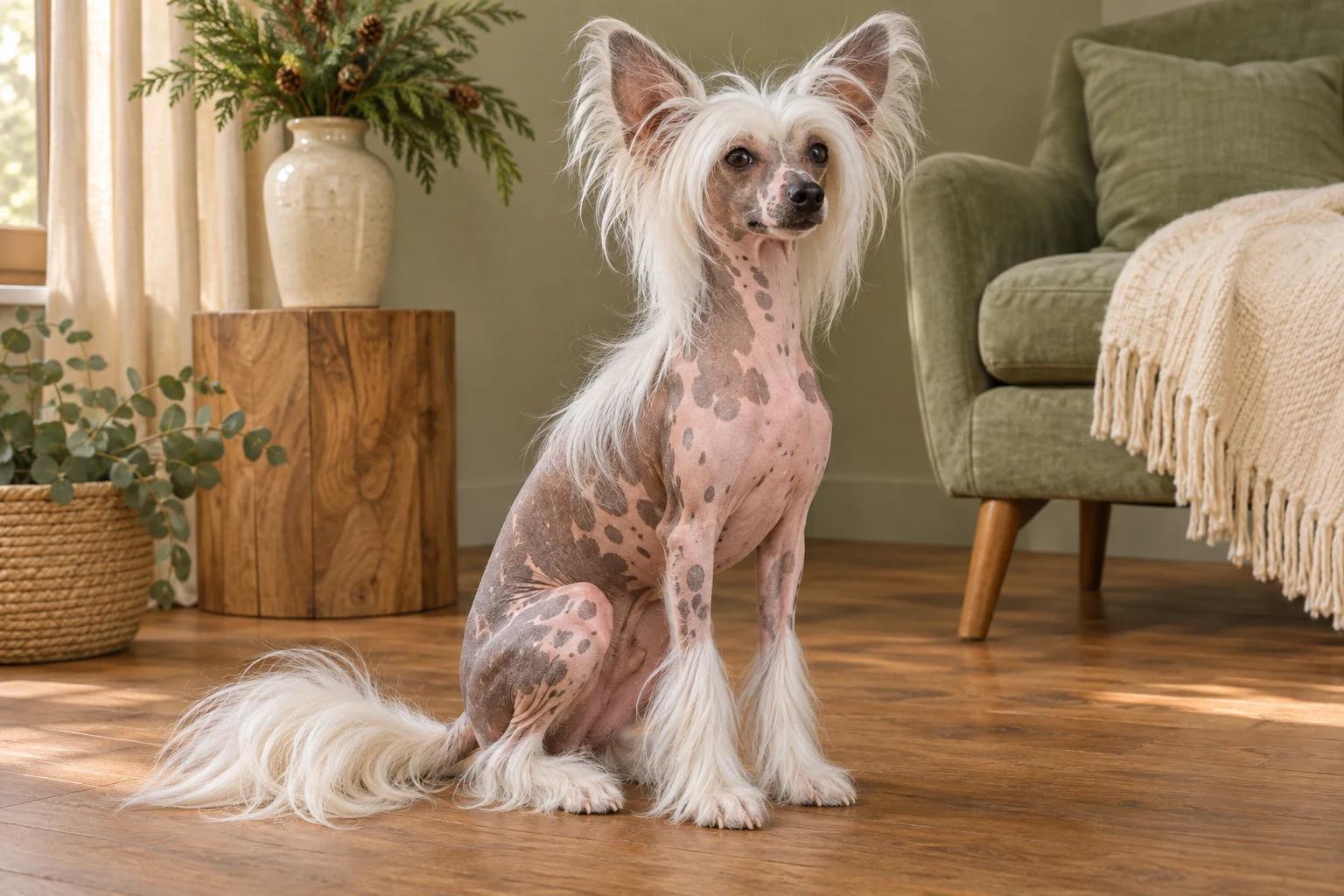
Chinese Crested vs Xoloitzcuintli is not simply a choice between two hairless-looking dogs. Both breeds include coated dogs, and the Xoloitzcuintli also comes in three sizes. The comparison becomes much more useful once you specify which variety and size you mean. Name the options precisely before comparing equipment and care commitments.
Keep the Chinese Crested profile and Xoloitzcuintli profile open together. Compare the physical options first, then consider the kind of companionship and introductions you would enjoy managing.
Chinese Crested vs Xoloitzcuintli: specify the size
The Chinese Crested standard gives an ideal height of 11–13 inches. UKC separates Xolos into toy, miniature and standard sizes: 10–14 inches, over 14 through 18 inches, and over 18 through 23 inches respectively. These measurements are taken at the withers, not the top of the head. The toy Xolo height range therefore overlaps the Crested's ideal range; the larger Xolo varieties change the scale of the comparison. UKC Chinese Crested standard, UKC Xoloitzcuintli standard.
This is why a photograph with no size label is insufficient. A close portrait can make a standard Xolo and a Crested look more comparable than they would standing together. Ask which Xolo size the description concerns before using it to plan transport or living space.
For an adult, measure the dog for equipment rather than selecting a carrier from the breed name alone. Check the interior space, the manufacturer's limits and whether the dog can use it comfortably. For a puppy, keep expected adult dimensions separate from current measurements and be prepared to replace equipment as needed.
A larger Xolo option also changes practical handling questions. Consider the space available beside a car, the route through your hallway and how you would manage transport when ordinary plans are disrupted. These are differences in logistics, not reasons to rank one size as better.
Coated varieties are part of both breeds
The Chinese Crested's coated variety is the Powderpuff, with a silky double coat. Its Hairless variety has distinctive furnishings. The coated Xolo has a short coat, while its hairless counterpart has little hair overall. Thus “coated” does not describe the same maintenance task in both breeds.
An appearance preference comes with a corresponding grooming conversation: ask for a demonstration of the regular coat work rather than assuming every coated dog requires an equivalent routine.
If you are drawn to a hairless appearance, do not treat the shared label as evidence that one universal product list will suit both dogs. Discuss the actual dog's care with its caregiver and veterinarian. Keep skin concerns out of trial-and-error home treatment.
Our existing Hairless Chinese Crested sun-plan article addresses that specific outdoor-planning topic. It is separate from this comparison because choosing a breed also requires decisions about size, handling and daily interaction.
Compare greeting styles without making promises
My Breed Atlas records the Crested as relatively open to new people, with the Xolo closer to the middle of that scale. UKC also describes the Xolo as calm and alert, with reserve toward strangers. That makes introduction style a useful point of comparison, though it does not determine any individual greeting.
A household with frequent casual visitors should consider what welcoming a dog actually involves. For a Crested, you may need to organize an enthusiastic introduction so that people do not all reach toward the dog at once. For a more reserved Xolo, you may need to explain that watching from a distance is an acceptable beginning.
Neither arrangement should depend on visitors improvising. Tell them the routine before they enter: leave the doorway clear, allow an approach and do not insist on contact. Provide somewhere the dog can remain without becoming the center of attention.
Ask the caregiver for a recent example of a visit. How did the dog behave when the person arrived, after everyone sat down and when the visitor moved again? The sequence is more useful than a claim that the dog either loves or dislikes strangers.
Shared companionship, different practical choices
The American Kennel Club emphasizes the Chinese Crested's affectionate, playful companion character. The Xolo's standard emphasizes a calm, watchful presence. Consider which description attracts you, but avoid interpreting calm as inactive or playful as incapable of resting. AKC Chinese Crested reference.
Imagine an ordinary evening. Would you enjoy a brief shared game, a small learning task and a dog resting nearby? How would you give an observant dog space when guests move around? These are more revealing questions than asking which breed is universally easier.
Do not assign a fixed exercise allowance from these personality words. Activity planning should account for the dog's age, condition and experience. Ask the veterinarian about appropriate exertion and ask the caregiver what the current routine actually contains.
When comparing Xoloitzcuintli vs Chinese Crested, keep the same questions for both dogs so that one is not judged by a charming photograph and the other by a list of chores. Request comparable information about handling, transport, visitors and time without the familiar caregiver.
Choose the version of the comparison that fits your life
Write the choice precisely: for example, a Powderpuff Chinese Crested or a coated toy Xolo. That produces a clearer decision than “Chinese Crested or Xoloitzcuintli,” because the grooming and size options are now visible.
Then separate preferences from requirements. A preference might be a flowing coat; a requirement might be transport equipment that fits your available space. A preference might be an outgoing greeting style; a requirement might be a household willing to respect a dog's need for distance.
The difference between Chinese Crested and Xoloitzcuintli is most useful when it changes a plan you can name. If size, coat work or visitor routines point clearly toward one option, investigate that option further. Use the breed quiz to organize the decision, then meet dogs with the relevant variety and background rather than treating a generic breed image as the final answer.
FAQ
Is a Xoloitzcuintli always larger than a Chinese Crested?
A Xoloitzcuintli is not always taller: the toy Xolo height range overlaps the Chinese Crested's ideal range. Miniature and standard Xolos are larger size categories, so specify which Xolo you are comparing.
Are both breeds always hairless?
Both breeds include coated dogs. Ask which variety you are considering and request a demonstration of its ordinary care, rather than planning from the breed's best-known image.
Which breed is more welcoming to visitors?
The My Breed Atlas profile indicates greater openness to new people for the Chinese Crested, while the Xolo's standard describes reserve. Ask about actual greeting experience and arrange introductions without forcing contact for either breed.
Sources behind this article
Article source checked: November 15, 2026. Source checked 2026-11-15
Keep reading

Affenpinscher vs Brussels Griffon: Everyday Differences
Read article →