Chihuahua vs Miniature Pinscher: Daily Life Compared
Compare Chihuahua vs Miniature Pinscher body shape, movement, mental engagement and daily routines before choosing your small companion.
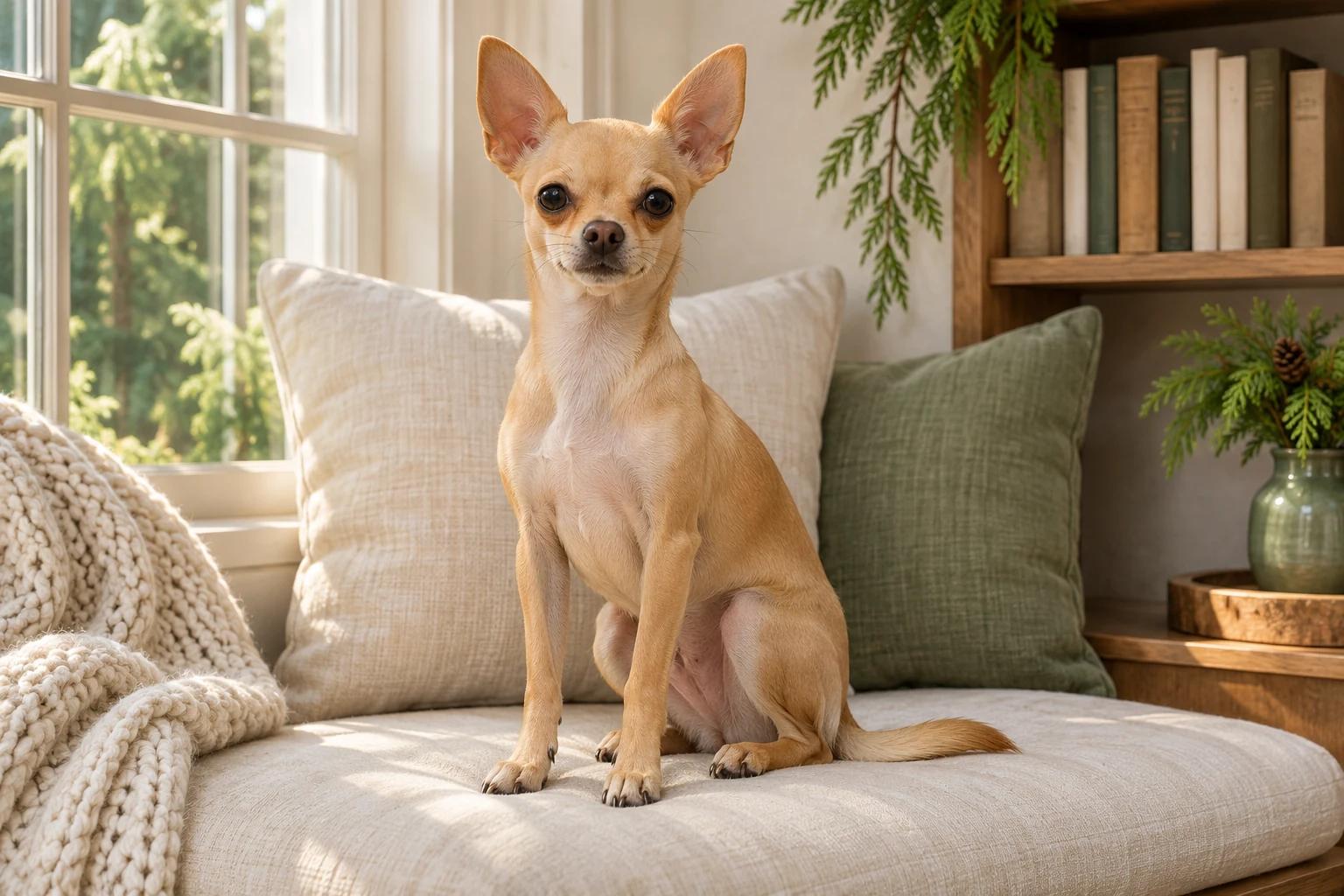
Chihuahua vs Miniature Pinscher is a comparison between two distinct small companions, not two versions of the same dog. The Chihuahua has a rounded head and a body slightly longer than tall; the Min Pin presents a more angular, compact outline and a characteristic high-stepping gait. Those differences are visible, but the more useful ownership question is how you want a small dog to participate in your day.
Read the Chihuahua profile and Miniature Pinscher profile together. Start with the genuine contrasts, then translate them into decisions about equipment, learning activities and household routines.
Chihuahua vs Miniature Pinscher: outline and movement
The UKC Chihuahua standard describes a rounded skull, a moderately short muzzle and a body a little longer than its height. These features produce a different outline from the narrower, tapering head and compact body described for the Miniature Pinscher. UKC Chihuahua standard, UKC Miniature Pinscher standard.
The difference between Chihuahua and Miniature Pinscher is especially clear when watching them move rather than comparing cropped portraits. The Chihuahua standard describes an active, springy trot; the Min Pin standard identifies a higher-stepping front action. These are breed descriptions, not instructions to encourage exaggerated movement or a basis for diagnosing a dog from a video.
For an owner, the practical lesson is to fit equipment to the individual outline. Do not buy the same harness simply because both labels appear in the toy-dog section. Check the manufacturer's measurements and how the equipment sits on the actual dog. A garment that closes is not necessarily one that permits comfortable ordinary movement.
When visiting a dog, ask to see an unhurried walk on ordinary footing. Notice how the handler manages the equipment and what the dog is already accustomed to. That provides a more useful picture of your likely routine than a posed image alone.
Compare the learning commitment, not just floor space
My Breed Atlas records a higher mental-engagement tendency for the Miniature Pinscher than for the Chihuahua. That is a meaningful reason to examine how much you enjoy inventing and teaching small tasks. It does not mean a Chihuahua has no interest in learning or that a Min Pin must be entertained continuously.
For a prospective Min Pin household, make a list of activities you would genuinely repeat: a short search game, learning a new movement cue or practising a familiar sequence in a different room. If that list feels like a chore before the dog arrives, take the mismatch seriously rather than assuming a small body means a small commitment.
For a prospective Chihuahua household, do not confuse companionship with passivity. Make room for participation even when carrying would be quicker. Walking to the door, entering transport equipment and moving to a resting place can all become useful tasks rather than moments when the person simply relocates the dog.
This distinction helps frame the choice. The Min Pin's stronger mental-engagement profile may appeal to someone who likes devising regular challenges. The Chihuahua may appeal to someone who wants a very small companion and enjoys teaching practical everyday skills. Neither choice removes the need for consistent attention.
Personality descriptions need a practical translation
UKC emphasizes the Min Pin's spirited, self-possessed character, while its Chihuahua description emphasizes confidence and attachment to the owner. These are different emphases, not opposing categories: a devoted dog can be confident, and a spirited dog can enjoy close companionship.
Translate the words into questions about ordinary events. For the Chihuahua, ask how the dog responds when its familiar person moves to another room and how different household members take part in care. For the Min Pin, ask how the caregiver brings an interesting activity to a close and introduces a new task.
Request examples rather than adjectives. “What happened during the last visitor's arrival?” is more informative than “Is this dog friendly?” Ask what the person did, how much space the dog had and how the visit progressed. A successful routine may depend on arrangements you will need to reproduce.
Do not use either breed's confidence as a reason to force greetings. A dog can look bold while still needing more room. Arrange introductions so you can step away rather than requiring contact in a narrow hallway.
Coat choice is one part of the decision
The Miniature Pinscher has a short, close-fitting coat. The Chihuahua offers smooth and long coat varieties. That makes coat preference a real difference between the options, but it need not dominate a comparison about daily ownership.
If a longer-coated outline is important to you, the Chihuahua offers that possibility within the breed. If your preference is a sleek, short-coated silhouette, both a smooth Chihuahua and a Min Pin may appeal. The existing Chihuahua coat comparison covers those visible varieties in more detail.
Keep the shopping decision separate from the care decision. Ask what tools are already used, how the dog responds to handling and whether professional help is part of the routine. Short hair does not eliminate the need to practise being touched and checked.
Choosing a Chihuahua or Miniature Pinscher for your home
Put two plans on paper instead of two photographs side by side. Each plan should cover the exit from your home, the usual walking route, a place for quiet rest and the person responsible for daily learning or play.
For the Chihuahua plan, pay particular attention to handling at the dog's scale. Can you attach equipment without rushing? Is there a predictable transport routine? Will everyone let the dog move and participate rather than automatically picking it up?
For the Min Pin plan, pay particular attention to the learning opportunities you intend to provide. Name the actual games and skills rather than writing “mental stimulation” as a vague promise. Decide who will continue them on busy days.
A Miniature Pinscher vs Chihuahua decision becomes clearer when one plan feels inviting and the other feels forced. Use the breed quiz to organize your preferences, then meet suitable dogs and compare the routines you could realistically maintain. Neither breed description can promise the outcome of a particular placement.
FAQ
Are a Chihuahua and a Miniature Pinscher the same kind of dog?
Chihuahuas and Miniature Pinschers are distinct breeds. Their head shapes, body outlines and characteristic movement differ, even when a smooth-coated Chihuahua and a Min Pin share similar coloring.
Which breed has the stronger mental-engagement tendency?
My Breed Atlas records the Miniature Pinscher higher for mental engagement. Use that as a prompt to plan regular learning opportunities, not as a claim that every Min Pin needs the same schedule or that Chihuahuas do not learn.
Can coat preference help me choose between them?
Coat preference can narrow the options: Chihuahuas have smooth and long varieties, while Miniature Pinschers have short coats. Consider that preference alongside handling, activity and the daily routine rather than using appearance as the whole decision.
Sources behind this article
Article source checked: November 15, 2026. Source checked 2026-11-15
Keep reading

Affenpinscher vs Brussels Griffon: Everyday Differences
Read article →