Chihuahua Exercise Needs: A Practical Daily Plan
Plan Chihuahua exercise needs around walking, sniffing, indoor games and rest without relying on a fixed daily distance.
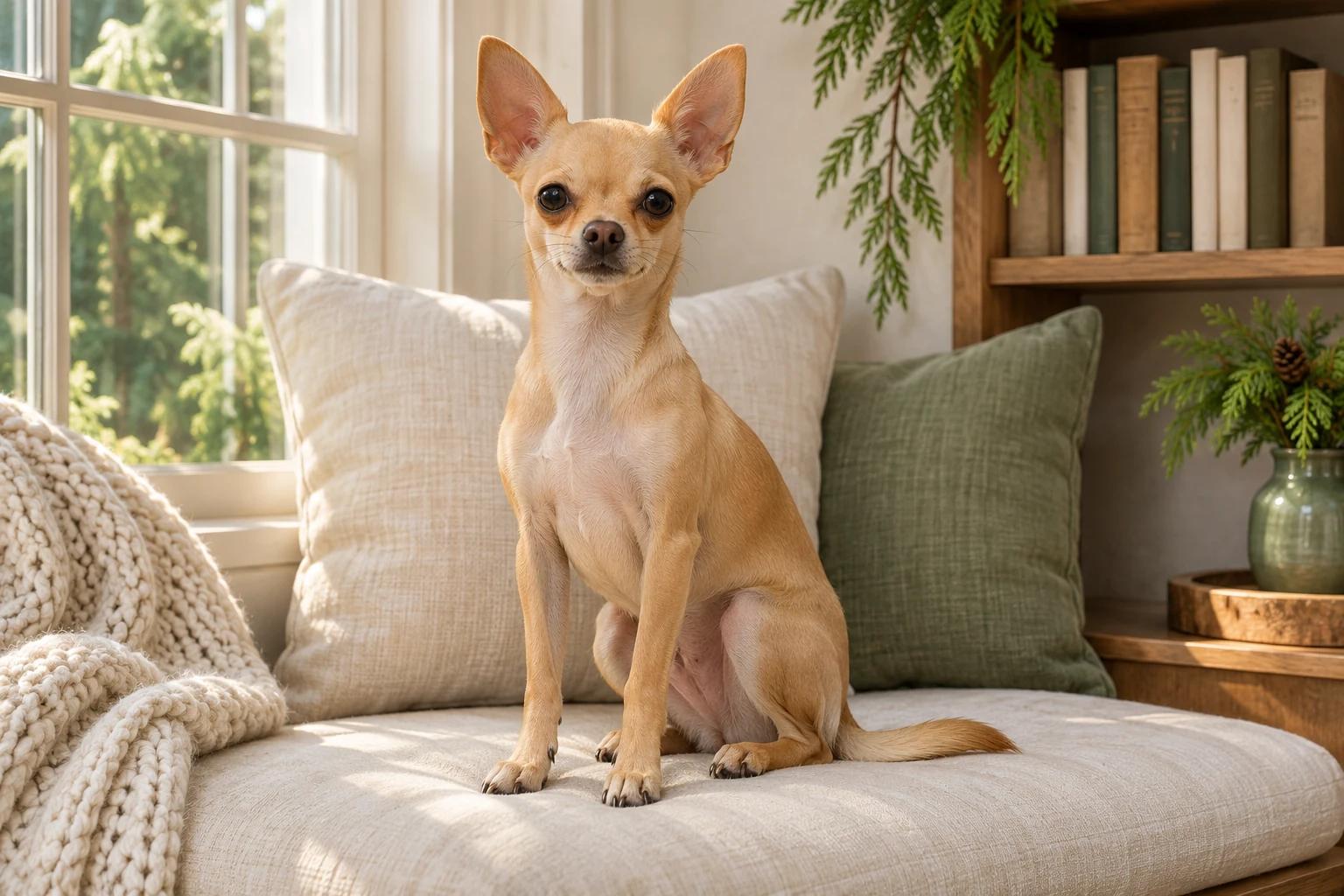
Chihuahua exercise needs are easier to plan when you separate moving, exploring and learning. A dog can spend an outing watching busy pavement without having much opportunity to sniff. It can also chase a toy indoors without encountering anything new. A useful daily routine makes room for more than one kind of activity rather than treating every experience as interchangeable.
Begin with the Chihuahua profile, then plan around the dog in front of you. Small size makes some activities possible in limited space, but it does not remove the need to participate in the world beyond a person's arms.
Chihuahua exercise needs: build a varied day
VCA's smooth-coat Chihuahua guide distinguishes indoor games from the mental interest of outdoor walking and sniffing. It also identifies games and tricks as ways to provide mental activity. Those points offer a useful framework without prescribing one distance for every Chihuahua. VCA Chihuahua guide.
Think in terms of three opportunities: an outing with room to investigate, a small shared game and a simple learning task. These do not need to become three elaborate appointments. A quiet stretch of the usual route can provide exploration; a brief game at home can provide interaction; putting equipment away can follow a familiar settling routine.
The aim is not to fill every waking moment. Leave unstructured rest between activities and avoid adding another game merely because the dog is watching you. A plan that requires constant entertainment will be difficult to sustain and hard to evaluate.
How much exercise does a Chihuahua need?
There is no single number of minutes that answers this for every age, condition and environment. Ask your veterinarian about appropriate activity when bringing a dog home, after a change in health or before a substantial increase in exertion. Do not use an online breed label as a substitute for that conversation.
For day-to-day planning, first document the routine already in place. Note where the dog walks, what the outing contains and how the rest of the day unfolds. A route with repeated waits at crossings is not equivalent to uninterrupted movement, even if both take the same time.
Change one part at a time. You might choose a quieter route with more sniffing opportunities rather than automatically extending the distance. That makes it easier to see whether the change actually improves the outing. If your dog is reluctant, unusually tired or moving differently, do not push through to complete a target; discuss concerning changes with the veterinary team.
Design a Chihuahua daily walk from the ground up
Before departure, check that the equipment fits the actual dog and that you can manage the lead without dragging it. Set up the exit so you are not juggling bags, a phone and a dog in a narrow doorway. An unrushed beginning is worth more than a complicated route.
Choose a path with space to move aside. Consider the busiest parts at the time you will really walk, not only on a quiet weekend visit. A broad pavement at midday may become crowded during the school run or evening commute.
Make room for pauses that belong to the dog. Let investigation be part of the purpose rather than a delay between destinations. If the same lamppost holds attention, you do not have to turn the outing into a contest over forward motion.
Plan an easy route home and adjust to conditions. Avoid making the farthest point of the walk the first place you assess whether the dog is comfortable. Weather, footing and crowding are practical reasons to change the outing rather than insist on completing a familiar circuit.
Give indoor games a specific purpose
A small living room can support useful play when the route is clear. Move loose cables and breakable objects, choose secure footing and use a toy appropriate to the dog's size. Avoid arranging a game around leaps off furniture or fast turns around obstacles.
For a simple search, let your dog see a familiar toy placed a short distance away, then invite it to find the toy. Increase the challenge by changing one hiding place, not by making the whole room inaccessible. Supervise the game and put the materials away afterward.
A short return game can also include a pause near you before the next turn. Keep the distance modest enough that you remain part of the activity. If the game becomes frantic, simplify it rather than trying to tire the dog out with faster throws.
Use a clear finish. Store the toy, offer a familiar quiet activity and stop initiating more play. Ending predictably is part of making games fit into everyday life.
Notice attention as well as movement
The American Kennel Club describes the Chihuahua as alert. An alert companion may notice plenty on an outing that its person barely registers, so choose observation spots thoughtfully. AKC Chihuahua reference.
A bench beside a stream of approaching dogs may not provide the relaxed pause you imagined. A quieter edge of the route may let you watch the surroundings without being surrounded. This is a route-design choice, not a demand that your Chihuahua greet every passerby.
Carried outings have a different purpose from walking. They can be part of transport or a necessary response to circumstances, but record them separately when reviewing activity. Seeing a street from a carrier is not the same task as exploring it on foot.
Make the plan resilient to ordinary disruptions
Write down a normal-day option and a reduced-outdoor option. The second should still include engagement, such as a familiar search game and a short lesson, rather than an assumption that the dog will simply wait until tomorrow for all interaction.
Coat appearance alone cannot tell you which routine will suit a dog. Our Chihuahua coat article explains that distinction without assigning personalities to coat varieties. Keep equipment and weather decisions separate from assumptions about temperament.
When considering Chihuahua activity level, ask whether you enjoy small, repeatable opportunities for participation. Someone who wants a dog only as a carried accessory may overlook the daily work involved. The breed quiz can help organize preferences, but your actual routes and available time are the practical test.
FAQ
Can indoor play replace every Chihuahua walk?
Indoor play and outdoor exploration provide different experiences. Plan opportunities to walk and sniff when appropriate for the individual dog and conditions, with indoor games as part of the routine rather than an automatic replacement.
Is there a fixed daily walking distance for Chihuahuas?
A fixed distance cannot account for age, health, route conditions or the individual dog. Discuss appropriate activity with your veterinarian and review the content of outings instead of pursuing an arbitrary mileage goal.
Does carrying a Chihuahua count as exercise?
Carrying provides transport and may allow observation, but it is not physical walking activity for the dog. Keep carried time separate when assessing the daily routine and make suitable opportunities for the dog to move independently.
Sources behind this article
Article source checked: November 15, 2026. Source checked 2026-11-15
Keep reading

Afghan Hound Exercise Needs: Build a Workable Active Day
Read article →