Chausie vs Savannah: adult size, appearance and breed identity
Compare Chausie vs Savannah adult weights, contrasting appearance, coat patterns and registry recognition.
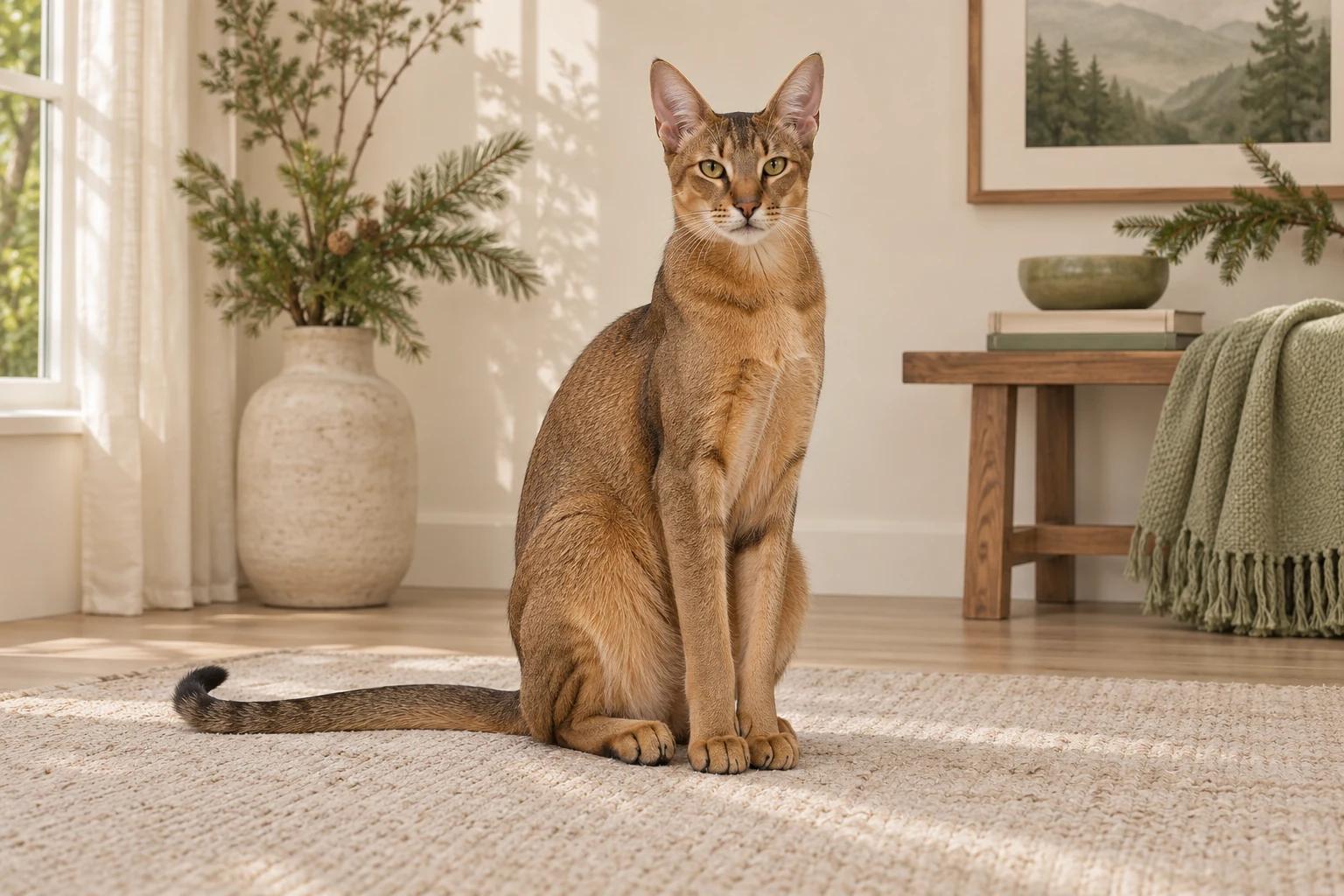
Chausie vs Savannah is a comparison between distinct breeds, not two names for the same cat. Start with their adult reference weights and the particular animal you are considering. Appearance, ancestry and registration answer different questions, so a dramatic photograph should not be asked to answer all three.
Chausie vs Savannah: the adult weights overlap
The current Chausie profile lists an adult reference of 15–25 pounds. The Savannah profile lists 12–25 pounds. These figures are unsexed: they should not be presented as separate female and male ranges.
In kilograms, the references are approximately 6.8–11.3 for Chausies and 5.4–11.3 for Savannahs. The whole Chausie interval sits within the displayed Savannah interval. That does not mean the breeds have identical weight distributions; an interval does not tell us how many animals occur at each point within it.
It also does not establish that a Chausie will be heavier than the Savannah you meet. A twenty-pound adult is within both references. Comparing the lower endpoints alone creates a three-pound difference, but that is a difference between endpoints, not a measured average difference between the breeds.
When reading a Savannah vs Chausie comparison, keep those distinctions attached to the numbers. An adult's actual measurement is more useful than guessing from the largest example in a photograph. For a kitten, neither upper endpoint is a promised destination. Ask your veterinarian about the appropriate weight for the individual rather than using a breed maximum as a goal.
A brief visual distinction
TICA describes the Chausie with jungle-cat ancestry and three coat patterns: solid black, brown ticked tabby and black grizzled ticked tabby. The latter two names describe banded hairs rather than a requirement for large body spots.
The Savannah's outline is not just its spots
TICA's Savannah description links the breed's ancestry to the African serval and describes an unusually long neck, long legs and tall ears. Those proportions help explain why a cat can look imposing without weighing as much as its silhouette suggests. A full side view communicates something different from a tightly cropped head portrait.
Its familiar spotted appearance is an important part of the breed image, but TICA also lists black and black smoke among standard colors. A comparison based only on a bright spotted photograph therefore leaves out part of the recognized appearance.
For a prospective owner, the useful distinction is between seeing a pattern and understanding an outline. Look at the relationship of neck, legs and torso rather than assuming that every tall-looking animal must be near the upper weight reference. None of these features gives a numerical shoulder height for the individual. A photograph can show proportions; it cannot supply a measurement merely because the cat is standing beside an object of unknown size. Ask for actual dimensions when dimensions matter.
Read coat terms at the hair level
The UC Davis Veterinary Genetics Laboratory explains that agouti pigment switching produces bands within individual hairs. Non-agouti hairs have more uniform pigmentation. The larger pattern across the body involves additional genetic effects, so hair banding and the arrangement of visible markings are not interchangeable descriptions.
This is useful when a breed comparison uses words such as ticked, patterned and solid in the same paragraph. One term may refer to the appearance of a hair, while another describes what you see across the animal. Asking which scale is being described helps make the terminology understandable without treating every unfamiliar word as a separate breed.
The laboratory also notes that overall coat appearance involves interactions with other genes. Its explanation is not a breed-identification test based on a photograph, nor does a pigment result summarize temperament or adult size. Use color language to understand the description in front of you, not to infer an entire pedigree. No owner needs to arrange a genetic test simply to appreciate the distinction between an individual hair and a body marking.
Registration is specific to the organization
The GCCF's current unrecognised-breeds page lists both Chausie and Savannah as ineligible under its policy on outcrosses to wild species. The same entries identify TICA as a recognizing body. Thus, “recognized breed” needs the name of the organization attached; it is not a statement that every registry applies the same policy.
This matters especially if showing is part of your interest. The GCCF page also explains restrictions on the presence of breeds without recognition at its licensed shows. Do not infer eligibility for a particular organization's event from a registration issued elsewhere. Check the actual organizer's requirements for the cat concerned before making arrangements.
Registry recognition is also a different question from permission to keep an animal in a particular location or property. This comparison does not establish either legal eligibility or a housing agreement. A registry entry describes that organization's position. It should not be stretched into a universal ownership permission, and a lack of recognition by one body should not be mistaken for a statement that the two breed names are synonyms.
For the separate question of everyday care arrangements, read the Chausie weekday care schedule. The cat match quiz can help you consider your preferences without reducing the choice to appearance.
Frequently asked questions
Is a Chausie or Savannah always heavier?
Neither a Chausie nor a Savannah is always heavier. The current adult references overlap: Chausie 15–25 pounds and Savannah 12–25 pounds. These unsexed ranges cannot predict which of two individual adults will weigh more.
What is the difference between Chausie and Savannah weight ranges in kilograms?
The current references convert to approximately 6.8–11.3 kilograms for Chausies and 5.4–11.3 kilograms for Savannahs. Converting the units does not make the ranges individual growth targets.
Does a twenty-pound cat fall within both references?
Twenty pounds falls within both the Chausie and Savannah current adult weight intervals. Weight alone therefore cannot distinguish these two breeds.
Sources behind this article
- TICA Chausie breed and standard ↗
- TICA Savannah breed and standard ↗
- UC Davis Veterinary Genetics Laboratory: Agouti ↗
- GCCF: Unrecognised Breeds ↗
Article source checked: November 16, 2026. Source checked 2026-11-16
Keep reading

Abyssinian vs Somali: Coat, Size and Everyday Company
Read article →