Cesky Terrier vs Scottish Terrier: Everyday Differences
Compare Cesky Terrier vs Scottish Terrier coat care, personality and daily ownership commitments before choosing a companion.
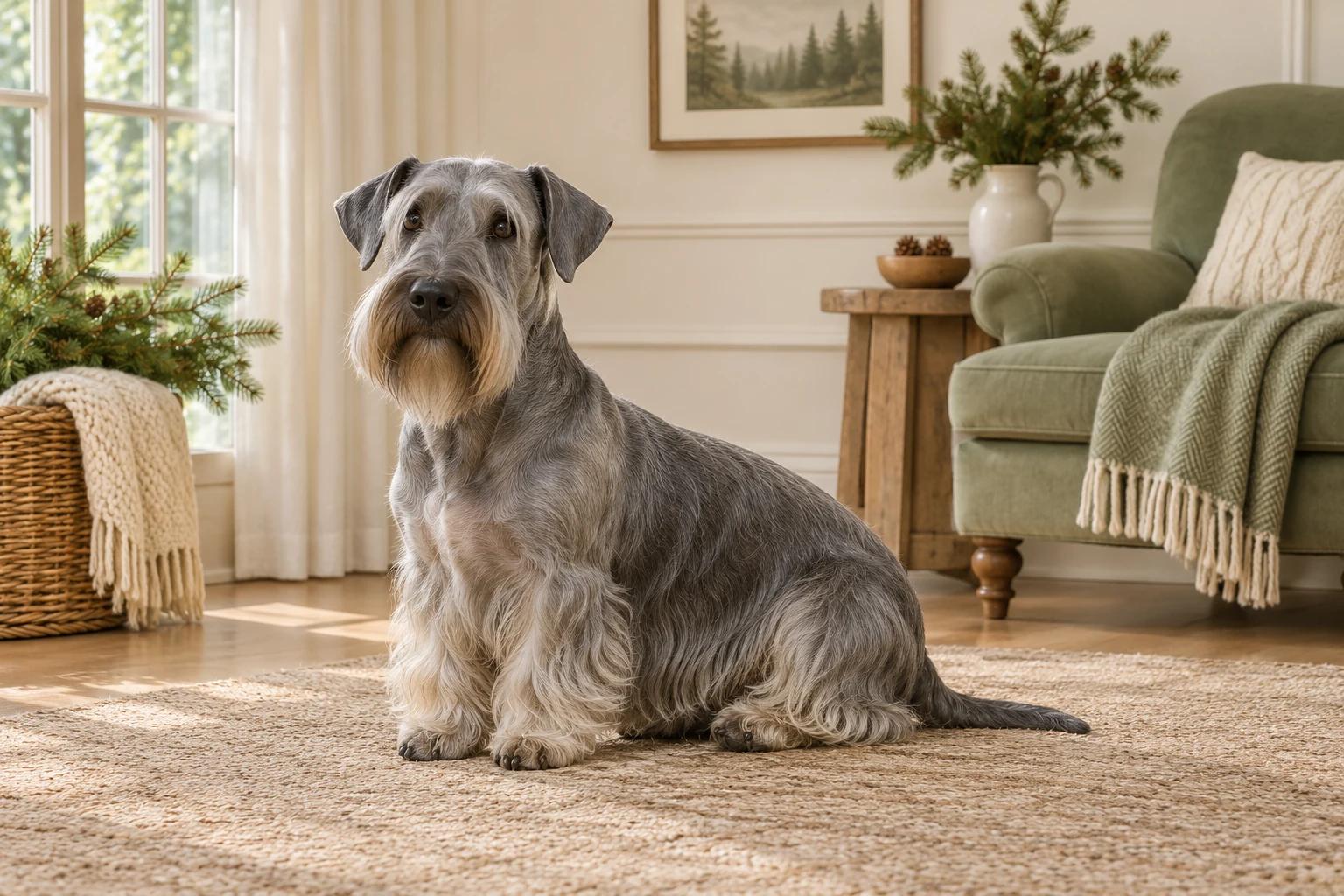
Cesky Terrier vs Scottish Terrier is a choice between two distinct terriers, not two hairstyles on the same dog. Both offer a compact companion with a recognisable character, but their coats and the way their personalities are described give you different questions to ask. Start with what you want to do together and what you are willing to maintain, rather than picking the more appealing photograph.
Read the Cesky Terrier profile and Scottish Terrier profile side by side. Their shared terrier label is useful background; the differences become clearer when you compare a grooming appointment, a lesson and an ordinary walk.
Cesky Terrier vs Scottish Terrier: the clearest differences
The Cesky has a silky, wavy coat, while the Scottish Terrier has a wiry double coat. Their natural ear presentation also differs: the Cesky's ears drop, while the Scottie's are upright. These are visible distinctions, but coat texture has a larger everyday consequence than the shape you prefer in a portrait. UKC Scottish Terrier standard.
The UKC Cesky standard specifies a clipped coat and describes its short-legged, rectangular build. Its historical account identifies Scottish and Sealyham Terriers in the breed's development. That connection does not make the modern breeds interchangeable. UKC Cesky Terrier standard.
For personality, AKC describes the Cesky as determined at work yet comparatively tractable, while its Scottie description emphasises independence, confidence and persistence. Think of these as different emphases rather than a ranking of obedience or affection. AKC Cesky Terrier reference, AKC Scottish Terrier reference.
Compare the coats before comparing salon photographs
A difference between Cesky Terrier and Scottish Terrier ownership is the grooming conversation you need to have. For a Cesky, ask how you will maintain the silky coat between professional visits. For a Scottie, ask a groomer familiar with wiry coats to explain the maintenance and presentation options for that individual dog.
Do not simply request “the terrier cut” for either breed. Bring the breed name, a photograph of your dog and a clear description of your daily routine. Say whether your walks involve wet grass, whether you enjoy coat care and how often you can realistically attend appointments.
The comparison becomes practical when you ask the same questions of both groomers: what happens at home, what happens professionally and what should prompt an earlier call? A cheaper appointment is not necessarily the smaller commitment if it leaves you with work you cannot manage between visits.
Our article on the Cesky's clipped coat description explains its distinctive presentation. Here, the decision is not which outline wins a photograph. It is whether you prefer maintaining the Cesky's coat type or learning the routine appropriate to a Scottie.
Think about training as a shared activity
If you are deciding between a Cesky Terrier or Scottish Terrier, ask how you feel about teaching small skills repeatedly. Neither choice makes household manners automatic. A terrier's compact size does not turn a rushed doorway exit or an unresolved handling problem into something you can ignore.
The Cesky's comparatively tractable description may appeal if you want an engaged partner for everyday practice. The Scottie's independent, persistent description may appeal if you enjoy a dog with a pronounced sense of its own priorities. Neither description tells you how many repetitions a particular dog will need.
Try a concrete scenario: you want the dog to leave an interesting patch of grass and continue a walk. Your plan should include a clear cue, a worthwhile reason to respond and practice before the difficult moment. Choosing a Scottie means taking its independent reputation seriously, not expecting force to settle the disagreement. Choosing a Cesky means teaching the same skill rather than assuming tractability makes it unnecessary.
Ask a caregiver what rewards the dog enjoys and which lesson is currently being practised. That gives you a starting point for continuing the work, instead of arriving with a training plan based entirely on a breed stereotype.
Size is less decisive than you might expect
Both are short-legged terriers, and their published adult weight ranges overlap. If your main requirement is a compact dog, the shortlist may reasonably include both. It is more helpful to compare the actual adult dog's dimensions and the equipment it needs than to declare one the tiny option.
Check the ordinary spaces: the area beside your desk, the car restraint arrangement and the route between the sleeping place and the outside door. Measure equipment rather than buying it from a breed label alone. A puppy's current dimensions will not answer the adult equipment question.
A Scottish Terrier vs Cesky Terrier decision also should not rest on the assumption that the shorter-looking dog requires fewer outings. Both breed profiles place activity in the middle of their reference scales. Plan regular outdoor time and engaging activities for either, not a schedule built around doing the minimum because the dog is compact.
Build two realistic ownership budgets
Start with coat care, because it is an obvious difference you can investigate locally. Obtain a clear explanation of the service for each breed rather than transferring one quote to the other. Add the tools and home practice each groomer expects.
Next, price the same ordinary needs for both: walking equipment, transport, routine veterinary care and help when you are away. Keep these as separate lines. There is no useful winner if one total includes professional grooming and the other quietly assumes you will do all of it yourself.
Include time as well as money. Who will practise handling? Who can attend an appointment during work hours? Which walks will still happen on busy days? Those answers may favour one care routine without making either breed better in the abstract.
Choose the character you want to live alongside
For an owner drawn to a silky-coated terrier with a comparatively amenable reputation, the Cesky is a sensible breed to investigate further. For someone attracted to a wiry-coated companion whose description foregrounds independence and persistence, the Scottie may be the more interesting starting point.
Use the breed match quiz to organise your priorities, then meet dogs and ask focused questions. A good comparison should leave you knowing what to investigate next: the coat routine, the training partnership and the everyday responsibilities you will actually enjoy taking on.
FAQ
What is the main practical difference between these breeds?
Coat type is a clear practical difference. Cesky Terriers have silky, wavy coats, while Scottish Terriers have wiry double coats. Ask a breed-experienced groomer to explain the appropriate home and professional care for each before choosing.
Is the Cesky Terrier simply a softer-looking Scottie?
No. The Cesky Terrier is a separate breed, despite Scottish Terrier ancestry in its development. Its coat, dropped ears and breed description differ from the modern Scottish Terrier's appearance and character profile.
Which breed is easier to train?
The Cesky is described as comparatively tractable, while the Scottie's description emphasises independence. That is a useful starting contrast, not a guaranteed result. Ask about the individual dog's current skills and plan consistent, rewarded practice with either breed.
Sources behind this article
- AKC: Cesky Terrier ↗
- UKC: Cesky Terrier Standard ↗
- AKC: Scottish Terrier ↗
- UKC: Scottish Terrier Standard ↗
Article source checked: November 15, 2026. Source checked 2026-11-15
Keep reading

Affenpinscher vs Brussels Griffon: Everyday Differences
Read article →