Cesky Terrier Temperament: Everyday Partnership
Understand Cesky Terrier temperament through everyday walks, household routines, introductions and cooperative handling.
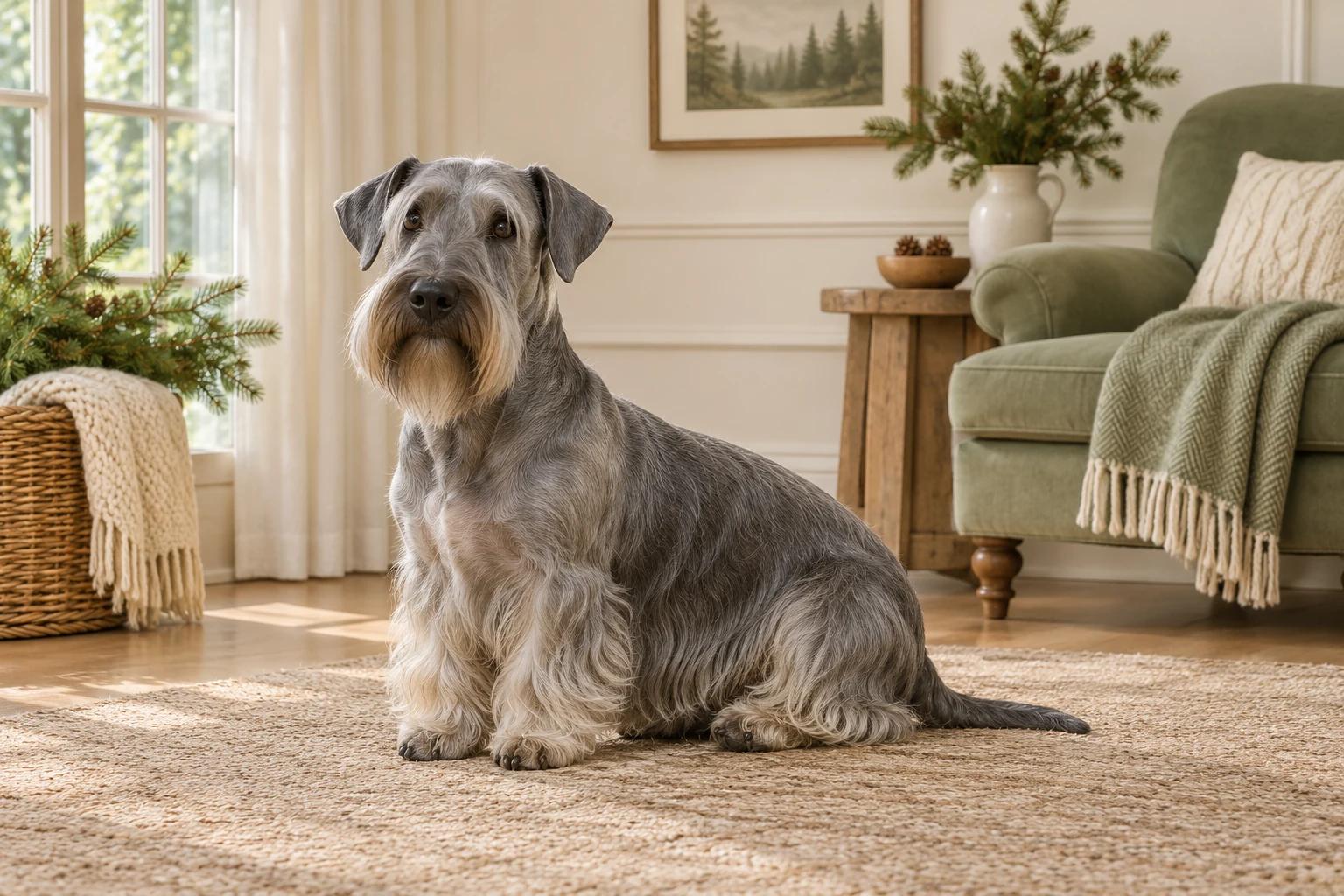
Cesky Terrier temperament combines a determined little terrier's interest in the world with a reputation for being relatively amenable to life alongside people. That combination is more useful than either “easy dog” or “stubborn terrier” as a description. Expect to share activities, explain household rules and make room for investigation, rather than choosing between constant entertainment and a dog that needs nothing from you.
The Cesky Terrier profile provides the basic care picture. To decide whether that picture fits your home, look at ordinary moments: the walk past a hedge, a visitor arriving, a grooming appointment and the stretch of time between outings.
Cesky Terrier temperament: cooperative does not mean passive
AKC describes a tenacious worker with a comparatively tractable character. This is a useful distinction: willingness to engage with a person need not erase persistence when something else has caught the dog's attention. AKC Cesky Terrier reference.
Imagine a walk that reaches a fascinating patch of grass. The practical question is not whether your Cesky loves you enough to ignore it. It is whether you have taught a clear way to pause, investigate and move on. Include some exploration in the outing instead of making every stop a disagreement.
Choose a familiar cue for continuing the walk. Practise it where leaving is easy before expecting it beside the most interesting fence on the route. A household that enjoys these small negotiations may appreciate the Cesky's character more than one expecting a small dog to follow silently through every activity.
Give curiosity somewhere appropriate to go
VCA identifies digging and chasing as interests that can remain alongside the breed's companion role. It also recommends brief, interesting, positively reinforced lessons. Those are limited starting points, not a claim that every Cesky behaves identically. VCA Cesky Terrier guide.
Put the implications on a map of your home. Which door opens directly onto the street? Is the garden boundary secure at ground level? Where do delivery drivers enter? Arranging these details is more useful than assuming that a small terrier will remain nearby simply because the family is outside.
For a supervised searching game, let the dog watch you place a familiar toy in an easy hiding spot. Invite a search and allow the discovery to finish the game. Increase difficulty only while the activity remains enjoyable. The purpose is a shared task, not a test of intelligence or a competition to exhaust the dog.
If gardening matters to you, decide which areas are off limits before planting. Barriers and supervision give that decision a physical meaning. Repeatedly telling a dog off after finding a hole does not explain where you would prefer exploration to happen.
Read sociability through ordinary encounters
Cesky Terrier personality is best understood through more than one meeting. A dog may behave differently in a familiar kitchen, on a busy pavement and at a first visit to your home. Ask its current caregiver to describe those settings separately rather than accepting a single word such as “friendly.”
Make an introductory visit unhurried. Leave space for the dog to approach without everyone leaning over it. Watch what happens after the initial excitement: can you talk to the caregiver while the dog does something else? Does it seek contact, investigate the room or prefer to stay nearby without being touched?
For guests at home, choose the resting place before the door opens. Visitors can sit down and let the dog decide whether to approach. Avoid turning the arrival into a group examination of its coat and face. The aim is an ordinary visit, not proof of sociability on demand.
If another dog lives with you, discuss introductions with the current caregiver or a qualified trainer. Ask about the Cesky's experience of sharing rooms, resting spaces and outings. A pleasant encounter outside does not answer every question about living together.
Make household consistency concrete
Among useful Cesky Terrier characteristics to plan around is a willingness to take part in daily life. Give that participation a shape. Decide where the dog waits while meals are prepared, where walking equipment is put on and how it can ask for attention without interrupting every task.
Keep cue words and expectations simple. If one person invites jumping during greetings while another objects, the dog receives competing lessons. Agree on the greeting you want, then reward that version instead of expecting the dog to infer which person wants which response.
Keep practice brief enough to fit real life. A successful return from the hallway can be the whole lesson. You do not need a formal training session every time you reward a useful choice. Equally, stop before a straightforward task becomes a long argument.
Include care in the companionship plan
Cesky Terrier behavior during handling deserves attention before a grooming appointment is overdue. Ask the caregiver how the dog responds to a comb, a towel and someone touching its feet. These everyday observations tell you more about the immediate work ahead than a claim that the breed is generally manageable.
Prepare a stable, comfortable place for short handling practice. Begin with contact the dog already accepts, then pause and reward cooperation. If it repeatedly moves away, reduce the task rather than restraining it to finish. A groomer can help you plan practical preparation; pain or a sudden change in tolerance belongs with a veterinarian.
Our article on the Cesky's clipped coat description explains a different part of ownership: why the breed has its distinctive presentation. For temperament decisions, focus on how care fits the relationship and schedule, not on recreating a photograph.
Decide whether you enjoy the daily partnership
Write down a likely weekday, including the least convenient parts. Who handles the midday outing? Where does the dog rest during calls? Who keeps grooming appointments and practises calm handling? An appealing personality description becomes useful only when those responsibilities have names attached.
Use the breed match quiz to organise preferences, then return to the practical questions. A Cesky may interest someone who wants a small terrier with activities to share and rules to teach. Choosing it solely because it sounds less demanding than another terrier misses much of the appeal.
FAQ
Is the Cesky Terrier an inactive companion?
No. The Cesky Terrier is a terrier with interests beyond sitting beside its owner. Plan regular outings and opportunities to explore and learn, rather than interpreting a comparatively amenable temperament as an absence of activity needs.
What should I ask about a Cesky Terrier's personality?
Ask for examples from walks, visitor arrivals, grooming and quiet time at home. Specific descriptions show how the dog behaves in situations you will actually share and identify skills you may need to practise.
Does a Cesky Terrier need consistent training?
Yes. Clear household rules and short rewarded practice give a Cesky Terrier understandable expectations. Agree on cues and greetings across the household instead of relying on the dog to interpret different rules from different people.
Sources behind this article
Article source checked: November 15, 2026. Source checked 2026-11-15
Keep reading

Airedale Terrier Temperament: What Everyday Life Can Feel Like
Read article →