Catahoula Leopard Dog vs Australian Shepherd: fit
Compare Catahoula Leopard Dog vs Australian Shepherd through working interests, size, coat and learning, without mistaking either for an easy option.
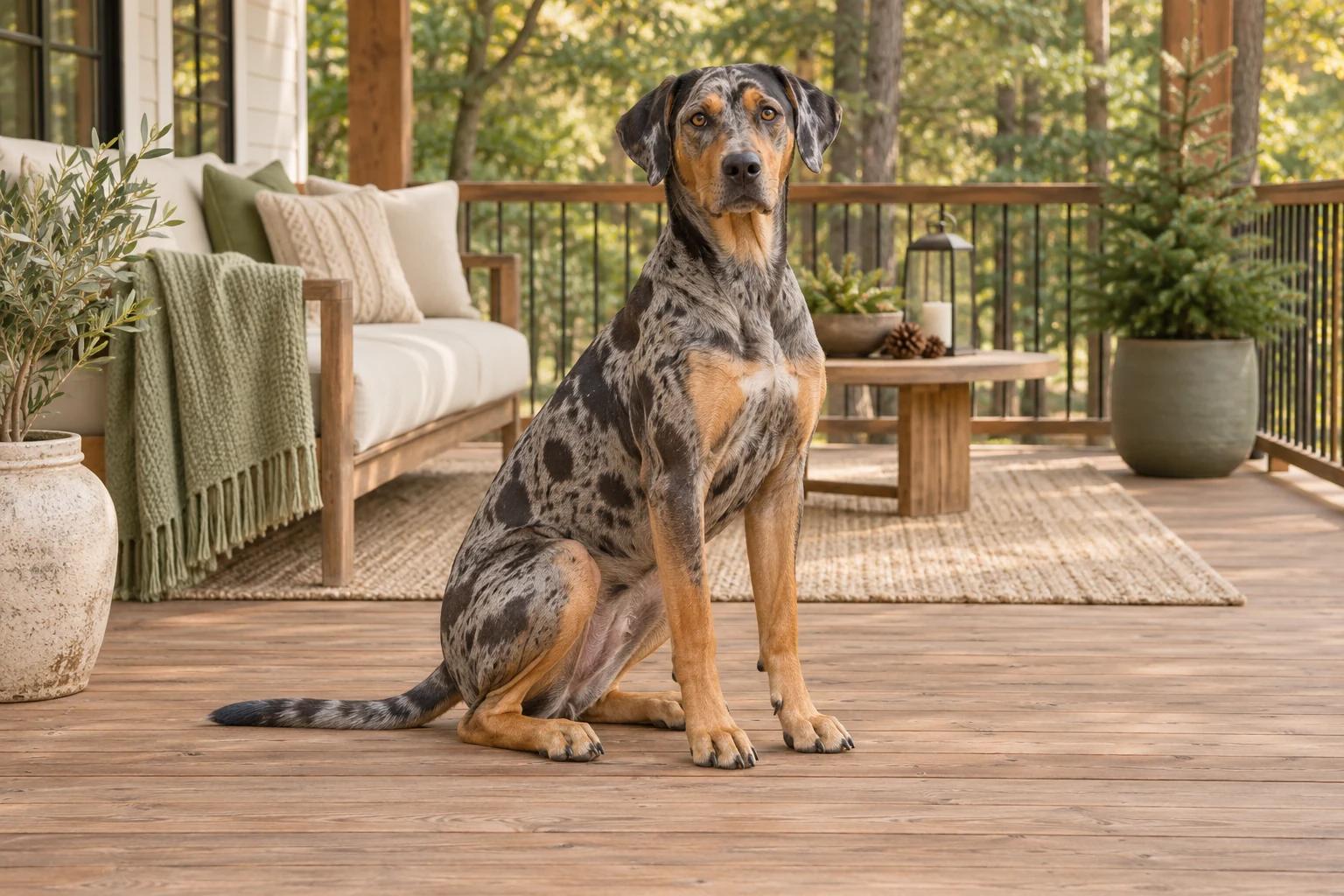
Catahoula Leopard Dog vs Australian Shepherd is not a choice between an active dog and an easy alternative. Both profiles point toward substantial engagement. The more useful comparison is what kind of partnership you want, which individual you are considering and whether you understand the less glamorous responsibilities as well as the appealing ones.
Open the Catahoula Leopard Dog profile and the Australian Shepherd profile together. Look beyond a favorite photograph. Build, coat and learning tendencies can guide your questions, but they cannot select a companion on your behalf.
Catahoula Leopard Dog vs Australian Shepherd: shared demands
The American Kennel Club's Catahoula description presents a versatile working dog. Its Australian Shepherd description emphasizes a ranch-dog background. Neither history means a modern companion arrives with a complete set of useful household skills.
On My Breed Atlas, both have high activity references. That makes it unhelpful to ask which breed will allow you to avoid regular participation. Instead, consider whether you actually want to spend time learning, providing suitable activity and making thoughtful decisions about the individual.
A household can admire working dogs without wanting to live with that level of involvement. Recognizing the distinction early is useful. Choosing whichever dog looks slightly easier on paper does not solve a mismatch with the shared commitment.
Compare learning interests without declaring a winner
The Australian Shepherd profile places mental engagement and training responsiveness at the top of its scale; the Catahoula is also rated toward the higher end. Those tendencies suggest questions about learning, not a universal intelligence ranking.
If you enjoy detailed training, investigate the activities that appeal to the actual dog. Perhaps you prefer precise handler-directed exercises; perhaps you are interested in a search-oriented hobby. Discuss both possibilities with experienced instructors rather than assigning a sport solely by breed.
The important difference is often in the partnership you can build. An enthusiastic learner still needs clear teaching. A dog that works more independently still needs communication and management. Neither style is automatically better, and neither removes the need to practice ordinary skills between enjoyable projects.
Describe your ideal activity honestly
Imagine the part of a hobby that happens before the impressive result: preparing, repeating a lesson and adjusting when something is unclear. If that process appeals to you, investigate it further. If only the finished performance is attractive, reconsider whether a demanding learning partnership is what you want.
Understand where the size references overlap
The Catahoula profile lists adult height at 22–24 inches and weight at 65–90 pounds for males and 50–65 pounds for females. The Australian Shepherd reference separates males at 20–23 inches and 50–65 pounds from females at 18–21 inches and 40–55 pounds.
There is overlap, particularly when comparing individual adults. You cannot assume every Catahoula will outweigh every Australian Shepherd, nor should you ignore the broader upper weight reference for the Catahoula. Obtain actual measurements when handling or a service limit matters.
A size difference may affect practical arrangements without deciding the whole match. Ask whether you can manage the individual comfortably and obtain the support needed for transport and care. Do not infer that the smaller of two adults will necessarily be easier to walk, teach or introduce to another animal.
Coat length changes the task, not the need for care
The Catahoula profile lists a short, smooth coat; the Australian Shepherd has a medium double coat. That is a meaningful practical distinction, but it does not turn one dog into a maintenance-free choice. Both need ordinary care and comfortable participation in handling.
If you are drawn to the Australian Shepherd's fuller outline, learn what brushing that actual coat involves. If the Catahoula's shorter coat appeals because it looks simpler, consider the other commitments you would still be accepting. Saving effort in one category cannot be exchanged for ignoring training or activity.
Ask a groomer to demonstrate unfamiliar techniques rather than treating a comparison article as a care manual. The aim is to understand the kind of work involved, not to rank a coat by attractiveness or promise that one choice eliminates loose hair.
Do not choose by the promise of quiet or easy sociability
The site's vocal reference is lower for the Catahoula than for the Australian Shepherd. That is a tendency, not a guarantee about noise in your home. If sound is a significant concern, investigate the particular dog's behavior and the circumstances that produce it.
Similarly, neither profile settles compatibility with a specific person or animal. Discuss the actual social setting you can offer. A dog expected to spend time in busy public places faces different demands from one whose activities are largely familiar and carefully managed.
Australian Shepherd vs Catahoula Leopard Dog comparisons can become a search for the breed that will fit every situation. That is not a realistic standard. Identify which circumstances are essential in your life and which you are willing to adapt, then seek individual assessment where needed.
Separate working heritage from proposed work
A broad working background does not authorize you to place an unfamiliar dog around livestock or assign it a guarding role. Any specialist activity needs suitable evaluation and instruction. A companion can have meaningful learning opportunities without reenacting every historical use associated with its breed.
This matters when people use the word “job” loosely. A job can mean a structured recreational project, not an obligation to perform demanding fieldwork. Explain your intended activity to an instructor so they can help distinguish an appropriate hobby from an unrealistic or unsuitable plan.
Do not assume that the difference between Catahoula Leopard Dog and Australian Shepherd can be reduced to one being independent and the other obedient. Actual learning history, motivation and context matter. Labels can start a conversation, but they are too blunt to finish it.
Decide which individual commitment you understand
When choosing a Catahoula Leopard Dog or Australian Shepherd, compare complete arrangements rather than isolated virtues. Which dog's activity interests, handling needs and learning history do you understand? Which commitments genuinely appeal to you, and which are you merely hoping will be easier than described?
The breed match quiz can organize your priorities. For the Catahoula's visual variety, read the separate coat and eye-color article. Appearance is an enjoyable part of learning about a breed, but it should not carry the weight of choosing the relationship.
FAQ
Is either breed a low-activity alternative to the other?
The My Breed Atlas profiles give both high activity references. Do not select one as a way to avoid regular participation. Investigate the individual dog's needs and the activities you can realistically support.
Is every Catahoula bigger than every Australian Shepherd?
No. Their adult reference ranges overlap. The Catahoula reference extends to a higher weight, but it does not determine the ordering of two individual dogs. Use actual measurements when a practical decision depends on size.
Does higher training responsiveness mean less teaching?
No. Responsiveness is a tendency, not a supply of learned household skills. An engaged learner still needs clear communication and practice. Choose a dog whose learning needs and style you want to work with, not one you expect to educate itself.
Sources behind this article
Article source checked: November 15, 2026. Source checked 2026-11-15
Keep reading

Affenpinscher vs Brussels Griffon: Everyday Differences
Read article →