Catahoula Leopard Dog exercise needs: plan with purpose
Meet Catahoula Leopard Dog exercise needs with varied, appropriate activity and learning, without turning every outing into an endurance test.
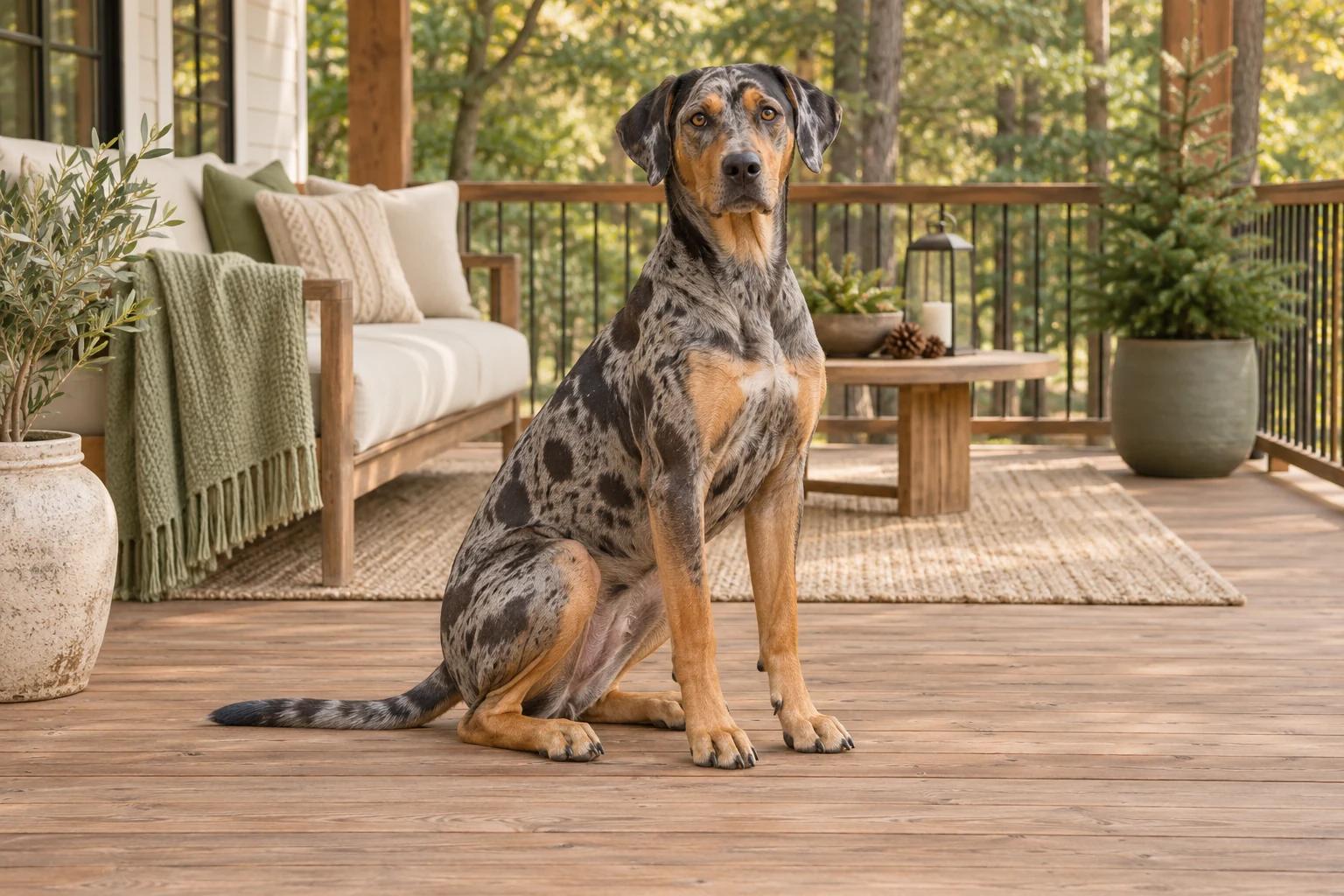
Catahoula Leopard Dog exercise needs deserve serious consideration before you choose the breed. The Catahoula Leopard Dog profile places activity at the high end of its reference scale and also emphasizes mental engagement. A plan based only on brief convenience outings is unlikely to reflect that commitment.
But serious consideration does not mean inventing a universal mileage target. The American Kennel Club describes an agile working dog with endurance. That is background for planning appropriate participation, not permission to assume an individual can undertake unlimited exercise.
Catahoula Leopard Dog exercise needs involve different jobs
The European Association of Louisiana Catahoulas emphasizes a balance of physical activity, mental work and rest, with demands suited to the individual. Use that broad principle to ask what each part of an outing is meant to provide.
There is movement, exploration, learning and the transition back to quieter activity. They may occur during the same outing, but they are not interchangeable. A fast route can offer little opportunity to investigate the surroundings; a slow training exercise may require concentration without much distance.
This distinction helps answer a practical question: what is missing from the arrangement, if anything? Before adding more of the same activity, consider whether you have overlooked a different component. More distance is not automatically the answer to an unclear lesson or an outing that is consistently too stimulating.
Give the daily walk a purpose beyond a number
A Catahoula Leopard Dog daily walk can be planned around the route's character rather than only its length. Think about whether it offers manageable movement, opportunities to sniff and places where you can pause or change direction. A route that looks convenient on a map may be awkward with the actual dog.
For example, a narrow path with no easy turn-off gives you different options from a quieter loop with several exits. That difference matters even when the distances are similar. Choose a setting you can adjust instead of treating completion of the route as an obligation.
Do not make every walk a test of behavior around its hardest distractions. If you are working on a particular skill, select a suitable place for that lesson. Ordinary exercise should remain manageable while training develops, not become a daily examination the dog repeatedly fails.
Account for the journey to the activity
Driving to an outing, waiting near other dogs and getting ready to begin are part of the experience, even if your activity tracker ignores them. An apparently simple class or trail visit can involve several unfamiliar transitions. Consider those demands when deciding what is appropriate that day.
Choose variety without creating constant novelty
Catahoula Leopard Dog activity level is a reason to investigate a useful range of options, not to replace every familiar outing with a new challenge. Familiar routes and learned games can have value. Variety should serve the dog and your practical life rather than become an entertainment obligation.
You might have a dependable walking option, a suitable learning activity and another outdoor pursuit taught with appropriate guidance. The precise selection depends on the individual. You do not need to collect sports or promise a demanding adventure every weekend.
When exploring a new activity, ask what preparation it requires. Veterinary guidance can address health-related suitability; a qualified instructor can address technique and progression. An energetic appearance is not a substitute for either kind of advice.
Avoid turning enthusiasm into a stopping rule
A dog asking to continue does not provide all the information you need about whether continuing is appropriate. Decide the activity's boundaries using informed guidance rather than waiting for complete loss of interest. The goal is a workable experience, not proving the dog can outlast you.
Likewise, do not make exhaustion the definition of success. If your only measure is whether the dog collapses into rest afterward, you have set a target that ignores how the activity was performed and whether it was suitable. Enjoyable participation and a sensible ending are more useful goals.
If the dog seems uncomfortable, unusually reluctant or distressed, stop and seek appropriate veterinary advice. Do not explain a change away as a failure of motivation or attempt to solve it by increasing the workload. A breed guide cannot assess that individual situation.
Plan alternatives for unsuitable conditions
A high-activity dog still needs you to make sensible decisions when the preferred outing is unavailable. Consider alternatives before weather, closures or a disrupted schedule force a hurried improvisation. An alternative does not have to reproduce every feature of the original plan.
A suitable indoor lesson might preserve some mental engagement while outdoor activity is adjusted, but it should not be presented as permanently equivalent to every physical need. The point is flexible planning, not a claim that one puzzle replaces all outings.
If disruptions are frequent, review the overall arrangement rather than relying indefinitely on emergency substitutes. Access to appropriate places, instruction and reliable time matters. Owning a large property or many toys does not answer those questions by itself.
Ask the duration question in an individual conversation
How much exercise does a Catahoula Leopard Dog need? There is no responsible single duration that covers every age, condition and activity. Discuss the individual with your veterinarian and an appropriate instructor, especially before introducing unfamiliar or demanding work.
Describe the actual proposal rather than simply asking whether the breed needs “a lot.” A gentle exploratory outing, a technical lesson and a physically demanding sport are different experiences. Their duration cannot be compared as though every minute represents the same demand.
For a newly adopted dog, learn what is already familiar and avoid trying to demonstrate your commitment through a sudden ambitious program. Consistent, appropriate participation is a better goal than a spectacular first weekend followed by an arrangement you cannot sustain.
Choose the commitment, not the image
The breed match quiz can help you examine whether active involvement fits your preferences. Be honest about whether you enjoy participating when the experience is ordinary, repetitive or inconvenient, not only when it produces a memorable photograph.
The existing Catahoula appearance article explains coat variety. Exercise planning asks a different question: can you offer an appropriate mix of movement, learning and quieter time for the actual dog? A distinctive appearance should not decide that for you.
FAQ
Is there one daily exercise duration for every Catahoula?
No. Age, current condition, experience and the type of activity matter. Discuss an individual plan with suitable professionals rather than treating a breed-wide number as a target every dog must meet.
Is a large yard enough to meet exercise needs?
Space alone does not establish what activity or learning actually takes place. Consider how you will participate and what suitable opportunities the dog will have. Property size is one resource, not a complete exercise plan.
Should I keep going while the dog remains enthusiastic?
Enthusiasm alone is not a complete measure of suitability. Plan appropriate boundaries and rest with professional guidance where needed. Do not make exhaustion or refusal the only reason to end an activity.
Sources behind this article
- American Kennel Club: Catahoula Leopard Dog ↗
- European Association of Louisiana Catahoulas: Unchallenged and Overchallenged Catahoulas ↗
Article source checked: November 15, 2026. Source checked 2026-11-15
Keep reading

Afghan Hound Exercise Needs: Build a Workable Active Day
Read article →