Bullmastiff vs Mastiff: compare scale and daily life
Compare Bullmastiff vs Mastiff size, shape, household planning and everyday involvement without confusing two distinct breeds.
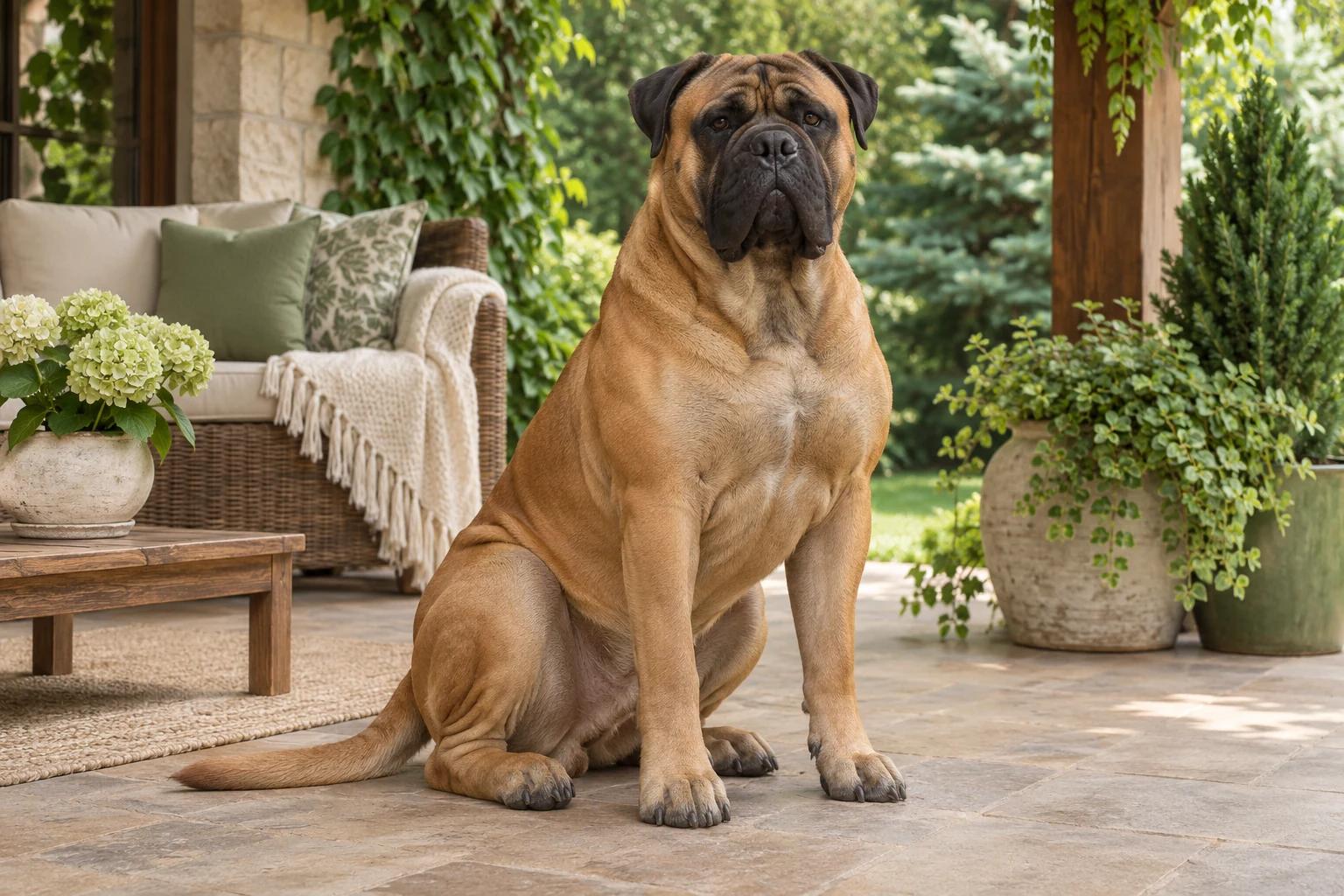
Bullmastiff vs Mastiff can be confusing because the names overlap and both describe substantial dogs. The Bullmastiff is not simply an extra-large Mastiff. In the My Breed Atlas adult references, the Mastiff is the larger breed, and the difference is significant enough to affect the way you plan your home.
Read the Bullmastiff profile beside the Mastiff profile. Here, Mastiff means the specific breed represented by that profile, not every dog in the wider mastiff-type family. Keeping that distinction clear makes the practical comparison much more useful.
Bullmastiff vs Mastiff: two breeds, different proportions
The American Kennel Club's Bullmastiff summary describes its development from Bulldog and Mastiff ancestry in England. That history does not make present-day Bullmastiffs interchangeable with Mastiffs or identify an undocumented cross as either breed.
AKC's comparison article distinguishes the Bullmastiff's squarer outline from the Mastiff's more rectangular body. This helps explain why the difference is not captured by height alone. You are comparing the space occupied by a whole dog, not just where its shoulders reach.
If identity matters to your decision, ask for the dog's background and documentation rather than deciding from a photograph. Similar coloring, a broad head or a familiar name is not enough to settle the question. Then return to the needs of the individual in front of you.
Put the adult measurements beside your actual space
The Bullmastiff reference is 25–27 inches and 110–130 pounds for males, or 24–26 inches and 100–120 pounds for females. The Mastiff reference is 30 inches and up and 160–230 pounds for males, or 27.5 inches and up and 120–170 pounds for females.
Those figures make the Mastiff the larger reference overall, although individual ranges overlap. Do not interpret that as the Bullmastiff being small. Either choice requires careful thought about handling, resting areas and the room needed to move through a home.
Try mapping a suitable resting area before deciding. Check the route around it, not just its footprint. A dog lying comfortably should not mean everyone else has to squeeze past a chair or step over its body to reach a doorway. Compare the arrangement with each dog's actual measurements when available.
Ask what involvement looks like, not which dog is lazier
For a Mastiff vs Bullmastiff decision, avoid making inactivity the selling point. Both profiles include daily outings, interaction and opportunities to learn. Ask the caregiver to describe how the actual dog spends its time, including the part before it settles quietly.
A useful account includes what the dog enjoys, what has been taught and which situations require extra planning. “Sleeps all afternoon” tells you little without knowing what happened earlier or how the dog responds when the routine changes.
Discuss appropriate physical activity with your veterinarian. Do not use a comparison article to select a fixed exercise allowance, or assume the heavier dog needs no purposeful engagement. Your job is to arrange a sustainable routine for the individual, not to find a label that excuses one.
Ordinary manners matter at either scale
Choosing a Bullmastiff or Mastiff means choosing to teach a dog whose adult body is substantial. Prioritize practical coordination: moving away from a door, waiting while equipment is attached and going to a resting place without needing to be physically moved.
Teach those skills in easy situations before relying on them during busy moments. If you wait until the entrance is crowded, you are asking the dog to learn while you manage several other problems at once. A quiet rehearsal gives both of you a clearer task.
Seek reward-based professional help early if walking or handling is difficult. Do not choose one breed because you expect its supposed calmness to replace training. A dog can be quiet and still block the doorway, pull toward something interesting or misunderstand what you want.
Give watchfulness a practical household plan
Both live profiles identify watchfulness as a consideration. That is a reason to organize arrivals, not to encourage intimidating displays. Decide where the dog will be while you answer a door and how invited guests will enter without crowding it.
A suitable barrier or separate resting area can let you manage the human part of an arrival first. Introductions can happen afterward when appropriate. Visitors should not have to negotiate their way past an unfamiliar large dog simply to put down a bag.
If the dog is fearful or confrontational around arrivals, do not test it with staged intruders. Ask your veterinarian and a qualified behavior professional for an individual plan. A breed's history does not tell a dog which real-world situations you consider harmless.
Short coats still belong in the care discussion
The difference between Bullmastiff and Mastiff includes the coat description: My Breed Atlas lists a short, smooth Bullmastiff coat and a short, double Mastiff coat. Ask a groomer about suitable tools and the individual routine rather than choosing by coat length alone.
Think about your grooming setup at adult size. Can the dog reach the area comfortably? Can you reach the supplies without leaning across it? Do you have help for tasks you cannot perform comfortably? These questions apply even when an appointment looks simple on paper.
Keep household cleaning in the plan as well. Choose washable covers where useful and organize supplies near the areas that need attention. Neither breed should be selected on an expectation that a short coat removes the ordinary work of living with a dog.
Compare complete arrangements before making a choice
Write down the care plan for each candidate, including space, teaching, appointments and backup help. Then identify any part that depends on a doubtful assumption. “Someone will probably manage” is not the same as a caregiver who understands the actual task.
Ask for relevant health records and discuss them with your veterinarian. This article does not rank the breeds by future medical cost or promise a healthier outcome. A sensible choice uses individual information as well as the broad differences in size and shape.
For a separate activity question, see the Bullmastiff therapy-visits article. For the ownership decision, the breed match quiz can help organize priorities. Neither breed wins universally; the better choice is the dog whose needs your real arrangements can support.
FAQ
Is a Bullmastiff bigger than a Mastiff?
Not in the My Breed Atlas adult references. The Mastiff is generally the larger breed, with higher sex-specific height and weight references. Bullmastiffs are still substantial dogs, and individual measurements matter for practical planning.
Is Bullmastiff another name for Mastiff?
No. Bullmastiff and Mastiff are distinct breeds. Bullmastiff ancestry includes Bulldog and Mastiff, but that history does not make the modern names interchangeable or identify a dog without supporting background information.
Which breed needs less training?
Neither should be chosen on the assumption that training is optional. Both need clear household manners and manageable handling. Compare the individual dogs' experience and your ability to support ongoing learning rather than looking for a training-free option.
Sources behind this article
Article source checked: November 15, 2026. Source checked 2026-11-15
Keep reading

Affenpinscher vs Brussels Griffon: Everyday Differences
Read article →