Bullmastiff size: plan for the adult, not the puppy
Understand Bullmastiff size, weight and height references, then plan space, equipment and handling without predicting a puppy’s exact growth.
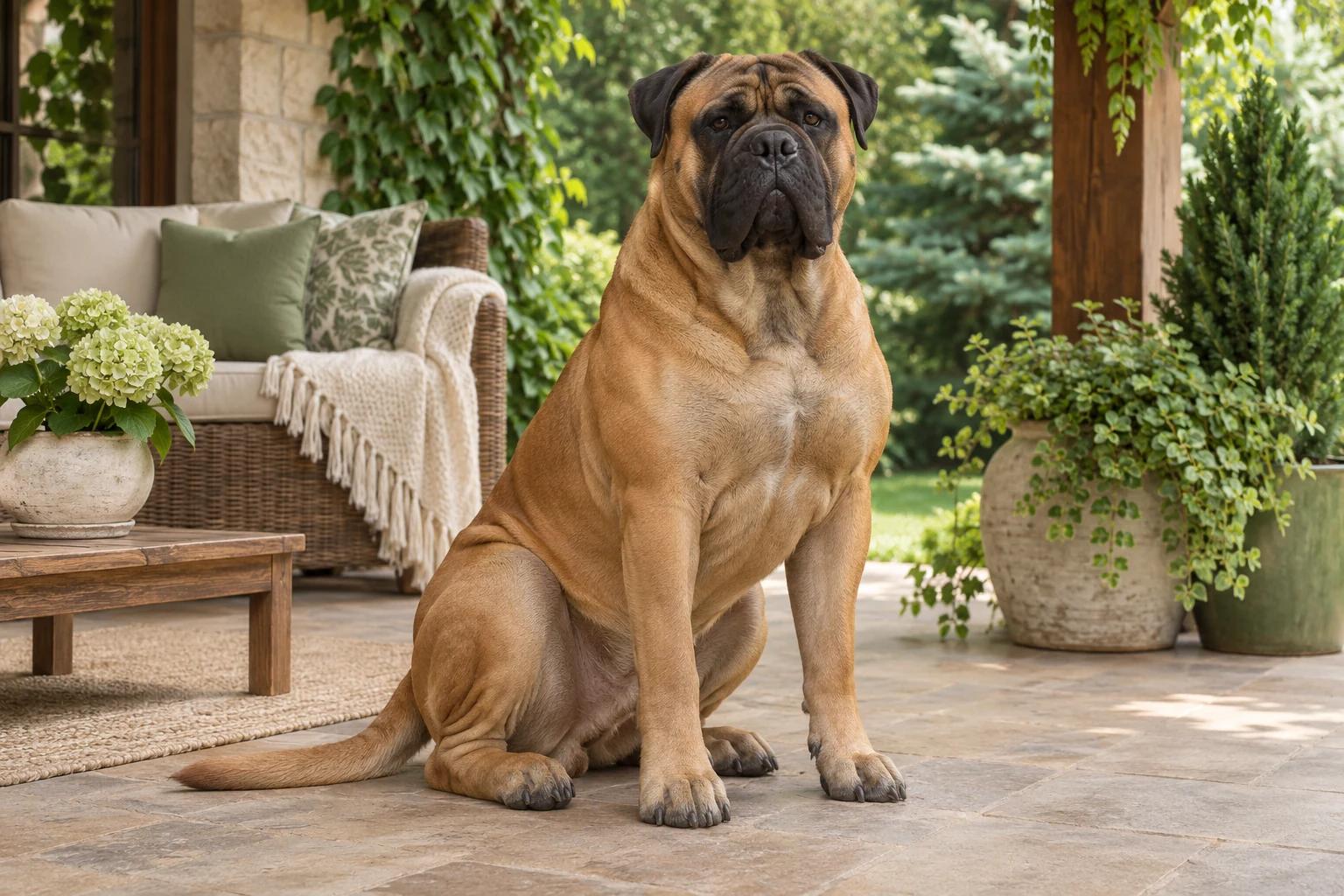
Bullmastiff size becomes real in the space between your furniture, the fit of a harness and the room a dog needs to turn around. A puppy can make those questions seem distant. Planning for the adult now is more useful than discovering later that the sleeping area occupies the only clear route through the room.
The Bullmastiff profile provides sex-specific adult references. Use those figures to understand the scale of the commitment, not to set a growth target. Your dog's actual measurements, condition and needs should guide individual decisions with the relevant professionals.
Bullmastiff size at a glance
The adult Bullmastiff height reference is 25–27 inches for males and 24–26 inches for females. The Bullmastiff weight reference is 110–130 pounds for males and 100–120 pounds for females. These ranges overlap, so sex alone does not tell you which of two particular dogs will be larger.
AKC's breed comparison reports the same sex-specific Bullmastiff weight ranges and describes its relatively square outline. The AKC breed summary also emphasizes a large, muscular build. Consider the whole body rather than shoulder height alone.
Do not use the top of a range as a goal. A breed reference does not tell you what your individual dog should weigh today. Questions about growth, feeding or body condition belong with your veterinarian, not with a comparison between your puppy and a stranger's photographs.
Read overlapping ranges before making assumptions
Imagine two adult Bullmastiffs, a male and a female, each weighing 115 pounds. This is a hypothetical example, not a prediction: that weight lies within both published reference ranges. If you selected the female expecting a substantially lighter dog, the sex label would not have answered your practical question.
Now imagine the same two dogs need new walking equipment. Matching weights still would not establish matching measurements or fit. You would need information about each dog, not an assumption that a shared number makes the equipment interchangeable. A weight reference describes one dimension of a body.
Use that distinction when speaking with a breeder or rescue. Ask for current measurements of an available adult and discuss what is known about a puppy's background without demanding an exact forecast. If your home or handling arrangements only work below a strict limit, say so directly. Do not quietly substitute the lowest number in the reference range for the adult dog you hope to have.
Fit equipment to measurements, not a breed label
A product described as suitable for large dogs may still be the wrong shape or size for your Bullmastiff. Check the manufacturer's measurements and fit guidance. For body-worn equipment, ask a knowledgeable professional to review the fit on the actual dog.
Keep a measurement note with the date, the body location measured and the manufacturer’s requested method. A note saying only “large harness” will not help when comparing a different design. Recheck a growing puppy rather than carrying an old measurement forward, and ask for a fit review if an item rubs, slips or changes position during normal movement.
Resting equipment needs its own assessment. The dog should be able to use the space comfortably for its intended purpose. If you are considering an enclosure, seek suitable sizing and introduction guidance instead of choosing only by whether it fits the room. The space must work for its occupant too.
Ask who can manage everyday handling
When people ask how big do Bullmastiffs get, they often want to know whether they will be able to manage one. Height and weight are only part of that answer. Learned cooperation, layout, equipment and the handler's circumstances all matter.
Imagine ordinary moments: putting on walking equipment, moving through a doorway or asking the dog to leave the food-preparation area. Those should depend on familiar cues and a sensible setup, not on lifting or pushing the dog into position.
Include backup caregivers in the discussion. Someone may be happy to feed a large dog but unable to manage an unfamiliar walking routine. Describe the tasks honestly and arrange support that fits the real dog. Do not assume willingness and practical capability are the same thing.
Plan access before you rely on an emergency solution
Consider how the dog reaches its regular care appointments and outdoor areas. Look at steps, tight turns and the places where people must wait together. Ask your veterinarian about access needs specific to the dog rather than applying a blanket rule from an online size chart.
If an arrangement works only because you can carry a small puppy, it needs an adult version. Work that out while you have time to consult professionals and adjust the environment. A substantial adult body is not something to build a last-minute lifting plan around.
This does not mean every home must have the same layout. It means your own plan should account for the actual route and available help. Write down unresolved access questions before committing, so that enthusiasm does not hide a practical obstacle.
Budget from real quotes rather than a giant-dog estimate
Size can affect which products or services you need, but a breed article cannot give you a reliable total for your household. Ask local providers about the actual service, equipment or appointment you are considering. Separate routine expenses from uncertain future costs.
Compare like with like. A grooming quote may cover a different set of tasks from another provider's service. A bed may fit your room but not your dog. The cheapest unsuitable option is not a useful saving, and the most expensive option is not automatically necessary.
Ask your veterinarian for an individual feeding plan rather than multiplying another dog's portion by weight. Keep nutritional questions separate from shopping comparisons. Growing larger is not a competition, and the reference maximum is not an instruction to increase food.
Size should inform the decision, not dominate the dog's identity
A Bullmastiff is more than its measurements. You still need to understand the individual dog's activity, learning and companionship needs. A large body does not explain every behavior, and a quiet moment does not establish that little involvement will be required.
The existing Bullmastiff therapy-visits guide explores one possible activity separately from basic ownership. You do not need a special public role to justify enjoying a large companion at home.
Use the breed match quiz to consider size alongside the rest of your priorities. The useful answer is not whether you admire a dog this substantial, but whether your space, support and daily arrangements can accommodate the individual comfortably.
FAQ
How much does an adult Bullmastiff weigh?
My Breed Atlas lists 110–130 pounds for males and 100–120 pounds for females as adult reference ranges. These are not individual target weights. Discuss your dog's body condition and appropriate weight with your veterinarian.
Are female Bullmastiffs always smaller than males?
No. The reference ranges overlap, and individual dogs vary. Use the actual dog's measurements when choosing equipment or assessing a particular space rather than relying on sex alone.
Can a puppy's current size predict its exact adult size?
A current measurement does not establish an exact adult outcome. Ask the breeder and veterinarian about the dog's background and growth, and plan with enough flexibility to adjust equipment and space as needed.
Sources behind this article
Article source checked: November 15, 2026. Source checked 2026-11-15
Keep reading

Airedale Terrier Temperament: What Everyday Life Can Feel Like
Read article →