Bull Terrier vs Staffordshire Bull Terrier: key choices
Compare Bull Terrier vs Staffordshire Bull Terrier size, training plans and everyday fit without treating similar names as the same breed.
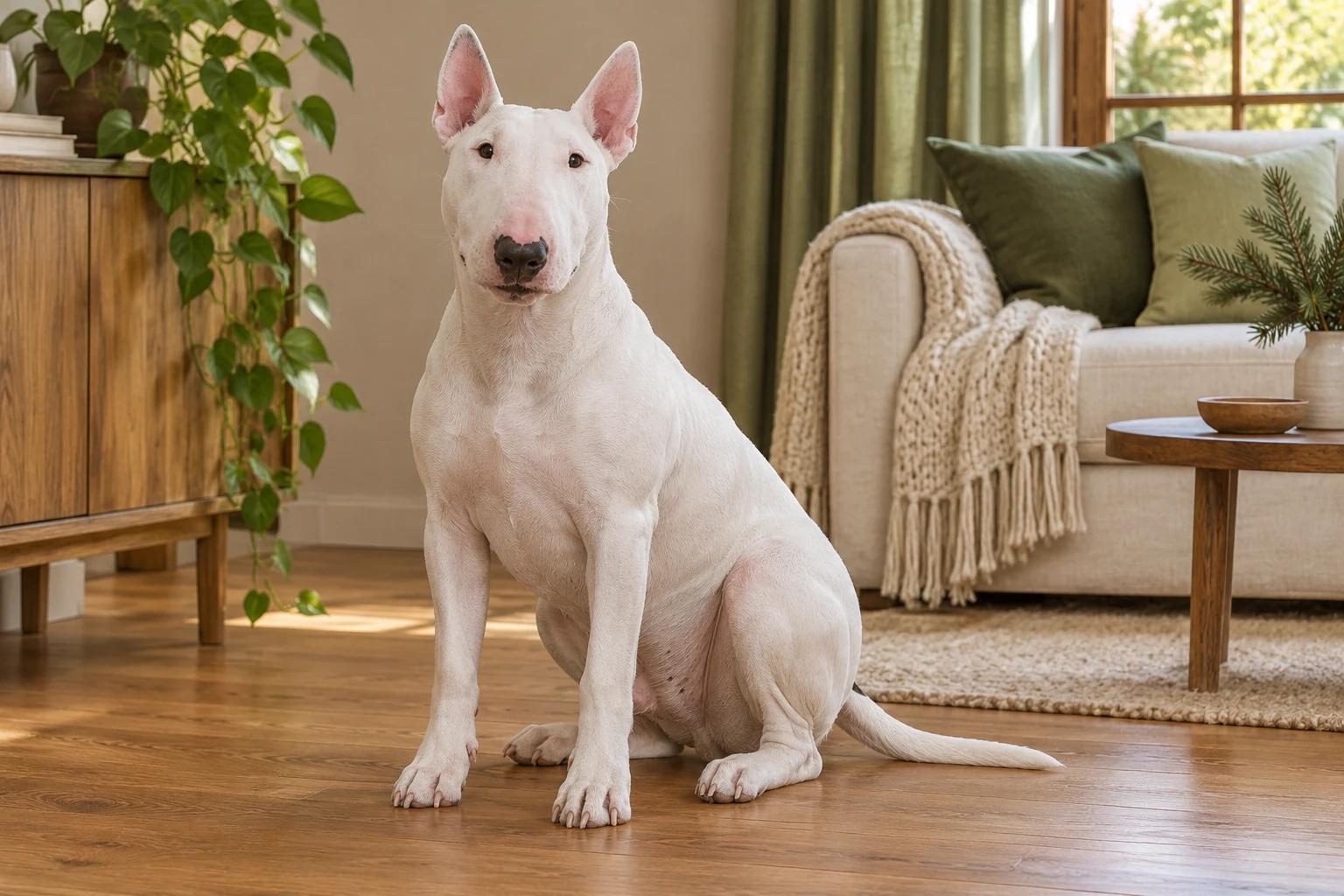
Bull Terrier vs Staffordshire Bull Terrier is a comparison worth spelling out in full. Similar names can make these separate breeds sound interchangeable, especially in casual conversation or a short listing. Their adult measurements differ substantially, and neither should be chosen from a nickname or a broad terrier stereotype.
Use the Bull Terrier profile and Staffordshire Bull Terrier profile as your starting references. Then ask what is known about the specific dog. Physical outline, training experience and social history all matter more than assumptions attached to a shortened name.
Bull Terrier vs Staffordshire Bull Terrier: size first
The Bull Terrier's adult reference on My Breed Atlas is 21–22 inches and 44–66 pounds. The Staffordshire Bull Terrier is listed at 14–16 inches, with males at 28–38 pounds and females at 24–34 pounds. These figures make the Staffordshire Bull Terrier the more compact option in this comparison.
The difference between Bull Terrier and Staffordshire Bull Terrier is not merely cosmetic when you choose equipment or arrange care. A bed, barrier or vehicle setup that works for one individual may not suit the other. Obtain actual measurements for an adult and check product limits rather than shopping from the word “terrier.”
Smaller does not mean effortless to handle. Ask to see ordinary lead walking and equipment routines for either dog. The practical issue is whether you can manage the partnership reliably, including when something interesting happens nearby, not whether you can lift a particular number of pounds.
Learn the identities behind the names
The UKC Bull Terrier standard describes the breed's muscular build and distinctive oval, egg-shaped head with naturally erect ears. Those features explain why its silhouette is recognizable. They do not establish the ancestry of an unfamiliar dog by themselves.
The American Kennel Club's Staffordshire Bull Terrier page describes a muscular, agile terrier. Despite the shared words in their names, a Staffordshire Bull Terrier is not a smaller Bull Terrier. Use the full breed identity when asking about records, services or restrictions.
If a listing is unclear, ask what information supports the label. A caregiver may have documented background, or the description may be an estimate. Keep that distinction visible. Neither a visual resemblance nor a confident nickname should be converted into certainty that the available evidence does not support.
Compare the learning partnership you want
Both profiles make mental engagement an important part of the ownership picture. Expect to teach useful skills and offer opportunities to participate. A short coat and a manageable footprint do not remove that continuing commitment.
A Staffordshire Bull Terrier vs Bull Terrier decision should include your appetite for training, but not a simplistic contest over intelligence. Ask what the dog already understands, how it responds to familiar cues and which situations make learning difficult. Examples are more useful than a claim that it is either clever or stubborn.
Watch a routine task if possible. How is a lead attached? Can the dog move away from an opening door? What happens when a game ends? These observations help identify the teaching you will need to continue. Choose a reward-based trainer who can work with the individual rather than promising a breed-specific shortcut.
Activity needs are a shared commitment
Both live profiles describe substantial activity and mental-engagement needs. Think about the activities you actually want to share instead of choosing the smaller dog as a way to avoid an involved routine. Walks, suitable play and learning tasks can each have a place.
Ask the caregiver about the dog's current pattern and preferred activities. A dog accustomed to one kind of outing may need a thoughtful introduction to another. Consult your veterinarian about appropriate activity for its life stage and physical circumstances rather than copying a generic exercise schedule.
Make sure your plan includes realistic access to suitable places. A busy off-leash area is not the only possible outlet, and it may not be appropriate for the individual. Have options for one-to-one activity and routes where you can create space when needed.
Other-dog relationships need their own evidence
A dog enjoying people does not automatically tell you how it will respond to unfamiliar dogs. The Bull Terrier profile specifically calls for care when considering other-dog compatibility, while the Staffordshire Bull Terrier profile also treats matching as individual. Neither description grants permission to skip a thoughtful introduction.
If you already have a dog, describe that dog's history, routine and living arrangements to the breeder or rescue. Ask what is known about the candidate's past interactions and what has not been observed. Arrange appropriate professional help when needed rather than relying on a spontaneous meeting.
Also consider the physical setup for separate rest, feeding and movement while you learn about the pair. Do not promise yourself that they will share every activity immediately. A plan that depends on instant compatibility leaves little room for the actual dogs to show you what works.
Short coats are only one part of care
Both profiles list short, smooth coats. That means you are not choosing between a heavily furnished coat and a close one, but you still need an ordinary care routine. Ask the caregiver which tools are used and how the dog responds to handling.
Make room for washing bedding, managing loose hair and maintaining equipment. Avoid ranking the breeds as maintenance-free on the basis of coat length. A practical care conversation should identify the individual routine and who will help with tasks you cannot comfortably perform.
Veterinary records are another separate topic. Review actual documents with your veterinarian and ask what ongoing care is appropriate. A breed label, a list of screening tests or a polished appearance cannot stand in for that individual discussion.
Bull Terrier or Staffordshire Bull Terrier: settle the constraints
Before deciding, check the rules that affect your home and regular services. Ask for exact wording if a landlord, insurer or provider has a relevant restriction, and use the dog's full identity when seeking clarification. Do not assume that a casual verbal description resolves a policy question.
Then compare the dogs against your practical priorities: adult size, handling, activity, care and known social experience. The breed match quiz can help organize those priorities. The existing Bull Terrier behavior article covers a separate concern rather than a basis for ranking the two breeds.
FAQ
Is a Staffordshire Bull Terrier a small Bull Terrier?
No. They are separate breeds, despite the shared words in their names. The Staffordshire Bull Terrier has a lower adult height and weight reference, but that does not make it a size variety of the Bull Terrier.
Which breed is larger?
My Breed Atlas lists the Bull Terrier at 21–22 inches and 44–66 pounds, above the Staffordshire Bull Terrier's 14–16 inches and sex-specific 24–38-pound span. Measure the actual adult when equipment fit or housing restrictions matter.
Can either breed automatically join a home with another dog?
No breed label establishes compatibility for a particular pair. Review each dog's history, arrange appropriate introductions and plan the living space carefully. Seek qualified support rather than expecting a shared name or friendly greeting to settle the match.
Sources behind this article
Article source checked: November 14, 2026. Source checked 2026-11-14
Keep reading

Affenpinscher vs Brussels Griffon: Everyday Differences
Read article →