Bull Terrier exercise needs: build a varied routine
Plan Bull Terrier exercise needs around purposeful walks, individual play, mental engagement and rest rather than a fixed daily minute target.
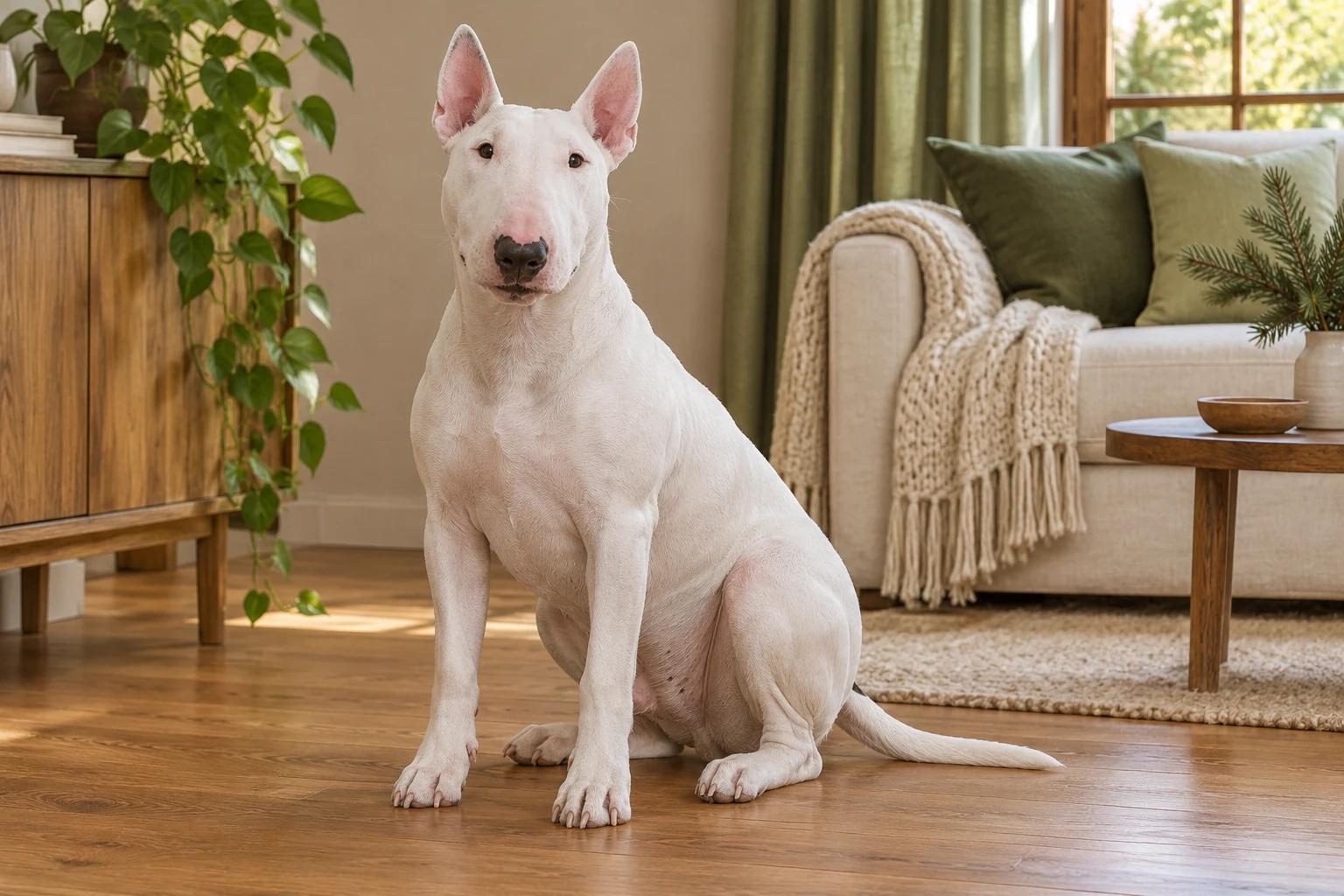
Bull Terrier exercise needs are better understood as a mix of movement, investigation and shared activity than as a single number of minutes. A route marched at one pace, a game with clear pauses and a quiet search task offer different experiences. Counting only distance can hide what the day is missing.
The Bull Terrier profile places both activity and mental engagement toward the higher end of its scales. That calls for an owner who wants regular involvement, not merely a larger garden. The practical question is how to provide worthwhile activity in settings the dog can manage.
Bull Terrier exercise needs begin with the individual
The American Kennel Club describes a playful, muscular dog for whom exercise and companionship matter. That gives a useful starting point, but it does not establish an exact program for a puppy, an older adult or a dog whose physical circumstances have changed.
Ask the current caregiver what the dog does now, which activities it enjoys and what it has not tried. Discuss suitable activity with your veterinarian, particularly before a substantial change or when you have concerns about comfort. Avoid copying an impressive online routine simply because another Bull Terrier performs it.
If you are bringing a dog into a new home, first understand the existing pattern. You can learn a great deal from ordinary outings before adding ambitious activities. A realistic starting point is more helpful than immediately testing the dog's maximum endurance.
How much exercise does a Bull Terrier need?
There is no single daily total that answers the question for every Bull Terrier. The useful measure is whether the plan fits the dog's stage of life, abilities and interests while providing regular opportunities for movement and mental work. Your veterinarian can help define individual limits.
For planning, divide the day into types of activity rather than inventing a compulsory duration. One outing might emphasize exploring a quiet route. Another part of the day might include a simple learning task or suitable play. Rest belongs in the plan too.
Do not read continued excitement as an automatic request for a longer workout. A dog may need a clearer transition, an easier environment or help with settling. Equally, a routine made almost entirely of brief toilet trips may leave little room for purposeful activity. Examine the whole pattern before changing one number.
Give the daily walk more than one purpose
A Bull Terrier daily walk can contain both exploration and cooperation. Choose where you will allow investigation and where you need coordinated movement, such as passing an entrance or crossing a road. Practice those changes in easy places before relying on them in a busy setting.
Route quality matters. A quieter path with space to turn away may be more useful than a crowded route of the same length. Think about visibility, narrow sections and the places where unfamiliar dogs tend to gather. Have an alternative rather than pressing on because the map says the loop is unfinished.
Bring your attention as well as the lead. Notice which parts of the walk are enjoyable and which repeatedly become difficult. A short note about the setting can help you adjust the route or discuss it with a trainer. “Difficult beside the narrow gate” is more actionable than “needs more walking.”
Build activities that do not depend on unfamiliar dogs
The live profile advises particular care with other-dog compatibility. That makes it important to have exercise options beyond a busy dog park or unrestricted group play. A dog should not have to tolerate an unsuitable social setting to get an outing.
Consider individual walks, suitable one-to-one games or access to a secure area where you can work together. Check the space before use, including entrances and any conditions that affect containment. If another dog will participate, base the decision on the pair and their known interactions.
Do not treat social pressure from other owners as a training plan. You can leave a setting that is not working. A qualified trainer can help arrange appropriate introductions or teach skills for passing other dogs without requiring close contact.
Add a thinking task without making it elaborate
Bull Terrier activity level includes a need for engagement, not just motion. A simple search for a familiar toy in a suitable room can give the dog something to investigate. Keep the first hiding place easy and the area clear of objects you do not want disturbed.
Another option is a small learning task with a practical result, such as moving between a resting place and a nearby starting point. The point is not to create an obstacle course from household furniture. Choose a task you can explain clearly and repeat without frustration.
For equipment or toys, consider the individual dog's use rather than trusting a product category. Supervise, inspect items and remove damaged pieces. Ask a knowledgeable trainer or veterinary team for help selecting suitable options if the dog tends to dismantle or swallow objects. Activity should not depend on leaving an unsuitable item unattended.
Plan the finish before you start the game
A good activity has an ending that both participants can understand. Put away the play item, offer an appropriate transition and allow the dog to rest in a familiar place. Practice the sequence during manageable sessions rather than only after the most exciting game.
VCA's guidance on settling explains that calm resting is a learned skill, while difficulty settling can have several causes. More exertion is therefore not a complete answer to every restless evening.
Observe whether the dog can make the transition comfortably. If rest remains difficult, seek individual advice rather than continually escalating the activity. New physical discomfort or a marked behavior change belongs in a veterinary conversation, not an internet competition over which owner exercises more.
Keep a fallback that still meets the purpose
An outdoor plan may become unsuitable because of weather, crowds or access. Decide what each activity was meant to provide, then choose an appropriate alternative. A quiet learning task can preserve shared engagement, though it is not a universal replacement for outdoor movement.
Discuss weather and physical limits with your veterinarian, and keep unsuitable conditions from turning into an endurance test. If access problems recur, redesign the regular routine instead of repeatedly improvising at the last moment. Reliable options are more valuable than an ambitious plan that works only occasionally.
The existing Bull Terrier article on a separate behavior concern should not be confused with an exercise prescription. For prospective owners, the breed match quiz can help assess whether you want the regular participation this active companion calls for.
FAQ
Is there one correct daily exercise duration for Bull Terriers?
No. Age, physical circumstances, experience and activity type affect the plan. Use the breed's active reference as a commitment signal, then discuss appropriate individual activity with your veterinarian instead of relying on a universal minute target.
Can a garden replace Bull Terrier walks?
A garden can be part of the available space, but access alone does not provide a varied routine. Plan shared activity, suitable outings and mental engagement rather than assuming the dog will organize a fulfilling day independently.
Must a Bull Terrier play with other dogs for exercise?
No. Individual walks, appropriate games and secure one-to-one activities can be useful options. Other-dog play should depend on known compatibility and suitable management, not on the belief that every dog needs a busy park.
Sources behind this article
Article source checked: November 14, 2026. Source checked 2026-11-14
Keep reading

Afghan Hound Exercise Needs: Build a Workable Active Day
Read article →