Brussels Griffon vs Pug: choosing a small companion
Compare Brussels Griffon vs Pug size, voice, companionship and coat-care planning to decide which questions matter for your household.
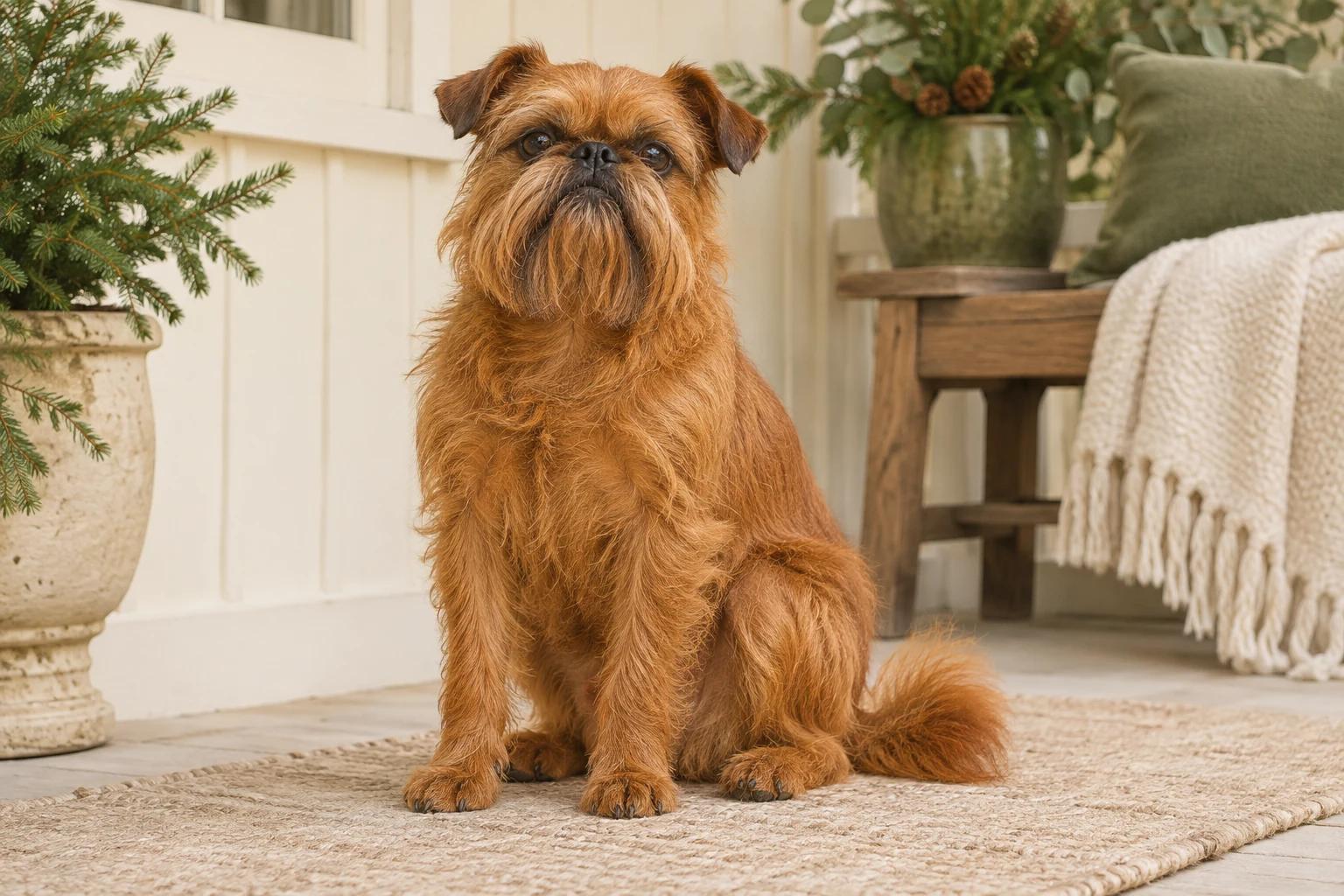
Brussels Griffon vs Pug is an appealing comparison if you want a small dog with a strong presence. Both can draw attention through an expressive face and an interest in people. That resemblance can distract from more useful questions about adult size, noise and the kind of daily involvement you want.
Begin with the Brussels Griffon profile and Pug profile, then compare actual dogs rather than imagined personalities. Neither is simply a scaled version of the other, and a charming first meeting is only part of an ownership decision.
Brussels Griffon vs Pug: the size comparison
My Breed Atlas lists the Brussels Griffon at 7–10 inches and 8–13 pounds. The Pug reference is 10–13 inches and 14–18 pounds. In these ranges, the Griffon is the smaller and lighter choice, while the Pug has a more substantial adult outline.
That size difference between Brussels Griffon and Pug can matter for a carrier, a building limit or the space beside your chair. It does not justify choosing equipment from the breed name alone. Measure the dog and follow the manufacturer's fit and capacity guidance, including usable interior dimensions where relevant.
For a puppy, leave room for uncertainty instead of assuming it will mature to the most convenient number. If an accommodation rule falls inside a breed's range, resolve the restriction before committing. For an adult, obtain current measurements rather than relying on a listing's estimated size category.
Two companion identities, not one personality contest
The American Brussels Griffon Association describes an alert dog closely involved with its people. The American Kennel Club's Pug profile presents a small, solid companion and notes its historical connection with Chinese emperors. These are distinct breed identities, even when both appeal to someone seeking company.
Avoid reducing the choice to which dog is funnier or more loving. Those are personal impressions, not dependable measures. Ask how each dog spends time with people: beside them, on their lap, joining games or resting in a familiar place while activity continues.
A pug vs Brussels Griffon comparison becomes clearer when you describe your own preferences. Do you enjoy a dog noticing every household movement? How much shared play do you want? When you are busy, where will the dog rest? Specific answers are more useful than declaring that you want an affectionate breed.
Voice may matter more than a few inches
The live profiles give the Griffon a relatively high vocal tendency and the Pug a lower one. Both can bark, but that reference difference makes noise an important topic if your home has shared walls or frequent activity outside the door.
Ask for examples from each dog's current routine. Does it react to sounds from the hallway, arrivals or the preparation of an outing? How does the caregiver manage those scenes? A quiet visit in an unfamiliar place may not reveal what happens at home.
Do not choose a Pug as a guarantee of silence or reject an individual Griffon without learning its circumstances. Instead, use the tendency to decide what evidence you need. Review building rules and the location of resting areas alongside the dog's history. Noise tolerance is a household constraint worth naming honestly.
Coat care needs a separate conversation
The Pug profile lists a short, smooth coat. Brussels Griffon coat care depends on the individual coat and its maintenance plan. The existing Griffon coat guide explains the appearance distinctions, so there is no need to use a beard as shorthand for the whole dog.
Before choosing either breed, ask to see the tools and routine currently used. What will you do at home, and what help will you need? Can you provide a calm place for handling? If a grooming appointment is part of the plan, check the practical availability rather than assuming you can arrange it later.
Short hair does not mean no loose hair or no care. Look at washable bedding and the surfaces the dog will use, and discuss the individual coat with a groomer. A realistic cleaning plan is more useful than choosing from a photograph that cannot show what daily maintenance involves.
Training remains part of companion life
The live references describe both breeds as responsive to training. That is an invitation to teach, not a reason to skip it. A small dog still benefits from understanding a resting cue, coming when called in secure settings and cooperating with ordinary handling.
Consider your own habits. If you tend to lift a dog whenever you want it elsewhere, make room for teaching it how to move there instead. If you find noisy demands amusing, decide which responses you are willing to maintain once the novelty has passed.
Ask a reward-based trainer what an introductory plan would look like for the dog you are considering. Choose classes and social settings for the individual, not just the toy-breed label. Small size does not establish that two dogs will enjoy the same group or play style.
Discuss activity and physical comfort individually
Do not pick between these breeds by assuming one is a miniature exercise machine or that the other needs nothing beyond a cushion. Ask what outings, play and learning the actual dog enjoys, and what opportunities to settle are part of its routine.
Both have physical care considerations that deserve veterinary discussion. Ask your veterinarian about appropriate activity, weather conditions and any limitations relevant to the individual. Do not infer breathing comfort or exercise tolerance from a cheerful expression or a breed description.
Keep this part of the decision practical rather than competitive. Describe the activities you hope to share and ask whether they are appropriate. If your plans depend on demanding outings or conditions the dog may not manage, address that mismatch before choosing on looks.
Brussels Griffon or Pug: compare the unanswered questions
Write down the facts you have for each candidate and the questions still open. Measured adult size, observed vocal behavior, care arrangements and experience during absences belong on that list. A breeder or rescue that knows the dog can help distinguish observations from assumptions.
Meet adults where possible and allow a visit to include quiet time, not just greetings. Notice whether your preferred kind of companionship matches what you see. The breed match quiz can organize your priorities, but the final choice should rest on the dog, your circumstances and a realistic support plan.
FAQ
Which is smaller, a Brussels Griffon or a Pug?
The Brussels Griffon is smaller in the My Breed Atlas reference ranges: 8–13 pounds and 7–10 inches, compared with 14–18 pounds and 10–13 inches for the Pug. Individual measurements remain important for equipment and restrictions.
Is the Pug always quieter than the Griffon?
No. The profiles give the Pug a lower vocal tendency, but that is not an individual guarantee. Ask about each dog's responses to ordinary sounds and arrivals, particularly if you share walls with neighbors.
Which breed is the better companion?
Neither is universally better. Compare the specific dog's social preferences, care routine and behavior with the time, space and interaction you can provide. Appearance and breed reputation cannot settle that match on their own.
Sources behind this article
Article source checked: November 14, 2026. Source checked 2026-11-14
Keep reading

Affenpinscher vs Brussels Griffon: Everyday Differences
Read article →