Broholmer vs Mastiff: size, company and practical fit
Compare Broholmer vs Mastiff size, household arrangements and everyday expectations without confusing mastiff type with a single breed.
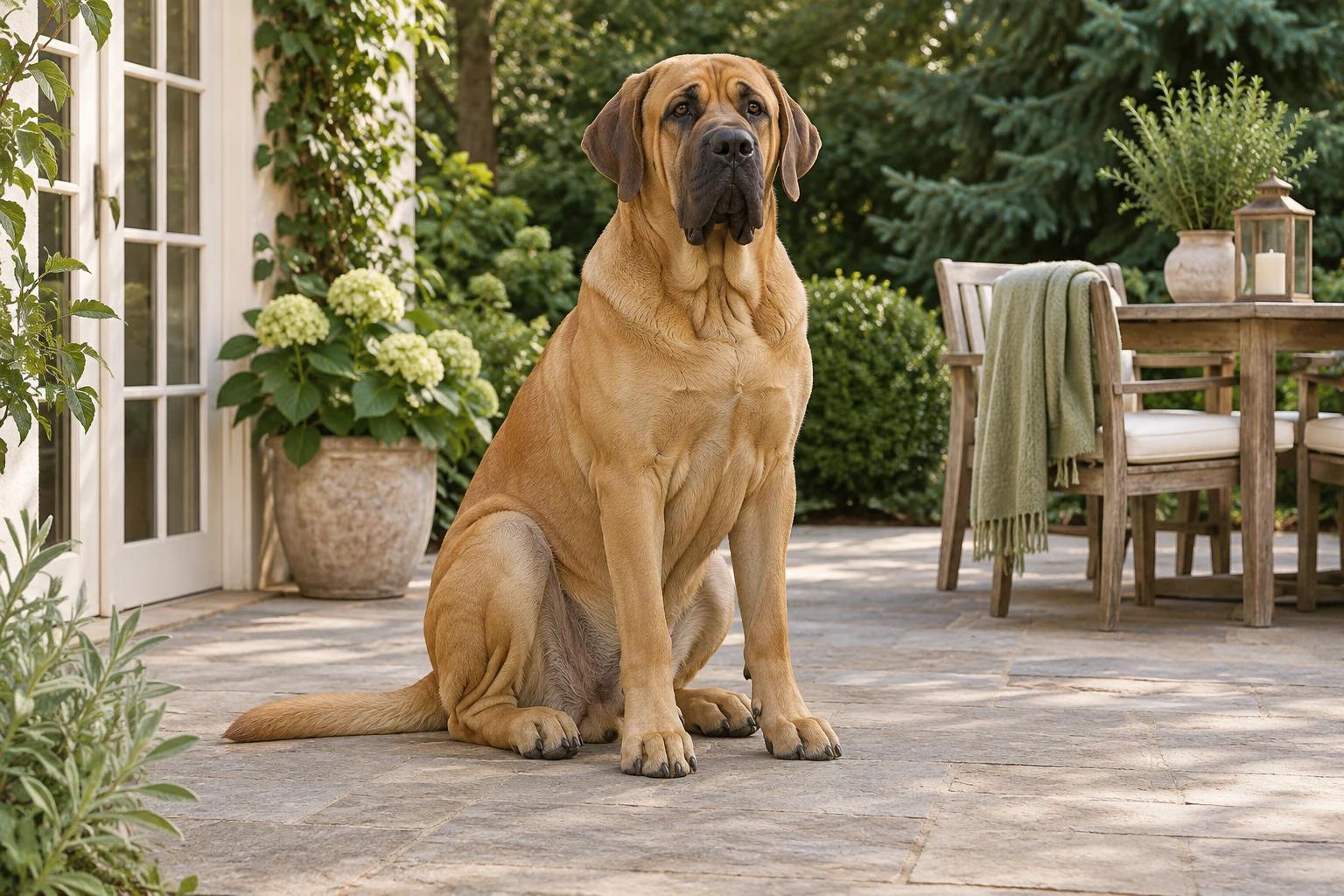
Broholmer vs Mastiff is partly a comparison between two breeds and partly a question about names. The Broholmer is a mastiff-type dog, but that does not make it the same breed as the Mastiff. Here, Mastiff means the breed also commonly called the English Mastiff, not every dog described as mastiff-like.
Both deserve a serious look at space and handling before you focus on appearance. The Broholmer profile and Mastiff profile provide the reference points. The most useful choice is the dog whose actual needs you can accommodate, not the one whose photograph looks most impressive.
Broholmer vs Mastiff: start with the physical difference
My Breed Atlas lists the Broholmer at 27.5–29.5 inches and 88–154 pounds. For the Mastiff, the listed heights are 30 inches and up for males and 27.5 inches and up for females; weights are 160–230 pounds for males and 120–170 pounds for females.
The difference between Broholmer and Mastiff is therefore not a tidy division into a small dog and a large one. Both are substantial. Some reference ranges overlap, while the male Mastiff weight range extends well beyond the Broholmer range. Compare the individual adults when a particular measurement matters.
A household that can accommodate one large dog should not automatically assume every heavier dog will fit the same arrangement. Check equipment limits, usable resting space and the people who will handle the dog. If your plan depends on carrying it when something goes wrong, discuss a more realistic backup arrangement before committing.
Understand what the names describe
The FCI Broholmer standard identifies Denmark as the breed's origin and describes a large, rectangular mastiff-type companion and guard dog. The word “type” places its outline in a broader family of forms; it does not erase its separate identity.
The American Kennel Club's Mastiff description emphasizes a massive, heavy-boned dog with a dignified disposition. My Breed Atlas records England as the Mastiff's origin. These brief descriptions establish the comparison without requiring you to choose on historical romance.
When searching for a breeder or rescue, use the specific breed name and read the description carefully. A listing that says only “mastiff” may need clarification. Ask what is known about the dog's background rather than assuming a broad label supplies a pedigree or a reliable adult-size prediction.
Calm descriptions still need practical manners
The Broholmer's standard combines calmness with watchfulness. The Mastiff's dignified description can also sound reassuring to someone seeking quiet company. Neither description means that household manners arrive ready-made or that every individual welcomes the same interactions.
For a mastiff vs Broholmer decision, ask the same concrete questions of both caregivers. How does the dog move through a doorway with a person? What happens when a visitor arrives? Can it settle while household activity continues? Which situations require planning or assistance?
Observe ordinary handling where possible. The goal is not to see whether the dog can perform a dramatic trick. A comfortable equipment routine, manageable walking and the ability to move out of a busy passage tell you more about the partnership you would actually inherit or need to build.
Compare the home, not just the dogs
Picture each adult in the spaces you use most. A dog lying beside a chair occupies more than its standing footprint. Its resting place must remain usable when the chair moves and someone else walks through the room. Mark out the likely equipment dimensions before ordering anything.
The entrance matters too. Can you close the outside door before removing equipment? Is there room to wait if another dog appears in a shared corridor? Can visitors enter without stepping immediately into the dog's resting area? Answering those questions may reveal a limitation that a simple square-footage comparison misses.
If a landlord, insurer or care provider has a relevant restriction, obtain the actual wording. Do not rely on a casual assumption that one breed name will be accepted where another is not. A size limit within an adult range is a real uncertainty, especially when you are considering a puppy.
Short coats do not remove household care
Both profiles describe short coats. That makes long-hair trimming a poor basis for choosing between them, but it does not mean there is no grooming or cleaning to plan. The Broholmer standard specifically describes a close coat with undercoat, and the Mastiff profile lists a double coat.
Ask each caregiver to show you the dog's existing coat-care routine and equipment. Find out where the dog is comfortable being handled and whether you will need help continuing the routine. Choose a practical grooming area with room for the dog to stand and turn without squeezing between furniture.
Think about washable bedding, floor access and the storage of supplies as part of ordinary household organization. Do not make the decision on a promise that one breed will leave no hair behind. Compare what you can manage consistently rather than treating a short coat as a complete care plan.
Choose shared activities you can sustain
There is no need to invent a contest over which breed is lazier or more athletic. Ask about the activity of the actual dog: the outings it enjoys, the pace it is accustomed to and how it spends time between activities. For a puppy or a dog with limitations, discuss suitable plans with the veterinarian.
A companion routine can include walks, investigation and small learning tasks without turning every day into a physical challenge. Make space for teaching as well as movement. With either breed, cooperative walking and settling are useful projects in their own right.
Tell the caregiver what you hope to do. If your imagined lifestyle depends on long demanding outings, ask whether that expectation fits the particular dog rather than selecting from a silhouette. If you want quieter company, explain the time and engagement you can still provide.
Broholmer or Mastiff: make the final comparison concrete
Build two short lists: what you know about each dog and what remains unanswered. Include measured size for adults, handling experience, visitor arrangements, equipment and available support. Keep unknowns visible instead of filling them with the most attractive breed description.
The existing Broholmer behavior-profile guide offers context for a separate kind of information you may encounter. The breed match quiz can help organize broader preferences. Neither replaces a detailed conversation about the dog you are considering and the home you can offer.
FAQ
Is the Broholmer the same breed as the English Mastiff?
No. The Broholmer is a separate Danish breed described as mastiff-type. In this comparison, Mastiff refers to the English-origin breed, not the whole group of dogs with mastiff-like features.
Is a Broholmer smaller than a Mastiff?
The Broholmer reference range is generally lighter, while the Mastiff's male range extends substantially higher. Some listed measurements overlap. Compare individual adults and equipment limits rather than treating the difference as absolute.
Which breed is easier to accommodate at home?
That depends on the individual dog and your layout, handling resources and restrictions. Both require substantial space in practical places. A lower reference weight alone does not establish that a Broholmer will fit an unsuitable household arrangement.
Sources behind this article
Article source checked: November 14, 2026. Source checked 2026-11-14
Keep reading

Affenpinscher vs Brussels Griffon: Everyday Differences
Read article →