Brittany vs English Springer Spaniel: daily-life fit
Compare Brittany vs English Springer Spaniel size, sporting roles, coat care and activity to choose a dog whose daily needs fit your home.
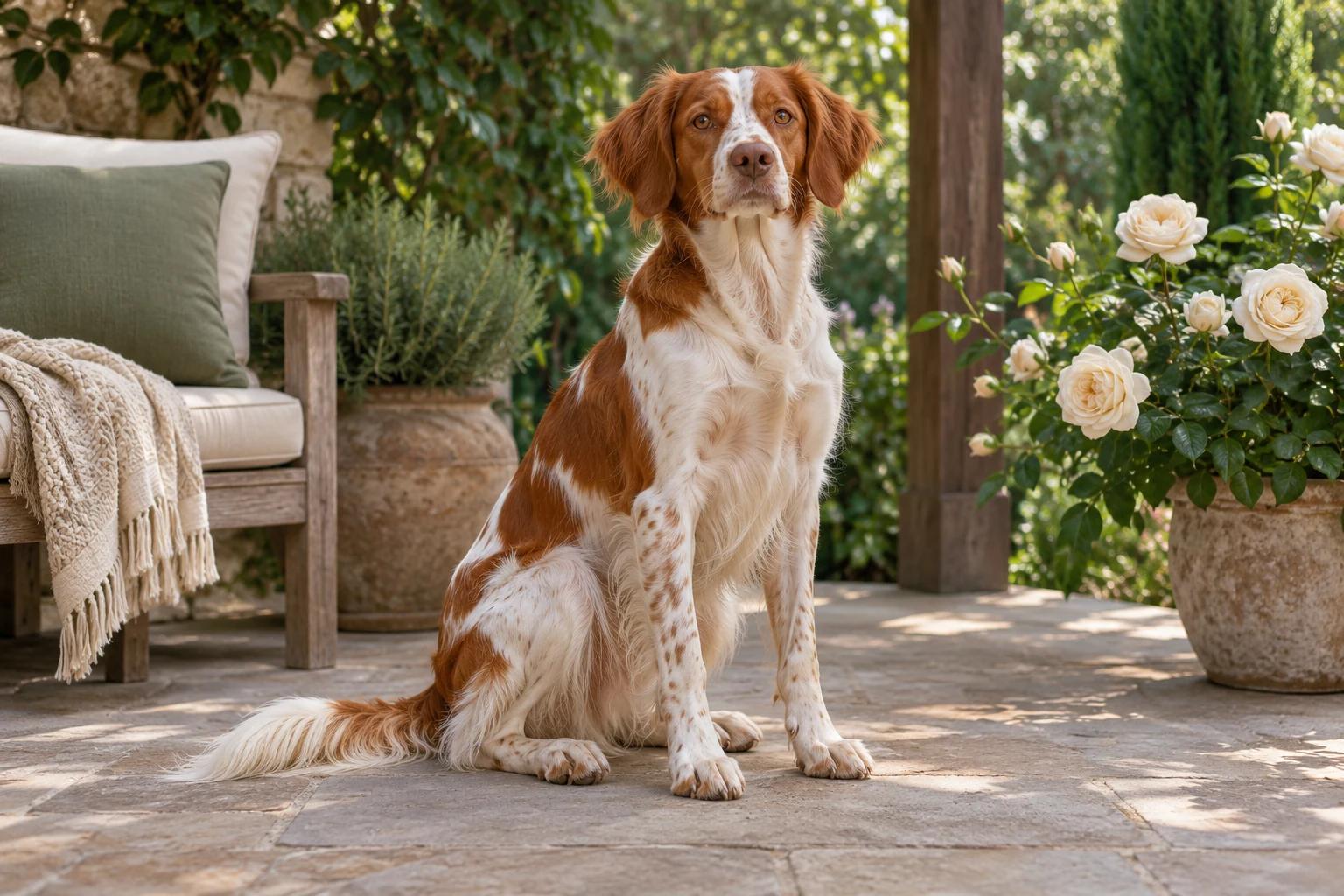
Brittany vs English Springer Spaniel is a useful comparison for someone drawn to an active, medium-sized sporting companion. Both can offer an engaging partnership, but their working roles, weight references and coats are not interchangeable. The right comparison begins with what you want to do together and what your ordinary week can support.
Read the Brittany profile and English Springer Spaniel profile alongside your own priorities. Both have strong training-response tendencies and meaningful activity needs. Choosing between them is not a shortcut around teaching, exercise or everyday care.
Brittany vs English Springer Spaniel: pointing and flushing
The American Brittany Club describes the Brittany's pointing role: locating game and holding a point. The UKC English Springer Spaniel standard describes the Springer's flushing and retrieving work. These are different sporting jobs, even though both involve a dog working with a person outdoors.
For a non-hunting owner, that distinction is useful background rather than a requirement to take up hunting. It gives you a reason to ask about the dog's outdoor interests and the activities its breeder or caregiver provides. You still need to learn how the individual behaves on an ordinary walk.
If you are interested in field activities, talk to an appropriate club or qualified instructor before buying equipment or making assumptions about the training involved. Describe your experience honestly. A dog selected for a particular activity needs a plan suited to that activity, not merely an appealing label on a listing.
Similar shoulder heights can hide a weight difference
The Brittany profile gives an adult height range of 17.5–20.5 inches and weight of 37–44 pounds for males and 33–37 pounds for females. The English Springer Spaniel profile lists males at 20 inches and 45–55 pounds, with females at 19 inches and 40–50 pounds. Their height ranges and combined weight ranges overlap, but a Springer has a higher upper weight endpoint. The actual dog’s measurements determine practical handling needs.
If size is important, ask for the measurements of the adult dog or the puppy's adult relatives. Do not judge weight from a photograph with no clear scale. Also remember that an approximate adult reference cannot guarantee a puppy's final dimensions.
Consider the practical consequences in your home. Does the travel equipment fit your vehicle? Is the resting area out of the household's main walkway? Can the person providing backup care manage the actual dog? These questions matter more than calling both breeds medium-sized and treating the equipment as interchangeable.
Compare the coat you will actually maintain
The Brittany profile describes a short, wavy double coat. The Springer's coat is medium length and double, with feathering described in its UKC standard. That longer hair changes the appearance, but a photograph alone cannot tell you the entire grooming routine.
Ask a groomer to explain the care needed for the particular dog and coat. Look at where debris collects after an outing, which areas need checking and what you can realistically maintain at home. Both profiles record shedding, so neither should be chosen on an assumption of a hair-free house.
A difference between Brittany and English Springer Spaniel coat care may become most obvious in your preferred activities. Muddy paths, wet grass and woodland routes create different cleaning jobs from a paved neighborhood walk. Think about where you will go regularly and make room for the return-home routine, not just the outing itself.
Match the activity plan to your weekdays
Both the Brittany and Springer need an active routine, with mental engagement as well as physical outings. If you want a companion requiring little involvement, this comparison should prompt you to reconsider the shortlist rather than select whichever looks slightly easier.
Write a typical weekday in detail. Include outdoor opportunities, time spent teaching or playing and the periods when the dog must rest while you work. Then write the busiest version of that day. The gap between those two schedules shows you where dependable help or a different plan may be necessary.
Do not count only exercise minutes. Travel to a suitable place, equipment preparation and cleaning up afterward also take time. A routine that sounds reasonable as a walking total can become harder when those supporting jobs are included. Decide which activities you genuinely enjoy enough to repeat through ordinary weather and busy weeks.
Company and greetings deserve their own questions
The English Springer Spaniel profile places more emphasis on family affection and openness to new people than the Brittany profile. That may be relevant if visitors are frequent or you want a dog involved in a busy household. It does not mean every Springer welcomes every greeting or every Brittany prefers distance.
Ask caregivers how their dogs spend a quiet evening. Do they rest near people, seek frequent interaction or alternate between company and their own space? Then ask about arrivals, not just settled company. Enjoying people and greeting them with manageable manners are different things.
When considering Brittany or English Springer Spaniel, explain how often people enter your home and whether there is room for a dog to rest away from the entrance. A workable layout and clear routine help you meet the dog's needs without expecting it to participate in every gathering.
Choose the partnership, not a winner
English Springer Spaniel vs Brittany discussions can turn into a competition over intelligence or enthusiasm. For your decision, compare the tasks you want to teach and the support available. Both profiles suggest responsive learners, but each dog will need practice in your settings.
If you love outdoor exploration, ask how the dog is managed around scents and movement. If you hope to try a sport, ask a trainer what foundation skills you would begin with. If your main goal is an everyday companion, prioritize lead manners, handling, recall practice in secure settings and settling at home.
Meet adults where possible and ask for concrete examples from their routines. Choose the dog whose needs make sense alongside your actual interests and resources. The breed match quiz can help organize that decision, while the existing Brittany title guide provides separate context for reading breeder information.
FAQ
Is a Brittany smaller than an English Springer Spaniel?
The Brittany has a lower adult weight reference on My Breed Atlas, at 33–44 pounds across sexes, while Springers are listed at 40–50 pounds for females and 45–55 pounds for males. Combined weight ranges and shoulder heights overlap, so compare actual measurements when size matters.
Do Brittanys and Springers have the same sporting role?
No. The Brittany is associated with pointing, while the English Springer Spaniel works as a flusher and retriever. Those roles offer background for choosing activities, but neither automatically supplies a pet dog's training or manners.
Is either breed a low-activity alternative?
Neither the Brittany nor the English Springer Spaniel should be selected as a low-involvement alternative. Both are active sporting choices. Ask about the individual dog's existing routine and compare it with the activity and companionship you can reliably provide.
Sources behind this article
Article source checked: November 14, 2026. Source checked 2026-11-14
Keep reading

Affenpinscher vs Brussels Griffon: Everyday Differences
Read article →